

At the National Conference on the implementation of the Resolution of the 11th Plenum of the 13th Central Committee of the Communist Party of Vietnam, held this morning (April 16), Politburo member and Chairman of the National Assembly Tran Thanh Man delivered a presentation on "Revising the Constitution and laws; directions for the election of deputies to the 16th National Assembly and deputies to People's Councils at all levels for the 2026-2031 term".
National Assembly Chairman Tran Thanh Man affirmed that the laws and resolutions passed at the 9th Extraordinary Session of the 15th National Assembly related to the reorganization of the state apparatus and the promotion of socio -economic development, ensuring national defense, security, and foreign affairs have effectively served the revolution of reorganizing and streamlining the political system's apparatus, promptly resolving institutional difficulties and obstacles, creating breakthroughs for development, leveraging resources, and creating new development spaces for localities and the whole country, in accordance with the Party's guidelines and resolutions.
Implementing Resolution No. 60-NQ/TW dated April 12, 2025, of the 11th Conference of the 13th Central Committee of the Communist Party of Vietnam, which includes the merger of provincial-level administrative units, the elimination of district-level organizations, the merger of commune-level organizations, and the establishment of a two-tiered local government model; and the arrangement of political and social organizations and mass associations assigned tasks by the Party and State into the Vietnam Fatherland Front… opens up a new landscape for national development in the new era with a long-term vision.
The scope of amendments and additions to the Constitution focuses on two groups of content.
To meet the aforementioned requirements, the scope of this constitutional amendment focuses on two groups of content.
Firstly, the provisions of the 2013 Constitution related to the Vietnam Fatherland Front and socio-political organizations (focusing on Articles 9 and 10) aim to meet the requirements of streamlining the organizational structure, enhancing the role, responsibility, and initiative of the Vietnam Fatherland Front, its role in uniting all classes and strata, and strongly orienting towards residential areas, being close to the people, and reaching out to each household.
Secondly, the provisions in Chapter 9 of the 2013 Constitution are intended to implement a two-tiered model of local government organization.
Due to the limited scope of this constitutional amendment, which is expected to involve only about 8 out of 120 articles of the 2013 Constitution, the Standing Committee of the National Assembly will submit the draft to the National Assembly in the form of a Resolution (similar to what was done in the constitutional amendments of 1988, 1989, and 2001).
According to National Assembly Chairman Tran Thanh Man, agencies and organizations, within their respective areas of authority and responsibility, have reviewed and compiled a list of legal documents that will be affected by the amendments and additions to the Constitution.
Specifically, according to the Government Report, there are approximately 19,220 documents issued at the central and local levels whose content is directly affected by the implementation of the policy to continue reorganizing the political system's organizational structure, including 1,180 documents from the central level and 18,040 from local levels.
The amendments to the Constitution and related laws and resolutions must be completed before June 30, 2025, and take effect from July 1, 2025. This includes transitional provisions to complete the restructuring and reorganization of the administrative apparatus and ensure that commune-level administrative units officially begin operation no later than August 15, 2025, and provincial-level administrative units officially begin operation no later than September 15, 2025. Specific guidelines will be provided to ensure smooth and uninterrupted operation, in accordance with the implementation roadmap and plan.
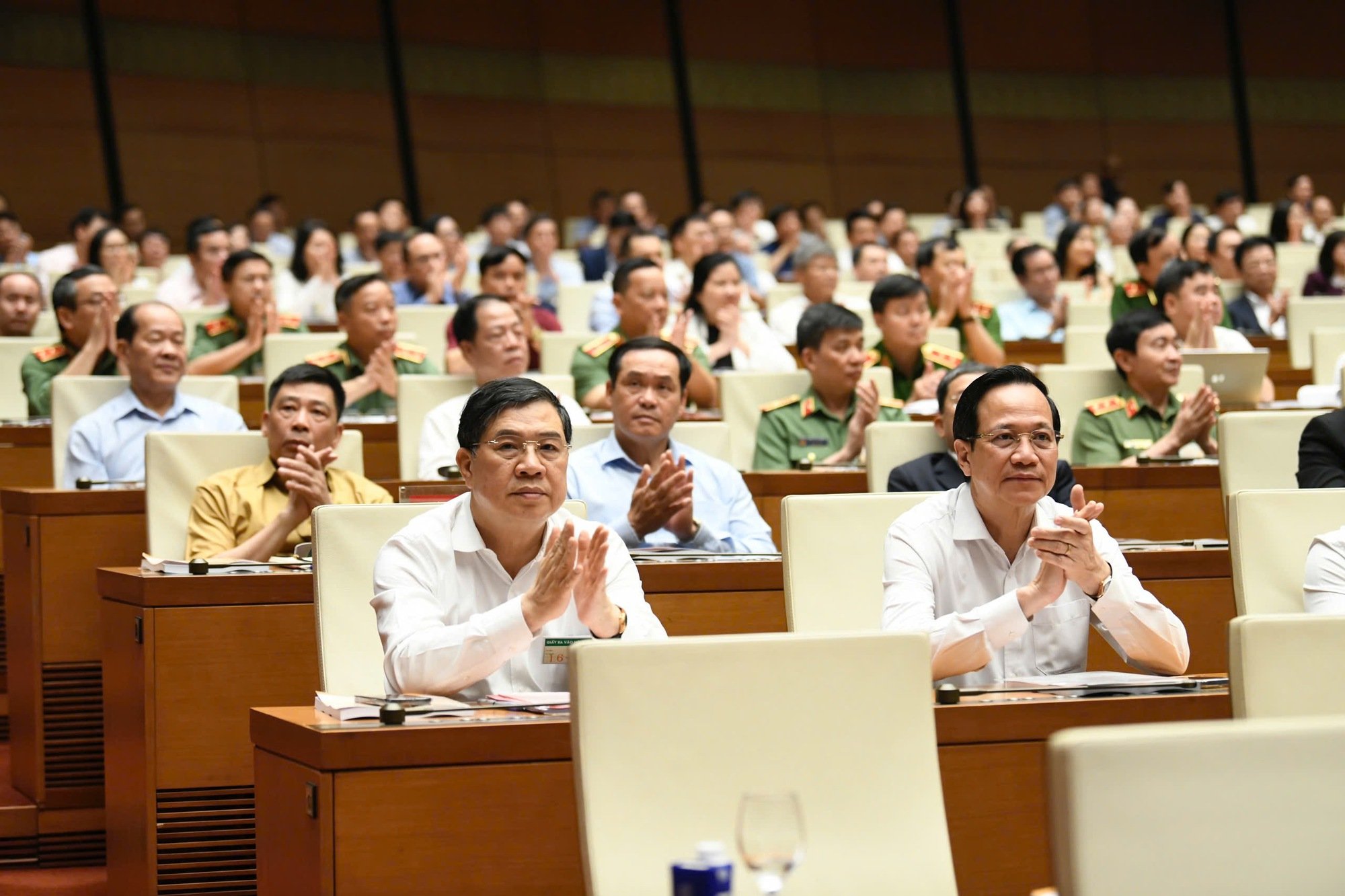
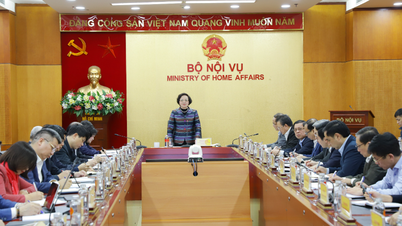
Delegates attending the National Conference to understand and implement the Resolution of the 11th Conference of the Central Committee of the 13th Party Congress.
It is expected that 500 delegates will be elected to the National Assembly.
Regarding the direction for the election of deputies to the 16th National Assembly and deputies to the People's Councils at all levels for the 2026-2031 term, National Assembly Chairman Tran Thanh Man said that the election is expected to be held earlier than the previous election to create synchronization with Party committees at all levels and to promptly implement the resolutions of the 14th Party Congress. The election day for deputies to the 16th National Assembly and deputies to the People's Councils at all levels for the 2026-2031 term is expected to be Sunday, March 15, 2026, and the first session of the National Assembly will be held on April 6, 2026. Therefore, agencies, units, and localities must proactively prepare early and in advance, starting now.
Regarding the number of National Assembly delegates, it is projected to be 500, with at least 40% being full-time delegates. The general structural guidelines are: approximately 10% young delegates (under 40 years old); approximately 30% re-elected delegates; at least 35% female delegates; and at least 18% delegates from ethnic minorities, representing the total number of candidates on the official list for the National Assembly.
The number of representatives in the People's Council is determined based on the population size of each administrative unit and is implemented according to the provisions of the Law on Organization of Local Government.
Regarding the criteria for delegates, they are basically the same as in the previous election; however, there is a new point: priority will be given to those with qualifications in science and technology, and those with basic training in law.
By March 2026, candidates must be old enough to complete a full term, with men born in March 1969 or later, and women born in September 1972 or later. For re-election, candidates must have at least 36 months remaining in their term, with men born in March 1967 or later, and women born in May 1971 or later. Furthermore, it is crucial to adhere to the requirement stated by General Secretary To Lam at the closing session of the 11th Central Committee Conference: the highest priority must be the demands of the job, followed by other criteria.
The requirements for the election process are: A specific leadership and guidance plan is needed to ensure the successful organization of the election. Provincial and municipal Party committees should establish steering committees to comprehensively lead the election process, directly supervising from the provincial level down to the commune level.
Good leadership in personnel management ensures the promotion of democracy and the centralized, unified leadership of the Party in personnel work.
There are solutions to direct the election of a sufficient number of National Assembly deputies and People's Council deputies at all levels, with particular emphasis on the quality of deputies, while ensuring a reasonable structure.
Focus on providing good leadership and guidance in organizing consultations to nominate candidates for the National Assembly and People's Councils at all levels.
Provide effective guidance on the dissemination and promotion of the content, requirements, and significance of the election; and the regulations of the Law on the Election of National Assembly Deputies and People's Council Deputies.
Strictly supervise the assurance of political security and social order; promptly and lawfully resolve complaints and denunciations from citizens.
The Party Committee of the National Assembly, the Party Committee of the Government, the Party Committee of the Vietnam Fatherland Front, the Party committees at the central level, the National Election Council, and Party committees and organizations at all levels will issue specific plans to implement and guide the execution.
"The National Assembly will continue to strongly innovate, improve the quality and effectiveness of its operations, and demonstrate the highest sense of responsibility to the Central Committee of the Party, the Politburo, the Secretariat, the voters, and the people. The National Assembly Party Committee will lead and direct the full implementation of Resolution No. 60-NQ/TW dated April 12, 2025, of the 11th Conference of the Central Committee of the 13th Party Congress; coordinate closely, substantively, and regularly with the Government Party Committee; and thoroughly disseminate the resolution to the National Ethnic Council, the National Assembly Committees, and the Party groups of the National Assembly delegations to ensure the successful conclusion of the 9th Session of the 15th National Assembly," said National Assembly Chairman Tran Thanh Man.
Source: https://moha.gov.vn/tintuc/Pages/danh-list-of-featured-news.aspx?ItemID=57065



































































Comment (0)