

On the morning of December 11th, at the closing ceremony of the first Vietnam Rice Yarn Festival held at the Ho Chi Minh City Tourism Association, representatives of the organizing committee stated that the event had exceeded expectations despite limited resources. The festival welcomed approximately 80,000 visitors, with a high concentration in the afternoon and evening, and at many times it was packed, even though Ho Chi Minh City was hosting nine other major events on the same day.
"Guests were pleased with the check-in areas, especially the efforts to bring in the kitchen space and the traditional rice noodle making processes such as rolling silkworm cocoons, pressing vermicelli, and grinding rice... International guests enjoyed watching the traditional noodle-making process firsthand," a representative of the organizing committee shared.
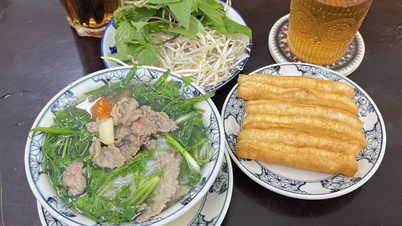
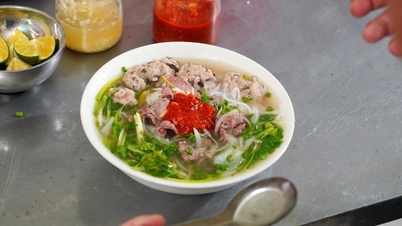
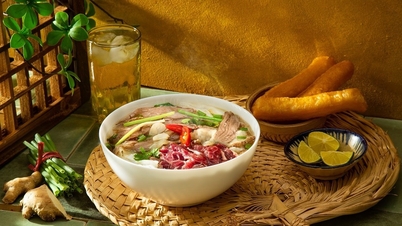
Besides pho, hu tieu, and banh canh, unique dishes like bun dot may (rice noodles with young shoots), "mixed hu tieu" noodles, and other specialties from the Mekong Delta are also attracting tourists. Among them, banh tam (silkworm noodle soup) and banh canh are the most popular. "The richness and diversity of the dishes make people excited to experience them. In the culinary world, you have to constantly innovate to attract customers," said Ms. Nguyen Thi Khanh, President of the Ho Chi Minh City Tourism Association.

Vietnam ranks second in the world for noodle dishes.
PHOTO: LE NAM
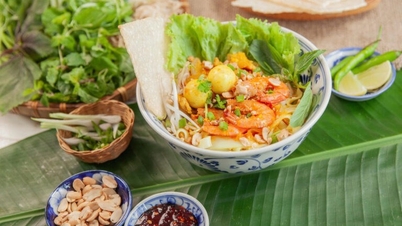
According to the 2026 ranking of the 100 best noodle dishes in the world published by Taste Atlas magazine, Japan tops the list with 26 dishes. Vietnam proudly contributes 18 dishes, ranking second globally, including pho, hu tieu, banh canh, bun rieu, bun bo Nam Bo, mi Quang, cao lau, banh da cua, and many other regional variations. Taste Atlas highly values the sophistication in handling rice ingredients, the handcrafted noodle-making techniques, and the strong local identity. Mi Quang achieved the highest ranking with 4.3 points.
Ms. Nguyen Thi Khanh commented: "This proves the value and vitality of Vietnamese noodle dishes. When Vietnamese cuisine is recognized by the world, this is also an opportunity for Ho Chi Minh City and Vietnam's tourism industry to further exploit its culinary cultural resources."
Source: https://thanhnien.vn/cac-mon-an-tu-soi-gao-viet-thu-hut-80000-khach-185251211142018113.htm

















![[Photo] Prime Minister Pham Minh Chinh holds a phone call with the CEO of Russia's Rosatom Corporation.](/_next/image?url=https%3A%2F%2Fvphoto.vietnam.vn%2Fthumb%2F1200x675%2Fvietnam%2Fresource%2FIMAGE%2F2025%2F12%2F11%2F1765464552365_dsc-5295-jpg.webp&w=3840&q=75)









































Comment (0)