

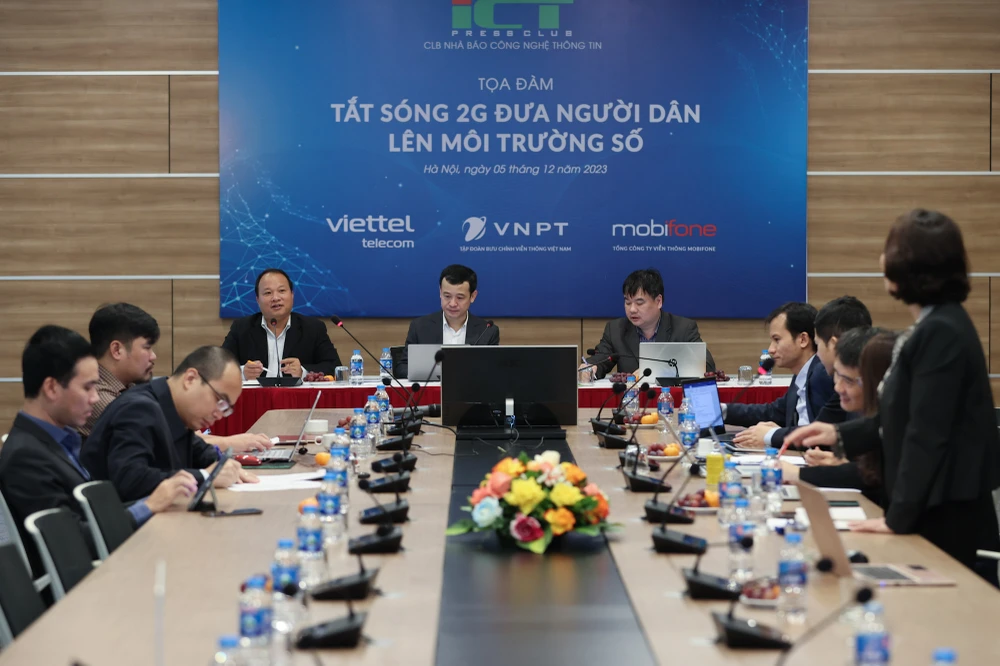
On December 5th, in Hanoi , the Information Technology Press Club (ICT Press Club) organized a seminar titled "Shutting Down 2G, Bringing People to the Digital Environment." The goal of the event was to hear the voices of regulatory agencies and telecommunications companies regarding the roadmap for shutting down 2G, as well as its impact on users and the domestic telecommunications market.
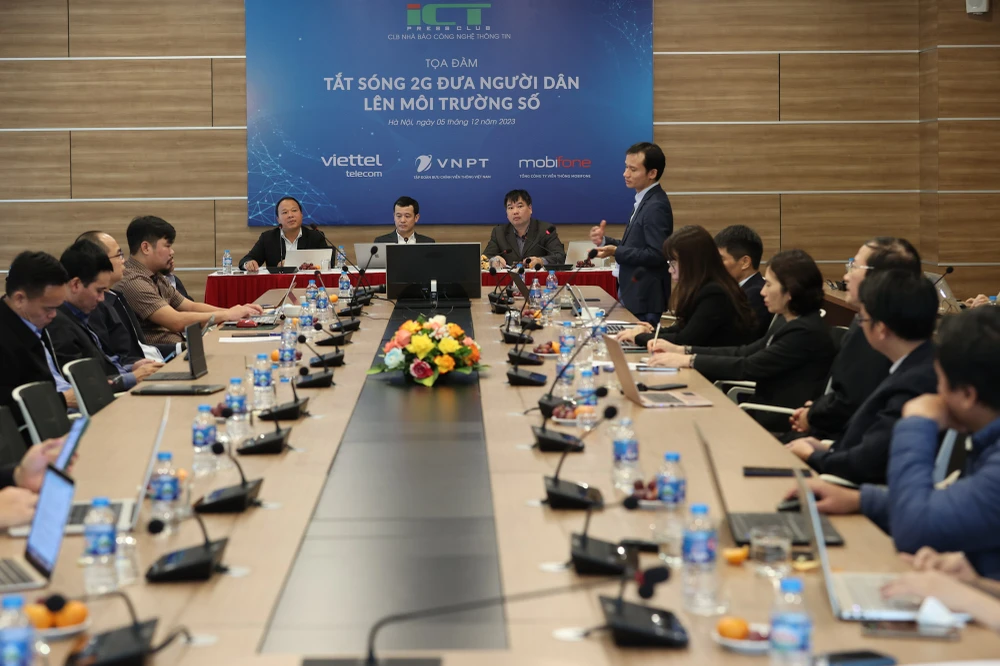
At the seminar, Mr. Nguyen Phong Nha, Deputy Director of the Telecommunications Department (Ministry of Information and Communications), stated that the Ministry of Information and Communications has implemented numerous solutions and policies to discontinue 2G networks. Accordingly, units within the Ministry of Information and Communications have proposed this since 2016, the year Vietnam licensed 4G technology, with a validity period until 2024. This is the time when network operators will orient themselves, consider re-licensing subscribers, and simultaneously transition to digital and technological advancements. In terms of implementation, network operators currently have plans to discontinue their 2G technology and test the new 5G technology.
According to Mr. Nha, a network operator cannot simultaneously operate 2G, 3G, 4G, and 5G technologies. This minimizes difficulties for broadcasting equipment, and it is a sound policy of the Ministry of Information and Communications, supported by businesses and network operators.
"By 2030, the Ministry of Information and Communications' orientation is to begin implementing 6G technology. Therefore, 2G technology phones will no longer be used, imported, or circulated in the market," Mr. Nha informed.
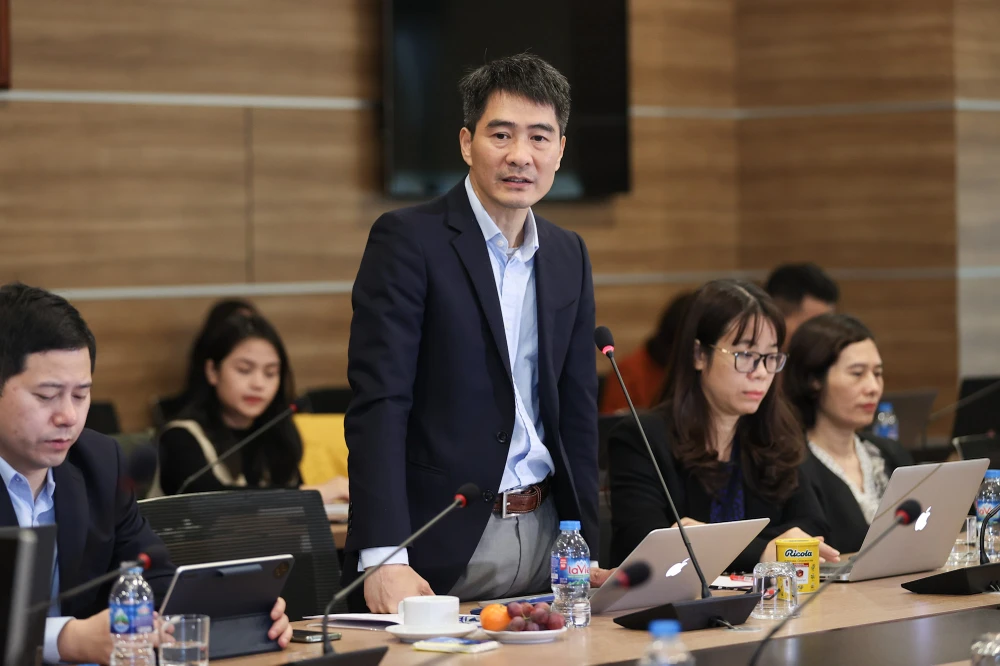
Mr. Nha also stated that currently, there are over 15 million active 2G subscribers on the national network. The Vietnam Public Telecommunications Service Fund (Ministry of Information and Communications) will provide 400,000 mobile phones to support priority groups such as those in remote areas and those with particularly difficult circumstances in transitioning to the new technology.
"The Ministry of Information and Communications, in coordination with local authorities, is mobilizing support from social contributions to help eligible people transition to 4G in a synchronized manner," Mr. Nguyen Phong Nha shared.

According to Mr. Nguyen Trong Tinh, Deputy General Director of Viettel Telecom, the conversion of 2G customers to 4G networks did not happen in the last one or two years, but has been underway for about four years. Currently, Viettel is the first network operator to successfully convert all 3G subscribers to 4G, with only 2% of customers still using 3G. According to Mr. Tinh, discontinuing older technologies to focus resources on new technologies will bring significant economic benefits and resources to telecommunications companies. However, the percentage of 2G subscribers in Vietnam is still generally high compared to other countries in the region and developed countries, with approximately 16% of subscribers using only 2G.
Mr. Tinh stated that Viettel aims to continue relocating remaining customers by the end of 2024, and will only shut down its base stations when the percentage drops below 5%. Viettel will also focus on expanding 4G coverage to all its service areas, including remote, border, and island regions. Furthermore, Viettel will subsidize a portion of the service fees for customers, bringing 4G service prices down to very low levels, approaching or even lower than current 2G prices, to meet customer needs. Viettel will also subsidize up to 50% of the device price for customers upgrading from 2G to 4G, including both smartphones and feature phones.

Mr. Nguyen Quoc Khanh, Deputy Head of Technology Department of VNPT Group, said that VNPT wishes to cooperate with other network operators and relevant parties to shut down 2G networks. In 2015-2016, Vinafone's 2G traffic accounted for 60%. When 3G and 4G are implemented, VNPT plans to cut off 2G networks, integrating this into priority programs to develop subscribers using 3G and 4G. Over the past two years, VNPT has proactively shut down individual base stations when demand or traffic is low. Following the direction and guidance of the Ministry of Information and Communications, by September 2024, VNPT is committed to converting all 2G-only subscribers, currently accounting for about 6% of the network's total subscriber base.
According to Mr. Khanh, VNPT will give away smartphones and subsidize prices for customers currently using 2G-only services in some remote areas and islands... to help people switch to 3G and 4G technology. By the end of this year, VNPT will apply new technology to detect subscribers who do not comply with legal regulations, so that the network operator can easily manage them.

Mr. Le Mai Son, Deputy Head of Communications at Mobifone, stated that Mobifone supports the Ministry of Information and Communications' directive to transition from 2G to 4G. This aligns with Mobifone's approach of optimizing business performance while ensuring customer rights. Over the past period, Mobifone has gradually deactivated 2G-only subscribers in areas with low access rates, while also assessing the impact on the public and developing a specific roadmap to completely eliminate 2G subscriptions.
However, Mr. Son believes that more time is needed to convince the public, including addressing the barriers of traditional 2G technology and transitioning to new technologies. He also suggests that to completely shut down 2G, a coordinated effort across society is necessary, starting with government agencies, followed by telecommunications companies and the media, to create a campaign that helps people understand this is an upgrade, not a removal.
Mr. Dao Hai Nam, a representative of Vietnamobile, stated that eliminating 2G brings many benefits to customers. Vietnamobile is currently prioritizing frequencies for 4G, gradually phasing out 2G. However, Vietnamobile still has a significant number of customers using 2G, so the network proposes to shut it down at an appropriate time.
TRAN BINH
Source





















![[Photo] Prime Minister Pham Minh Chinh holds a phone call with the CEO of Russia's Rosatom Corporation.](/_next/image?url=https%3A%2F%2Fvphoto.vietnam.vn%2Fthumb%2F1200x675%2Fvietnam%2Fresource%2FIMAGE%2F2025%2F12%2F11%2F1765464552365_dsc-5295-jpg.webp&w=3840&q=75)












































Comment (0)