

On the morning of November 27th, with 431 out of 468 (87.25%) National Assembly delegates voting in favor, the National Assembly officially passed the Law on Identity Cards. The law consists of 7 chapters and 46 articles.
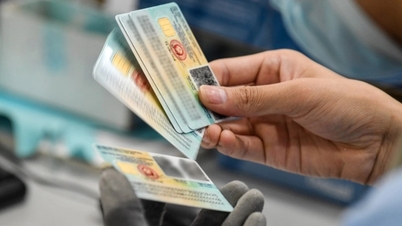
An identity card contains basic information about a person's personal details, background, identity, and biometrics.

The National Assembly officially passed the Law on Identity Cards. Photo: National Assembly
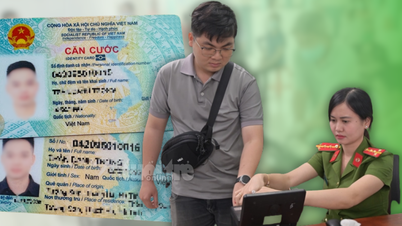
Article 18 of the Law on Identity Cards outlines the information fields to be displayed on the identity card. These include a facial photograph; personal identification number; surname, middle name, and given name; date of birth; gender; place of birth registration; nationality; place of residence; date of issuance and expiration date. Thus, compared to the 2014 Law on Citizen Identity Cards, the fields for place of origin and fingerprints have been omitted from the identity card.
Information in the National Identity Database includes personal identification information; biometric information including facial images, fingerprints, iris scans, DNA, voice; occupation, etc.
Those eligible for identity cards include: Vietnamese citizens aged 14 and above who must complete the identity card application procedure; Vietnamese citizens under 14 years old who may be issued an identity card upon request.
Before the National Assembly voted to approve the law, on behalf of the Standing Committee of the National Assembly, Chairman of the National Defense and Security Committee Le Tan Toi presented the verification report, stating that there were opinions suggesting that there have been many changes in the form, content, and name of the identity card over time, therefore, it was proposed to reconsider the name of the Law; it was suggested that the name of the law and the name of the card not be changed to identity card.
However, Mr. Toi informed that, through discussions, most opinions of National Assembly deputies and the Standing Committee of the National Assembly agreed with the name of the draft law and the name of the identity card as explained. The Standing Committee of the National Assembly believes that using the name "Identity Law" clearly demonstrates its scientific nature, encompassing the scope of regulation and the subjects to which the law applies, while also being consistent with the trend of managing a digital society.

Chairman of the National Assembly's Committee on National Defense and Security, Le Tan Toi. Photo: National Assembly
With the scientific integration of complete information into the identity card, along with a digital management system that ensures public accessibility, the renaming to the new identity card will make state management more scientific, serving the government's digital transformation, digital economy , and digital society. At the same time, it will create favorable conditions and support citizens in participating in social activities and conducting administrative and civil transactions more conveniently.
The Chairman of the National Defense and Security Committee also stated that the National Assembly Party Committee had sought the opinion of the Politburo on this matter and received the Politburo's unanimous agreement on using the name "Law on Identity Cards" as presented by the Government.
The Standing Committee of the National Assembly recognizes that changing the name to the Law on Identity Cards and Citizen Identification Cards is appropriate for the purpose of managing and serving the people.
According to Le Tan Toi, Chairman of the National Defense and Security Committee, current science has proven that, along with fingerprints, a person's iris has a complex and unique pattern that does not change much over time.
Iris recognition technology (also known as iris scanning technology) is a method that uses algorithms and images to identify a person based on the structure of the iris ridges (where a person's eye color is determined), and has been widely applied in many fields.
Currently, many countries have adopted this technology for citizen identification, passport verification, online verification, etc. Furthermore, this technology is highly accurate, simple, easy to use, and does not require complex operations.
Therefore, in addition to collecting fingerprints, the draft law has added a provision for collecting irises in identity information to serve as a basis for cross-referencing and verifying each individual's information; and to assist in cases where a person's fingerprints cannot be obtained (in cases of disabilities or deformed fingerprints due to objective or subjective reasons...).
Source: vietnamnet
Source




























































































Comment (0)