

In the current bleak global economic landscape, Vietnam is still considered a bright spot. However, many difficulties remain; some policies and initiatives have not been implemented decisively or effectively, and at times, morale has even declined in some areas. The Politburo 's issuance of Conclusion No. 14-KL/TW on September 22, 2021, followed by the Government's Decree No. 73/2023/ND-CP on September 29, 2023, aims to encourage and protect dynamic, creative officials who dare to think and act for the common good.
Climbing the mountain, dreams of reaching the high peaks.
Striving for a prosperous and happy life is the age-old aspiration of our nation. This aspiration has forged the will of the Vietnamese people, always wanting to confront challenges to affirm their strength: "Climbing mountains, dreaming of high peaks / Traveling by boat, yearning for long rivers." The nation's aspirations converge and crystallize in Ho Chi Minh's aspiration: to achieve complete independence for our country, complete freedom for our people, and for everyone to have enough food, clothing, and education. With extraordinary willpower, he and the Party transformed this aspiration into reality with the victory of the August Revolution in 1945. As he said: "Nothing is difficult / Only fear of a lack of perseverance / Digging mountains and filling seas / With determination, anything can be accomplished."
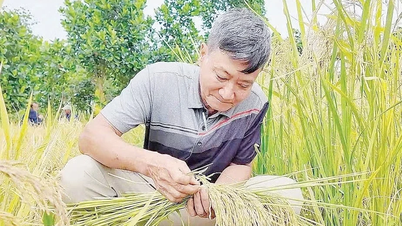
The victories that have written the golden pages of Vietnamese revolutionary history under the leadership of the Party were not easily achieved; they were paid for with the blood of the entire nation, the sacrifices of many generations of cadres, and many who dared to gamble their political lives for the common good of the country. The clandestine "contracting out" of land to individual peasant households in 1966-1968 by Kim Ngoc, Secretary of the Vinh Phuc Provincial Party Committee, contrary to the Party's policy at the time, is one example. He was criticized, but it was precisely from this breakthrough in thinking and approach that the Politburo researched and issued Resolution No. 10-NQ/TW, dated April 5, 1988, on reforming economic management in agriculture and unleashing the creative labor of the people. It also included the decision to implement a market-based single-price mechanism and abolish rationing by the Secretary of the Long An Provincial Party Committee, Nguyen Van Chinh, after 1975. A prime example is General Secretary Nguyen Van Linh, who, during the early period of reform, boldly piloted changes to the economic management mechanism in some state-owned enterprises in the area while serving as Secretary of the Ho Chi Minh City Party Committee. He also wrote a series of articles in the Nhan Dan newspaper's "Things That Need to Be Done Immediately" column from 1987-1990, fiercely criticizing the conservative, stagnant, corrupt, and incompetent thinking of officials at the time; he contributed to turning the tide and paving the way for the reform process. Another example is Prime Minister Vo Van Kiet's bold decision to build the 500kV North-South power line, despite numerous objections.
In that specific context, the aforementioned "breaking the rules" actions and bold decisions were like "big waves" or "tsunami" waves of that era. Only officials with courage, a proactive spirit, and a burning desire for innovation for the common good could steer the ship forward. These stories from the past remain valuable, serving as lessons and examples for us today, especially when a segment of officials are afraid of making mistakes, shirking responsibility, and working half-heartedly for the sake of security.
Only the strong can withstand the wind.
President Ho Chi Minh emphasized that the success or failure of all endeavors depends on whether the cadres are good or bad. Cadres only dare to think and act effectively when they possess excellent professional skills, competence, work experience, and the ability to anticipate and handle adverse situations, especially those without precedent. Our ancestors said, "Only those who are strong can withstand the wind"; otherwise, they will only ruin things. Acting recklessly and impulsively is even more dangerous, potentially leading to destruction.
The Politburo's Conclusion No. 14-KL/TW and the Government's Decree No. 73/2023/ND-CP have encouraged officials to think boldly, act decisively, and make breakthroughs more often, but they have not kept pace with the demands of current reality. The requirement is for more synchronized and decisive implementation; and for clearer mechanisms.
According to many officials, including leaders, managers, and professionals, the first step is for Party committees, agencies, and units at all levels to build and effectively implement mechanisms to encourage and protect officials with creative thinking and groundbreaking approaches, removing bottlenecks and obstacles in existing mechanisms, policies, or regulations that are no longer suitable for practical realities, thereby bringing practical results and making positive contributions to overall development. All creative ideas and breakthroughs for the common good should be supported with the close collaboration of Party committees and leaders, creating resources for the implementation process. Successes should be promptly rewarded and encouraged, creating a ripple effect in work programs. Failures, or even setbacks, should be thoroughly examined and analyzed to determine the causes. If the motives are pure and not self-serving, accountability may not be imposed, but lessons should be learned and shared. Anyone who abuses this policy to act arbitrarily, overspend, promote themselves, and cause negative consequences must be dealt with severely.
Along with that, there needs to be a strong reform of personnel management, especially in the evaluation process. Evaluation should be done to assign tasks according to ability and strengths; we cannot assign a carpenter to forge knives. Personnel evaluation should be objective and impartial throughout the work process so that those with good qualities and abilities will be trained and promoted, while those who are weak will be assigned to other tasks. This is how to create motivation for personnel to contribute and not be afraid of difficult tasks. However, if there is internal disunity, few people are dedicated to their work, but there are plenty of people who do little but criticize and nitpick, or sabotage; if leaders are biased, and capable personnel who are not part of their clique are ignored or even suppressed, then no matter how talented the personnel are, it will be difficult for them to fully utilize their abilities.
It is a fact that the competence of cadres at all levels, especially leaders and managers, is constantly improving, excelling in many fields. However, the fading of ideals and a decline in the will to strive among a segment of cadres remains a cause for concern. These cadres may be theoretically proficient but lack dynamism and creativity in organizing practical activities, are hesitant to innovate, and are inexperienced in handling unexpected, complex, and sensitive situations.
Therefore, to cultivate cadres who dare to think and act, personnel work must focus on both virtue and talent, with virtue being the foundation. Cadres must possess professional expertise while also having integrity, moral character, an upright lifestyle, dedication to their work, and commitment to the overall development of the country, locality, and unit. They must remain unwavering in the face of all difficulties and challenges, including distorted and hostile narratives, or dissatisfied rhetoric.
In particular, cadres must not only dare to think and act, but also possess strong character, vigilance, and the courage to overcome themselves in the face of all the temptations of everyday life. Reality increasingly provides us with costly lessons; many cadres with high qualifications, capabilities, and experience in many important positions, who have made significant contributions and are trusted by the Party and loved by the people, have had their careers ruined by a moment of carelessness, self-destruction, or allowing relatives to become corrupt.
"One tree alone cannot make a forest," meaning that growth requires a forest; a dynamic, proactive official, daring to think and act, will find it difficult to accomplish great things alone, especially within an organization with many factions. Therefore, alongside perfecting mechanisms to encourage officials to dare to think and act, it is essential to build a healthy working environment; the Party organization must be truly clean, strong, democratic, and united. All matters should be handled with shared responsibility; disagreements should be discussed democratically to reach a consensus, and everyone should work together, just as "three trees together make a high mountain."
The courage to think and act for the common good is inherent in every Vietnamese person. When we know how to awaken this quality through specific policies and mechanisms, no matter how long or difficult the road may be, we will walk together to reach our destination as promised.
(Nhan Dan Newspaper)
Source
![[Photo] General Secretary and President To Lam meets with National Assembly delegates from ethnic minorities.](https://vphoto.vietnam.vn/thumb/1200x675/vietnam/resource/IMAGE/2026/04/20/1776696701056_a1-bnd-8331-3342-jpg.webp)




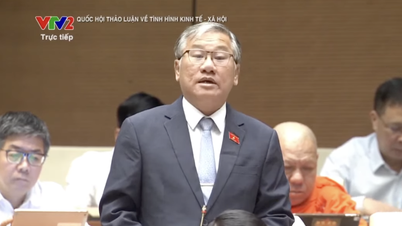
![[Image] National Assembly discusses the implementation of the socio-economic development plan.](https://vphoto.vietnam.vn/thumb/1200x675/vietnam/resource/IMAGE/2026/04/20/1776696707422_ndo_br_img-20260420-185419-jpg.webp)




































































Comment (0)