

On the occasion of the New Year 2025, Vietnam Weekly had a conversation with Dr. Nguyen Dinh Cung – former Director of the Central Institute for Economic Management Research, to look back at the past year and his hopes for strong reforms in the new year.
High GDP growth
Sir, 2024 has concluded with outstanding economic growth. How do you view this achievement?
Mr. Nguyen Dinh Cung : As is tradition, macroeconomic stability has been maintained; inflation is controlled within the defined target; GDP growth in 2024 is high, unexpectedly high, exceeding the predictions of most experts and economic organizations both domestically and internationally.
The factor driving this unexpected growth was the strong recovery in industrial production compared to 2023; coupled with a surge in exports thanks to a recovery and strong increase in import demand from key partner economies compared to 2023.

Mr. Nguyen Dinh Cung: The 14th National Congress needs to officially assign targets, including GRDP growth, the number of new jobs, and the corresponding per capita income, to each locality.
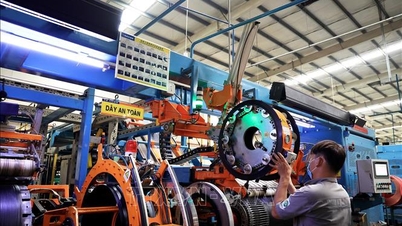
Industry was the driving force behind the unexpectedly high GDP growth, reaching its highest level since 2020 at 8.32%, a sharp increase of 5.3 percentage points from 3.02% in 2023. In addition, exports also became a key driver of economic growth. The recovery in import demand, coupled with a strong increase in export turnover, boosted industrial production, especially in manufacturing, which is dominated by FDI and is export-oriented.
However, both industrial production and exports are showing signs of weakening in the final months of 2024.
Over the four years from 2021-2024, economic growth has been unstable with relatively large fluctuations. If GDP growth in 2025 is 7%, the average growth during the 2021-2025 period will only reach 5.93%; if it reaches 8%, the average GDP growth over the five years will be over 6.2%, lower than the target of 7-7.5%.
Investment has been aggressively promoted to support economic growth. What are your key concerns regarding the economy over the past year?
Mr. Nguyen Dinh Cung : In 2024, FDI disbursement recovered to pre-Covid-19 growth rates of over 10.6%. Non-state investment also improved, increasing by 7.7% compared to 2.7% in 2023. However, the aforementioned growth rate is still much lower than the average of 13.6% from 2014 to 2019.
The assessments and directives of General Secretary To Lam in recent times have opened up space and created extremely favorable conditions for institutional reform, removing the very bottlenecks of the past.
Mr. Nguyen Dinh Cung
Public investment in 2024 is projected to increase by only 3.3%, a sharp drop from the average of 19% in 2022-2023. Therefore, it can be said that domestic investment, especially private investment, still has significant potential to be leveraged and compensate for the lack of other growth drivers.
The ratio of businesses entering the market to those exiting the market is 1.18, the lowest level to date; and the number of active businesses expected to increase by 2024 will only be slightly over 35,000. The rate of private investment growth over the past four years has been very low, averaging only 5.8%.
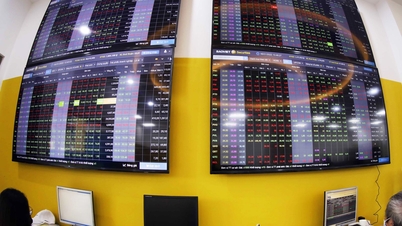
The stock market continues to fluctuate, hovering around 1200-1250 points; the real estate market is heavily influenced by speculative factors; supply and demand are imbalanced, transaction volumes are low, liquidity is low, and prices are unusually high…
I believe that as we move into 2025, the goal of accelerating growth will require a great deal of effort to achieve, while the external context remains unpredictable.
Looking at the world , what, in your opinion, should Vietnam pay the most attention to?
Mr. Nguyen Dinh Cung : President Trump's unexpected and unpredictable policies and decisions, and the risk of imposing "massive" tariffs on imports into the US, will adversely affect Vietnam's exports to the United States. "Using" the US as a transit point for exports is also a risk that cannot be ignored.
The export growth rate tended to slow down in the last months of 2024 due to a decrease in import demand in the world market, especially from Vietnam's main trading partners, and this trend is projected to continue in 2025.

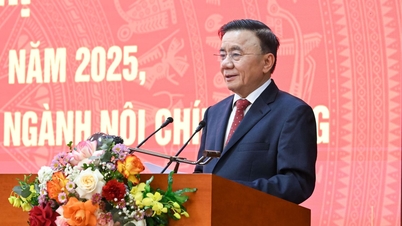
As is traditional, macroeconomic stability has been maintained; inflation has been controlled within the defined target. Photo: Bao Kien
President Trump's unpredictable policies and decisions, and the risk of imposing "broad" tariffs on imports into the US, will adversely affect Vietnam's exports to the United States. The risk of having export routes to the US "used for transit" is also a significant concern.
The dollar is expected to continue appreciating sharply; USD interest rates are rising. Therefore, it is difficult for Vietnam to lower interest rates, and the room for further monetary policy easing to boost growth is narrowing.
External demand is decreasing, export-oriented industrial production is declining, and FDI disbursement may decrease. In other words, the factors that fueled the unusually high growth of 2024 are no longer present.
That's not to mention military conflicts and unpredictable disruptions to global supply chains.
However, we also have many opportunities from outside. I believe there is pressure on us to diversify our export markets.
In addition to the modernization of supply chains, FDI continues to flow into Vietnam, especially capital flows withdrawing from China to both reduce dependence and avoid increased export tariffs to the US under Donald Trump's policies.
The space for institutional reform is wide open.
We are aggressively implementing a streamlining of the state apparatus. What advantages and disadvantages will this bring to economic development?
Mr. Nguyen Dinh Cung : We have never had such open space and favorable conditions for institutional reform as we do now. The assessments and directives of General Secretary To Lam in recent times have opened up space and created extremely favorable conditions for institutional reform, removing the bottlenecks of bottlenecks.
Secondly, there is still significant room for private investment; domestic investment flows need to be further facilitated; domestic investment opportunities should be promoted and encouraged; thousands of unfinished large-scale investment projects need to be revived to unlock capital for the economy; provide more products for the market; and create new value for society.
Thirdly, domestic consumption could improve if the domestic economy recovers to pre-COVID levels and the government implements policies to encourage production, increase income, and boost consumer spending.
When external conditions are less favorable than in 2024, exports and export-related industries cannot be the "lifeline" for growth exceeding 7%; we must leverage the potential of internal growth drivers to achieve 7-8%; otherwise, growth could revert to 5.5-6% as predicted by international organizations.
Amend the Law in line with market development.
General Secretary To Lam has stated that institutions are the "bottleneck of bottlenecks." How can we resolve this "bottleneck of bottlenecks" to create a "breakthrough of breakthroughs," sir?
Mr. Nguyen Dinh Cung : Addressing the aforementioned situation requires a "new way of thinking and doing." That is, to resolve the "bottleneck of bottlenecks," we must not only continue to improve it, but also dismantle it, and even "tear it down to rebuild" if necessary.
I believe that all levels and sectors need to thoroughly understand the following directives of General Secretary To Lam as a framework of thinking and methodology to remove the "bottleneck of bottlenecks":
First, we must abandon the "if we can't manage it, ban it" mentality in lawmaking.
Secondly, laws should not only govern, but also encourage innovation and creativity, promote development, create opportunities, and expand the space for growth.
Thirdly, we must improve the legal system, quickly addressing overlaps and inadequacies in the current system, creating a stable and easily compliant legal foundation. The principle is that one issue or one content should only be regulated by one law; businesses should be free to conduct any activity that is not prohibited by law. State agencies should only do what the law permits.

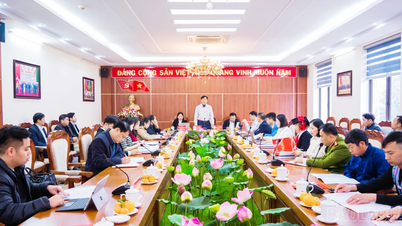
Entering 2025, the goal of accelerating growth will require significant effort to achieve, while the external context remains unpredictable. Photo: Nguyen Hue
Fourth, strongly and comprehensively decentralize power to local authorities in the direction of "Local authorities decide, local authorities act, local authorities are responsible."
Fifth, we should prioritize the "results-based management" approach and shift from "pre-auditing" to "post-auditing," creating new opportunities and impetus for development.
Sixth, uphold market principles in the mobilization and allocation of resources, while eliminating the "request-and-grant" mechanism and the subsidy mindset.
Can you specifically identify the institutional barriers that are causing bottlenecks and what the solutions are?
Mr. Nguyen Dinh Cung : The biggest legal bottlenecks and obstacles currently are concentrated in two areas. Firstly, the mobilization, allocation, and utilization of resources, especially land and various types of investment. Secondly, specialized laws, particularly those governing conditional business sectors and their corresponding business conditions.
Therefore, in the coming years, the focus should be on removing bottlenecks in the two aforementioned areas.
To resolve the "bottleneck of bottlenecks," we must not only continue to improve it, but also dismantle it, and even "tear it down and rebuild" if necessary.
Mr. Nguyen Dinh Cung
Regarding the mobilization, allocation, and utilization of resources, there are numerous overlapping laws, all sharing the same scope of regulation: investment, especially construction investment. These include the Investment Law, the Public Investment Law, the Construction Law, the Real Estate Business Law, the Housing Law, and the Law on Investment under the Public-Private Partnership Method. There are also other related laws such as the planning law, urban planning law, and rural planning law…
International experience shows that some countries only have laws to encourage and protect investment. Similarly, if they have housing laws at all, they are laws on housing policies for citizens.
Therefore, in accordance with the General Secretary's directive as presented above, the Investment Law should be amended to retain the provisions on investment protection and incentives.
Research should be conducted to amend the Land Law towards developing primary and secondary markets for land use rights, including agricultural land use rights, so that the law is enforced through the market, rather than through administrative measures as is currently the case. Research should also be conducted to amend the current Planning Law, replacing or abolishing planning provisions in other laws.
Regarding specialized laws related to conditional business sectors and corresponding business conditions, at least two-thirds of the conditional business sectors and corresponding regulations on business conditions should be reviewed and abolished, especially in the service sector. The remaining laws will be refined, specified, simplified, and made transparent to facilitate compliance and enforcement at the lowest possible cost.
Removing the two aforementioned bottlenecks, combined with thorough decentralization to local authorities, will undoubtedly lead to breakthroughs of unprecedented magnitude.

Domestic consumption could improve if the government implemented policies to encourage production, increase income, and boost consumer spending. (Photo: Bao Kien)
The General Secretary has strongly criticized wastefulness. What solutions does he recommend to address this situation?
Mr. Nguyen Dinh Cung : I believe we must immediately implement the directive of General Secretary To Lam: "Prioritize addressing wasted resources, such as stalled planning projects, projects hampered by procedures, unused public land, disputed assets, and protracted legal cases." Accordingly, in 2025:
Ministries, sectors, and localities must complete the removal of legal obstacles for thousands of investment projects, unblock the flow of investment capital, and quickly transform these projects into new production capacities for the economy.
The practice of "suspended" planning must be eliminated by removing any plans that are not included in the approved (integrated) development plans (at the provincial, regional, and national levels) by the competent authorities.
For public land and assets attached to the land that are not in use, including land managed by state-owned enterprises and public service units, the organizations and units assigned to manage them shall develop a plan for their use (including sale, contracting, or lease for a limited period, etc.) and put them into immediate use.
Put pressure on the leadership.
The government is considering a mechanism to "contract out growth," both quantitatively and qualitatively, to local authorities. What are your views on this mechanism?
Mr. Nguyen Dinh Cung : Currently, the (integrated) development plan for provinces and centrally-administered cities has been approved by the Prime Minister, in which all localities set a growth target of over 10%; the plan has also identified breakthrough tasks, development orientations for sectors and regions, and a list of initial projects to achieve the aforementioned growth target.
Setting high targets will create strong pressure, forcing provincial Party Secretaries and Chairmen to dedicate all their energy and intellect, win people's hearts, innovate, be creative, and dare to think differently and act differently to achieve the goals.
Mr. Nguyen Dinh Cung
Therefore, in reality, local leaders have set high growth targets and they are well aware of that.
If all or most localities achieve GRDP growth above 10%, then the national GDP will certainly exceed 10%. A stable 10% growth target for 10-20 years is very ambitious and difficult to achieve; and international experience shows that only a very few countries have succeeded so far. This means it is difficult, but not impossible.
I believe that the 14th Party Congress officially assigned targets, including GRDP growth, the number of new jobs, and per capita income, to localities, essentially assigning tasks to the local leaders (Secretaries and Chairmen of the People's Committees of provinces and centrally-administered cities) for the 2026-2030 term.
Therefore, they will be evaluated based on their performance using the three key performance indicators (KPIs) mentioned above.
Such goals are very ambitious and only truly capable individuals can achieve them. Setting high targets will create strong pressure, forcing the Provincial Party Secretary and Chairman to dedicate all their energy and intellect, win people's hearts, innovate, be creative, and dare to think differently and act differently to achieve the goals.
We must provide them with appropriate motivation and sufficient space to develop their talents and fulfill their assigned tasks. That space could include:
Implement thorough and comprehensive decentralization to local authorities according to the principle of "local authorities decide, local authorities do, local authorities are responsible." This means that local authorities not only have the right to decide "what to do," but also the right to decide "how to do it."
If changes or additions to the plan are necessary, they should be submitted to the Provincial People's Council. Once the Provincial People's Council approves the plan, it should be reported to the Prime Minister.
They have the right to apply and enforce legal regulations flexibly. In cases where legal regulations on the same issue overlap or differ, they have the right to choose the most appropriate regulation to apply in resolving the related issue.
In cases where the law does not provide for a solution, or provides for a solution that is unclear, the most reasonable and effective method may be applied to resolve the relevant issue.
Evaluate their performance against the overall objectives, results, and effectiveness; do not let a single failure or setback in a project negate the achievement of the overall goals, as reflected in the aforementioned indicators.
The central government must ensure coordination among localities within the region in implementing regional projects. It is crucial to prevent situations where one locality, for its own development, hinders connectivity, restricts space, or limits development opportunities for other localities.
If necessary, the Government will provide guarantees to enable localities to borrow additional capital for investment in important projects.
Vietnamnet.vn
Source: https://vietnamnet.vn/chua-bao-gio-co-khong-gian-cai-cach-rong-mo-nhu-hien-nay-2367156.html







































































Comment (0)