

Prime Minister Pham Minh Chinh and his wife, along with a high-level Vietnamese delegation, visited Poland, the Czech Republic, and Switzerland from January 15-22. Deputy Minister of Foreign Affairs Nguyen Minh Hang spoke to the press about the outstanding results of this visit.
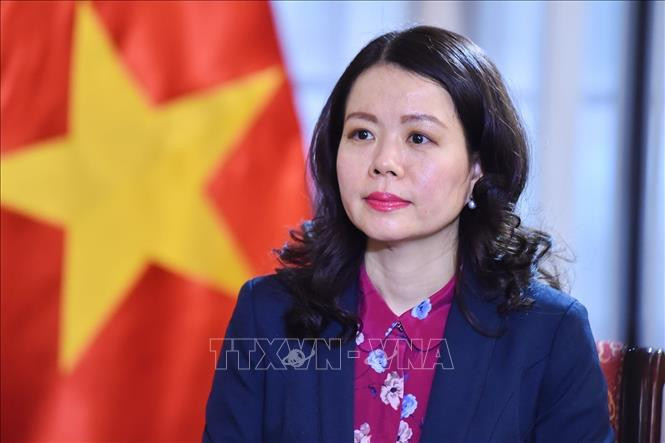
We are pleased to present the content of the interview:
Could the Deputy Minister please elaborate on the outstanding results of Prime Minister Pham Minh Chinh 's official visits to Poland and the Czech Republic, and his bilateral activities in Switzerland?
Prime Minister Pham Minh Chinh's official visits to Poland and the Czech Republic, and his bilateral activities in Switzerland, were very successful. The visits were a strong implementation of the foreign policy guidelines of the 13th National Congress of the Communist Party of Vietnam, strengthening and further deepening friendly and multifaceted cooperation with traditional partners in Western and Central Eastern Europe.
This is the first exchange visit by the Head of Government in 18 years with Poland and in 6 years with the Czech Republic, traditional friendly countries that have given the Vietnamese people selfless, sincere, and loyal assistance in the cause of national liberation, reunification, and national development today. The visit takes place in the context of Vietnam, Poland, and the Czech Republic celebrating 75 years of diplomatic relations in early February 2025; Vietnam and Switzerland looking forward to celebrating 55 years of diplomatic relations in 2026; and Poland assuming the rotating presidency of the European Union from January 1, 2025.
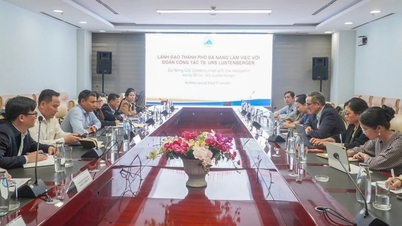
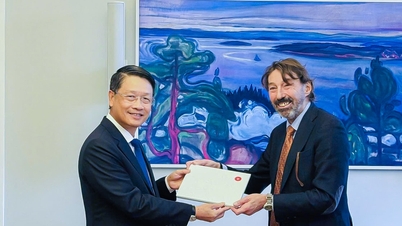
All three countries extended a warm, cordial, and sincere welcome to the Prime Minister, his wife, and the high-level Vietnamese delegation, befitting close friends. Prime Minister Pham Minh Chinh held more than 30 talks, meetings, delivered policy speeches, attended business forums, participated in the "Spring in the Homeland" program, and visited several cultural, scientific, and technical facilities in these countries.
The visit of Prime Minister Pham Minh Chinh achieved remarkable results, bringing the traditional friendship between Vietnam and Poland, the Czech Republic and Switzerland to a new stage of development, specifically:
Firstly, the relationship has been elevated, strengthening political trust. Vietnam and Poland issued a joint statement aiming to upgrade their relationship to a Strategic Partnership; Vietnam and the Czech Republic issued a joint statement on upgrading their bilateral relationship to a Strategic Partnership; and Vietnam issued a statement on upgrading its relationship to a Comprehensive Partnership with Switzerland. These are breakthroughs that further deepen relations between Vietnam and these three countries.
All countries agreed to strengthen exchanges of delegations and contacts at all levels and through all channels, especially at the high level and people-to-people exchanges, in order to enhance mutual understanding and lay the foundation for expanding cooperation in other fields. The leaders of Poland, the Czech Republic, and Switzerland highly appreciated Vietnam's increasingly prominent international position. The Czech Republic and Poland consider Vietnam their most important partner in Asia and express their admiration for the country and people of Vietnam.
Secondly, create new impetus for cooperation in traditional areas such as trade, investment, tourism, education and training, defense and security, culture, labor, etc., in line with the new partnership framework, expanding cooperation to areas where the parties have potential and needs for cooperation, such as digital transformation, green transformation, information and communication technology, cybersecurity, pharmaceuticals, automotive industry, unmanned aerial vehicles (UAVs), air and rail connectivity, etc.
One of the highlights of the visit was the agreement between the parties to strive to increase trade turnover to a higher level soon. Vietnam, Poland, and the Czech Republic agreed to further open their markets to each other's agricultural, aquatic, and food products within the framework of the Vietnam-EU Free Trade Agreement (EVFTA); agreed to soon ratify the EU-Vietnam Investment Protection Agreement (EVIPA), and to accelerate negotiations on a Free Trade Agreement between Vietnam and the European Free Trade Association (EFTA).
Vietnam and the three countries signed eight cooperation agreements on diplomacy, labor, aviation, education, sports, and culture. In addition, to boost tourism cooperation and people-to-people exchanges, Vietnam decided to waive visa requirements for citizens of Poland, the Czech Republic, and Switzerland. This decision was highly appreciated by the leaders and public opinion of these countries.
Thirdly, they shared views and agreed to strengthen coordination at regional and international forums. The Prime Minister and the leaders of the three countries had extensive discussions on many regional and international issues; agreed to strengthen coordination of positions and mutual support at multilateral organizations and forums to contribute to peace, stability, security, cooperation, and sustainable development in the region and the world; and agreed that disputes should be resolved peacefully on the basis of respect for international law and the fundamental principles of the United Nations Charter and the 1982 United Nations Convention on the Law of the Sea (UNCLOS).
Fourth, affirming the Party, State, and Government's concern for the Vietnamese community abroad. The Prime Minister and the delegation were extremely proud of the strength, unity, and unwavering devotion to their homeland of the Vietnamese community abroad in general, and the communities in the countries visited in particular. In all the talks and meetings, the Prime Minister requested the high-ranking leaders of the three countries to create more favorable conditions for the Vietnamese community to integrate better, preserve, and promote their cultural identity and the Vietnamese language.
The Prime Minister requested Poland to consider recognizing the Vietnamese community as a national minority. Attending the "Homeland Spring" activities, the Prime Minister urged the community to continue upholding traditions, supporting each other's development, and becoming a bridge between Vietnam and the host country. Leaders of various countries highly appreciated the contributions of the Vietnamese community to the socio-economic development of their host countries, affirming their continued attention and support for the Vietnamese community in their respective countries.
It can be said that the Prime Minister's official visits to Poland and the Czech Republic, and his bilateral activities in Switzerland, were successful in every respect, helping to elevate relations, enhance the country's standing, and create new momentum to deepen strategic and comprehensive cooperation with the three countries visited in particular, and with Western Europe and Central and Eastern Europe in general.
Could the Deputy Minister please share the results of the Prime Minister's trip to attend the 55th Annual Meeting of the World Economic Forum in Davos, themed "Cooperation in the Smart Age," and the messages that Vietnam conveyed at this conference?
During his more than 30 hours in Davos, Prime Minister Pham Minh Chinh had a packed schedule with numerous multilateral and bilateral activities. The trip was successful in many respects, achieving the set objectives at a high level. Specifically:
Firstly, leveraging the conference's advantage as a focal point for prestigious and globally influential corporations, the Prime Minister, leaders from various ministries, sectors, and localities delivered speeches and engaged in dialogues with leading corporations at five panel discussions covering key areas relevant to Vietnam's development interests and orientations, from high technology and artificial intelligence (AI) to pharmaceuticals, smart infrastructure, green energy, and financial centers.
The business community highly appreciates Vietnam's socio-economic management results, affirming its readiness to support and expand cooperation and investment in Vietnam's priority areas. They wish to work alongside Vietnam in achieving strategic development goals, particularly the implementation of Resolution 57 on breakthroughs in science, technology, innovation, and national digital transformation. Businesses are especially interested in and committed to partnering with Vietnam in developing financial centers in Ho Chi Minh City and Da Nang.
Secondly, the Prime Minister's statements and exchanges left a deep impression on Vietnam's aspirations, vision, and determination for development, with "three readinesses" to embrace the smart era. These are: readiness in terms of institutions, through the creation of a favorable legal framework for science and technology enterprises, startups, and innovation; readiness in terms of resources, especially high-quality human resources to lead innovation and digital transformation; and readiness in terms of infrastructure, especially key infrastructure serving digital transformation such as transportation, energy and clean water transmission, information and communication, and national databases.
Thirdly, the Prime Minister's visit further affirms Vietnam's international standing and stature. At this conference, the Prime Minister attended and spoke at four discussion sessions, including three sessions specifically designed for Vietnam by the WEF. The special dialogue session with the WEF, themed "Breaking Through to the Future: Vietnam's Vision for Innovation and Global Role," was dedicated to the Prime Minister, allowing him to share his story of aspirations, vision, lessons learned, and strategic development directions, as well as suggestions for promoting international cooperation in the smart era.
This was one of the activities reserved for a select few leaders, recognized by the WEF as inspiring and influential among the more than 50 Presidents/Prime Ministers attending the Conference. The National Strategic Dialogue and the Multilateral Roundtable between Vietnam and international partners, specifically arranged by the WEF for Vietnam in preparation for the 16th United Nations Conference on Trade and Development (UNCTAD) to be hosted by Vietnam in 2025, were highly appreciated by the delegates.
Finally, we made the most of the trip to promote and deepen relations with countries and international organizations, given the short time available at Davos. The Prime Minister and members of the delegation held dozens of meetings with leaders of partner countries, promoting trade and investment cooperation with various nations and strengthening cooperation with international organizations in fields such as trade, health, intellectual property, agriculture, and renewable energy.
The Prime Minister's participation in activities at Davos sent important messages to the international community, notably:
The message emphasizes sincerity, cooperation, international solidarity, and the role of multilateralism in promoting sustainable, inclusive development and transformation to adapt to the smart era.
The message emphasizes humanism, affirming that the smart era must be an era of development for humanity, serving humanity, and placing humanity at its center, promoting collaborative initiatives for the benefit of people in the new era.
Message about the responsibility of countries and businesses in the global ecosystem.
These messages will continue to be conveyed throughout a series of vibrant diplomatic activities in 2025, including Vietnam hosting the 4th Partnership for Green Growth and Global Goals (P4G) Summit and the 16th UNCTAD Ministerial Meeting, highlighting Vietnam's image as a reliable, dynamic, innovative, responsible, and promising partner, a nation ready to enter an era of national progress and a smart era for humanity.
Thank you very much, Deputy Minister.
Source

















![[Video] The craft of making Dong Ho folk paintings has been inscribed by UNESCO on the List of Crafts in Need of Urgent Safeguarding.](https://vphoto.vietnam.vn/thumb/402x226/vietnam/resource/IMAGE/2025/12/10/1765350246533_tranh-dong-ho-734-jpg.webp)
















































Comment (0)