

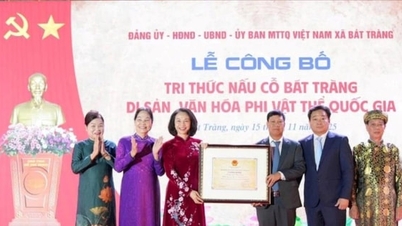
On August 13, 2025, the Ministry of Culture, Sports and Tourism announced the National List of Intangible Cultural Heritage, which includes three heritages from Hanoi: the Thanh Tri rice roll making craft (Vinh Hung ward), the knowledge of processing and enjoying La Vong fish cakes (Hanoi), and the knowledge of Bat Trang feast cooking (Bat Trang commune).
Why was the Bat Trang pottery recognized as a National Intangible Cultural Heritage? According to the Ministry of Culture, Sports and Tourism , the aforementioned newly recognized National Intangible Cultural Heritages, including the Bat Trang pottery, were all presented by the localities with full value, representing the identity of the community and locality. These heritages reflect cultural diversity and human creativity, passed down through many generations; they have the potential for restoration and long-term survival, and are nominated and protected with the consensus and voluntary commitment of the community.
What's so special about Bat Trang pottery?
When mentioning Bat Trang, people often immediately think of ceramics – the products that have made this village on the Red River famous for thousands of years. But besides pottery, Bat Trang also preserves a special spiritual culture: traditional feasts during festivals, holidays, ancestral worship ceremonies, and community events. The locals collectively call them "Bat Trang feasts."
More than just a family gathering meal, the Bat Trang feast is a harmonious blend of cuisine , beliefs, and aesthetics, reflecting the lifestyle, mindset, and identity of the entire craft village community. Each feast is not only for eating but also for worshipping ancestors and deities – a spiritual act expressing gratitude and praying for blessings.
The most striking feature of Bat Trang's traditional feast is the meticulous attention to detail in each dish. According to local culinary artisans, the feast must have a balance of yin and yang, the five elements, colors, and flavors. The dishes must not only be delicious but also visually appealing, harmoniously presented, creating an overall artistic effect.
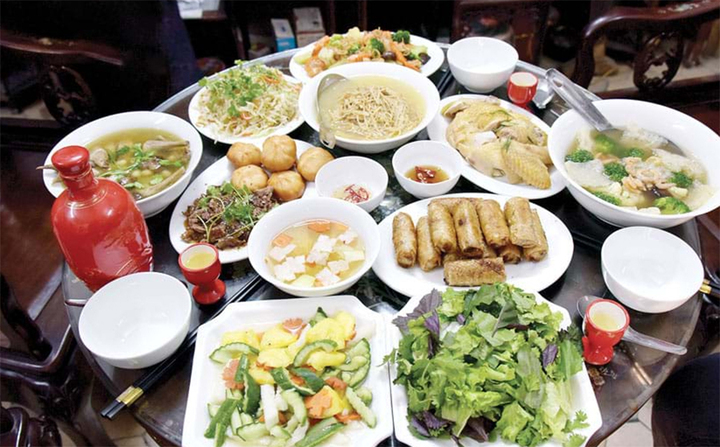
Bat Trang ceramic feast tray. (Photo: Nguoi Do Thi)
A traditional feast usually consists of 8 to 12 dishes, which are indispensable:
- Red gac sticky rice – a symbol of good luck and prosperity. Bat Trang spring rolls – elaborately wrapped and fried to a golden crisp.
- Boiled chicken with lime leaves – a popular dish, but it requires selecting good quality chicken and skillful boiling to ensure the meat is golden yellow and the skin is firm and glossy.
- Pork sausage and cinnamon-flavored sausage – symbols of completeness and abundance.
- Bamboo shoot soup, fish ball soup – delicate broths that harmonize the rich flavors of savory dishes.
- Braised fish, jellied meat, or braised pork in soy sauce – evoke a connection to rivers, waterways, and the land.
In addition, the people of Bat Trang also pay attention to desserts, often including sweet soup, sticky rice cakes, and small glutinous rice cakes, which both symbolize rice farming and carry profound symbolic meaning.
The feast is presented on plates and bowls made of Bat Trang ceramics, creating a rare harmony: delicious food – beautiful tableware – sacred space. This is the key difference that makes Bat Trang feasts unique and unmistakable.
Profound cultural value
Bat Trang ceramic feast trays not only serve culinary needs, but also:
- Community connection: During village festivals, pottery-making ancestral commemorations, or traditional New Year celebrations, families and clans prepare feasts together. Everyone works together to wrap cakes, cook sticky rice, and boil chicken, creating an atmosphere of unity and camaraderie.
- Preserving the custom of ancestor worship: Offerings are presented to ancestors and the village guardian deity, expressing gratitude to one's origins. This is a consistent cultural feature in the spiritual life of the Vietnamese people.
- Passing on skills and education: Adults guide their children and grandchildren on how to prepare and cook meals, passing on traditional recipes, thereby teaching them about filial piety and respect for family.
The Bat Trang pottery set meets all the criteria to be recognized as a National Intangible Cultural Heritage:
- Uniqueness: More than just a simple meal, the Bat Trang feast is a harmonious combination of cuisine and ceramics – two quintessential values of the craft village.
- Community spirit: Preparing feasts is closely linked to the shared life of the entire village, from weddings and ancestral worship ceremonies to traditional festivals.
- Inheritance: Through many generations, the custom of preparing feasts has been preserved and passed down, without fading away.
- Cultural symbolism: The feast reflects the Vietnamese philosophy of life - eating and drinking are linked to filial piety, harmony, and aesthetics.
This recognition not only affirms the value of traditional culture but also contributes to preserving and promoting the identity of Bat Trang pottery village, which is already world-renowned for its ceramics. In the trend of developing experiential tourism, the "Bat Trang feast" promises to become a unique tourism product. Visitors to the pottery village can not only watch pottery making and buy pottery, but also experience preparing and enjoying a traditional feast.
Vtcnews.vn
Source: https://vtcnews.vn/co-bat-trang-vua-thanh-di-san-van-hoa-phi-vat-the-quoc-gia-co-gi-hap-dan-ar960660.html

































































Comment (0)