

Many are concerned about the risk of goods from other countries evading origin regulations and falsely claiming to be Vietnamese products for export to the US to benefit from lower tariffs after President-elect Donald Trump officially returns to the White House in early 2025. However, according to experts and businesses, a trade war during the "Trump 2.0" era, if it occurs, will increase opportunities for Vietnamese goods.
Is the trade war restarting?
US President-elect Donald Trump recently announced that he may impose a 100% import tariff on goods from BRICS members, including China, if the group "threatens the position of the USD." Previously, Trump also threatened to impose a 25% import tariff on all goods from Mexico and Canada, and an additional 10% tariff on goods from China on his first day in office. Throughout his campaign, he also proposed a 10% import tariff on all products entering the US, with a potential 60-100% tariff on goods from China.
In fact, during his previous term (2017-2021), Trump increased import tariffs to 25% on $350 billion worth of goods from China, starting with solar panels and washing machines in 2018. This was followed by tariffs on steel and aluminum exports to the US, including those from allied countries. This year, the US further increased import tariffs to 100% on electric vehicles, 50% on solar panels, 25% on electric vehicle batteries, computer chips, and medical products; and plans to increase tariffs to 50% on semiconductors from China by 2025.
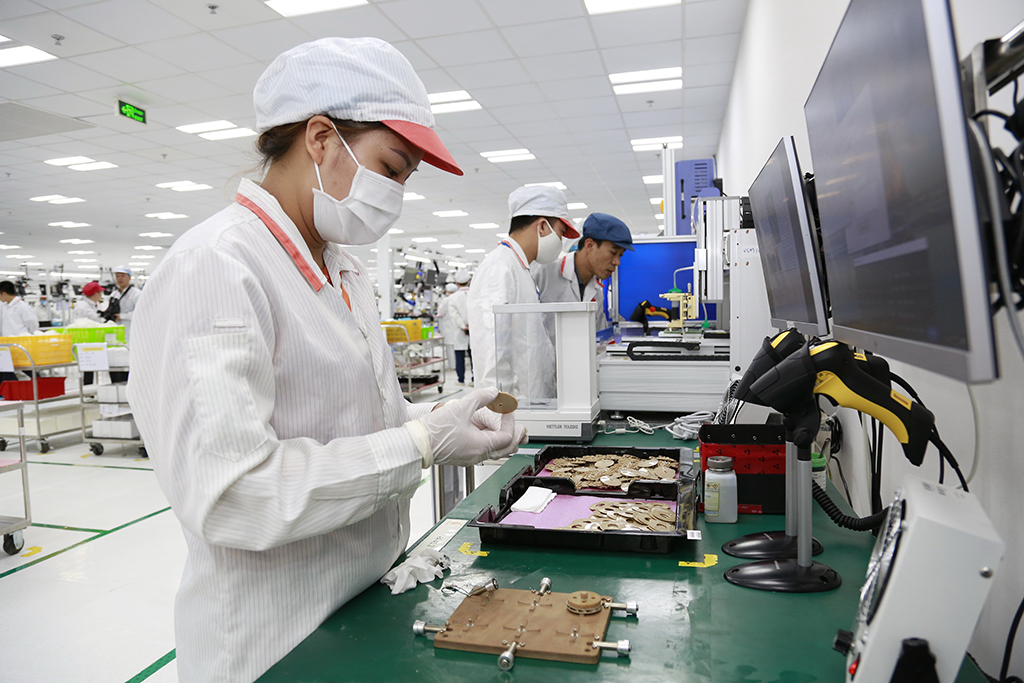
Electronic products are among the billion-dollar export items to the United States.
PHOTO: Pham Hung
Of course, China couldn't sit idly by and retaliated by increasing import tariffs on American soybeans and aircraft. In particular, last year, China launched a semiconductor war with the world's number one economy by announcing it would block public procurement contracts for Micron Corporation (USA) – a memory chip manufacturer – due to its failure to pass security assessments. This was followed by a security assessment requirement for Intel products circulating in China. Notably, a quarter of this corporation's total revenue comes from the world's second-largest economy. At the same time, from mid-2023, China began tightening controls on rare earth exports, restricting the export of eight types of gallium and six types of germanium for national security reasons. These are metals commonly used in chip manufacturing.
GRAPHICS: TUAN ANH
The first US-China trade war resulted in tariffs on approximately $550 billion worth of Chinese goods and $185 billion worth of US goods before culminating in a trade agreement in 2020. Now, on December 3rd, China officially announced a ban on the export of certain rare earth minerals to the US, marking a new escalation in the technology war between the two sides. This move demonstrates China's willingness to use supply chains to exert pressure, particularly by blocking exports of critical materials for weapons manufacturing and semiconductors to the US.
Economist Associate Professor Dr. Nguyen Thuong Lang commented: Data shows that the impact of tariffs during Donald Trump's first term was largely unclear on the US economy. However, import tariffs are a favorite tool of this leader, and the situation may be different in his second term. With experience and preparation, the new round of tariffs could be implemented quickly, decisively, and have a stronger impact on Chinese goods.
In his previous term, the US President spent nearly half a year consolidating and organizing his personnel. Now, although not yet official, he has already arranged most of the key personnel and built a sharp advisory team. Furthermore, at this point, his political acumen and understanding of partners are deeper and clearer after having had time to study and research. Therefore, imposing tariffs on goods from other countries, as announced by the President-elect, is highly likely to happen. This time, goods related to semiconductors, chips, and energy batteries may be prioritized for increased tariffs.
"However, it's important to note that the new US administration will consider how the tariffs will affect its own citizens. High import tariffs mean that American citizens will have to buy goods at higher prices; currently, goods produced in the US are always more expensive than imported goods before the tariffs were imposed. A recent study by the Peterson Institute for Economic Research shows that import tariffs imposed by President-elect Trump will cost each American family an additional $2,600 per year," Associate Professor Dr. Nguyen Thuong Lang analyzed.
Is there a risk of Vietnamese goods being unfairly affected?
According to experts, the risk of a renewed trade war is predicted to damage supply chains and increase global production costs. In particular, economies in the Asia-Pacific region will be impacted as they are major trading partners of both the US and China. Associate Professor Dr. Nguyen Thuong Lang analyzed: Vietnam is one of the countries with a large trade surplus with the US.
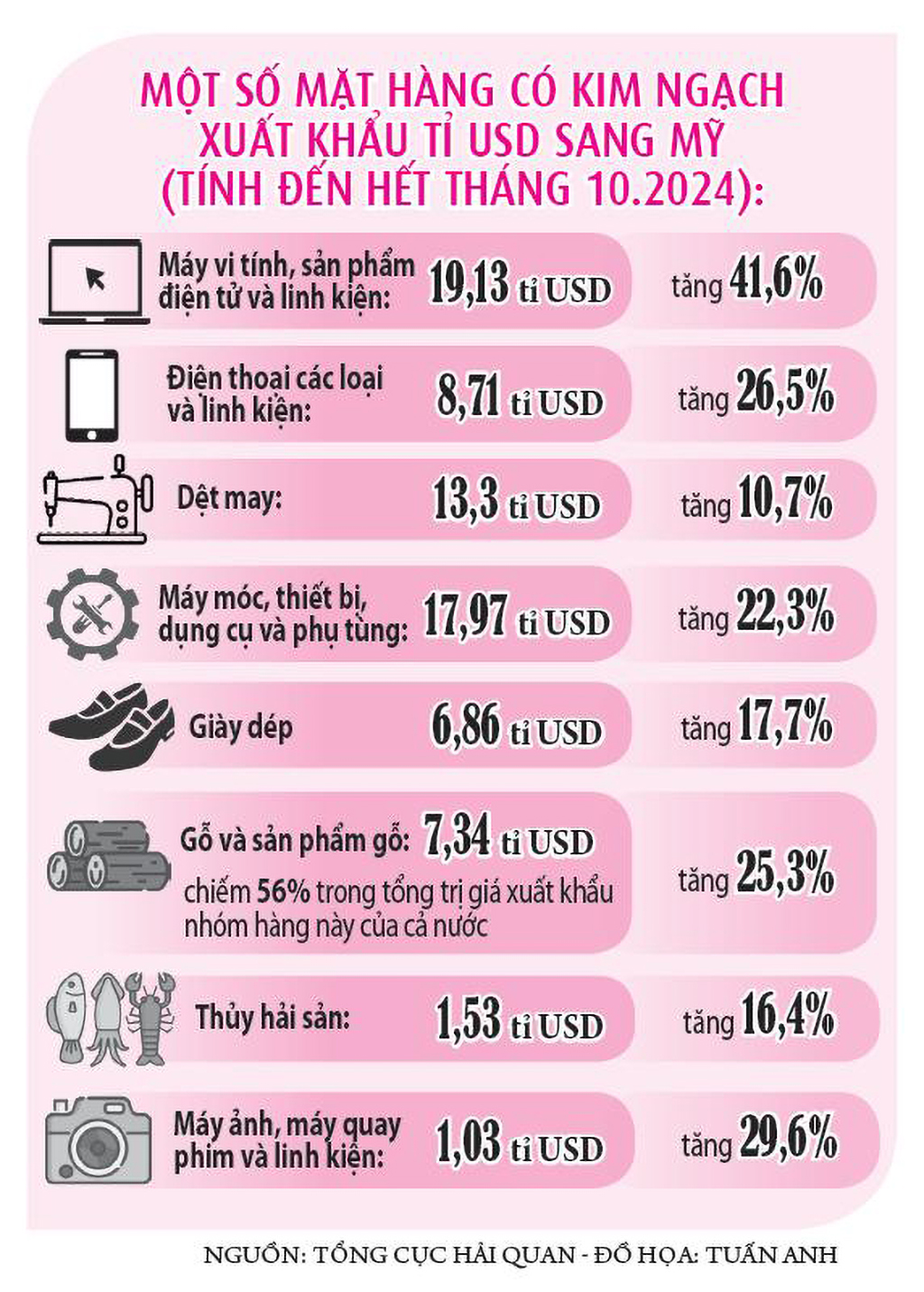
Specifically, the US currently accounts for 30% of Vietnam's total merchandise exports, an estimated increase of nearly 25% compared to last year. Vietnamese goods exported to the US have also been under intense scrutiny recently due to the large trade deficit. If the US pursues protectionist policies for its domestic production in the future, it may impose higher tariffs on goods from Vietnam. It is even more important to note that as Vietnamese exports to the US increase, imports from China to Vietnam are also rising sharply as we purchase raw materials for export production.
"The US has previously filed anti-dumping lawsuits against many imported goods from Vietnam. If the US-Vietnam trade balance is too large, the risk of being subjected to safeguard duties and anti-dumping measures is very high. In general, Vietnam will inevitably suffer the consequences of the US policy of imposing tariffs on imported goods from China. Among these, high-value export items such as seafood, textiles, and wood products will be affected if precautions are not taken," this expert warned.
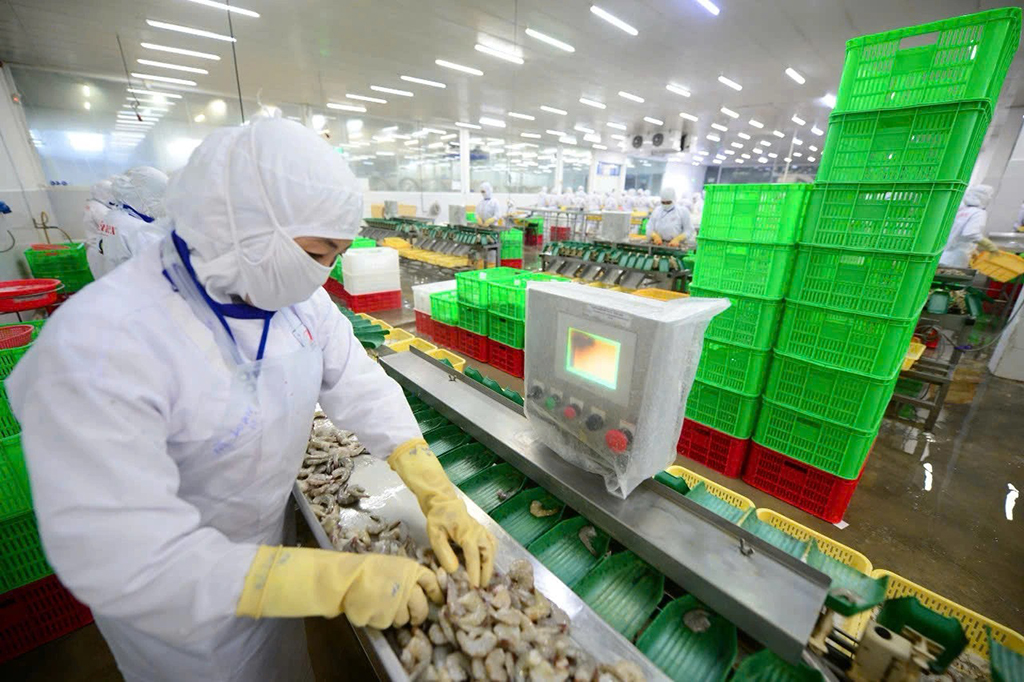
A second trade war, if it occurs, would create opportunities for many of Vietnam's key export products to the US and China.
PHOTO: Dao Ngoc Thach
Speaking to Thanh Nien newspaper, Ms. Le Hang, Director of Communications at the Vietnam Association of Seafood Exporters and Processors (VASEP), also commented: A trade war, if it occurs in the near future, could lead to a short-term increase in seafood imports into Vietnam as companies from other countries seek to avoid future tariffs. This is a predictable scenario. The possibility of Chinese companies trying to sell goods to the US or other countries before the tariff increase could lead to congestion and delays at major US ports. On the other hand, there could be a shift of Chinese seafood companies to other countries, including Vietnam, creating more challenges than opportunities, such as more intense competition for raw materials and potential damage to the reputation of Vietnamese products.
Mr. Nguyen Chanh Phuong, Vice Chairman of the Ho Chi Minh City Handicraft and Wood Processing Association, acknowledged: "The evasion of taxes by Chinese goods through Vietnam in the past may have occurred in many forms. We have seen waves of FDI from China, either through acquisitions of domestic businesses or through behind-the-scenes control. China is currently very strong in processing technology, mastering supply chains and building complete e-commerce systems. Therefore, in the short term, we can see both favorable and challenging situations. But in the long term, managing investment flows and supply chain shifts in the tax war between the two largest markets in the world could become very complicated."
However, the latest report from the Multilateral Trade Department (Ministry of Industry and Trade) states that there is little scientific evidence to suggest that Chinese goods are being diverted through third countries (including Vietnam) to avoid high import tariffs into the US market. During the previous term, the Trump administration imposed high tariffs on a range of products, targeting over 60% of Chinese goods, related to intellectual property rights. Data extending to 2023 also noted goods from Mexico and Vietnam. "But the signs are not significant enough to indicate a major trend. For example, for Vietnam, the value of goods imported from China and the value of goods exported to the US both showed relatively similar growth rates across all goods, not just those targeted by the US," the Multilateral Trade Department stated.
Opportunities for greater exports and FDI attraction.
On the other hand, experts and businesses also believe that "there is always opportunity in crisis." Mr. Nguyen Chanh Phuong stated: "Export orders for businesses are favorable, with many companies having production orders until mid-2025. Notably, the US market, which contributes more than 55% of the industry's total turnover, is recovering significantly. With the policy of imposing high tariffs on goods from China, it is likely that Vietnamese wood product exports to this market will increase in the near future."
Similarly, Mr. Vu Duc Giang, Chairman of the Vietnam Textile and Garment Association, analyzed: "The US is a major export partner of Vietnam's textile and garment industry with a turnover of over 10 billion USD/year, accounting for 40% of the total. Conversely, Vietnam is also importing about 38-39 agricultural products from the US. Among these, the Vietnamese textile and garment industry is importing and is the largest customer of the US cotton industry, supplying its spinning mills. With such close relationships, Vietnamese textile and garment businesses are confident in quickly responding to policy demands from other countries, including changes in US policy."
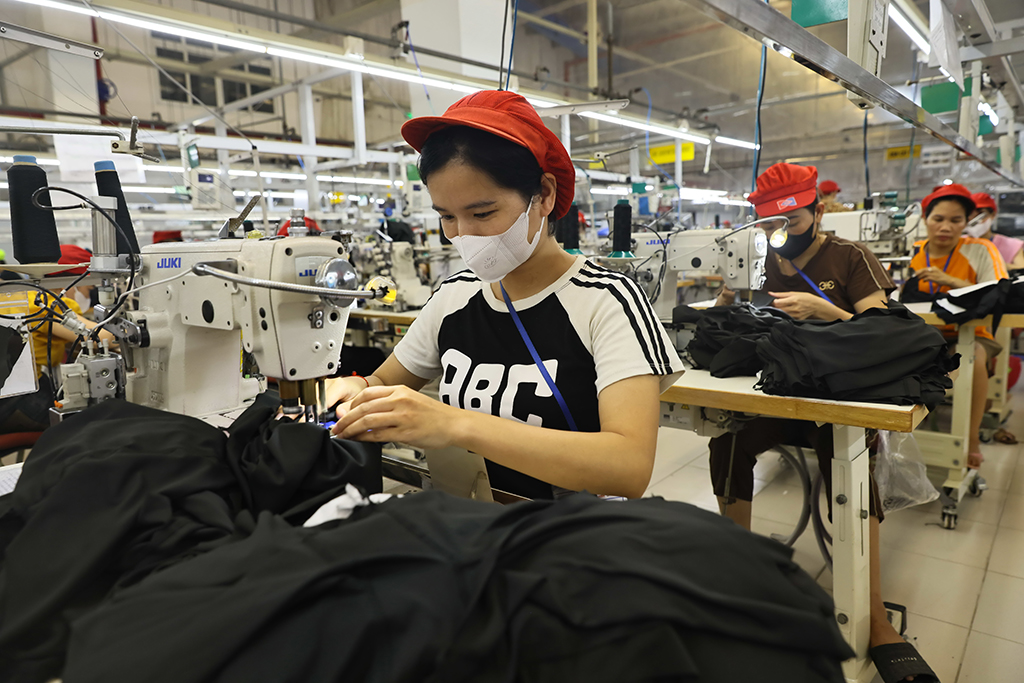
Textile and garment exports to the US are projected to remain strong under the new administration.
Photo: Ngoc Thang
Regarding seafood products, Ms. Le Hang also shared the same view. According to her, as the trade war intensifies, global supply chains may be disrupted, creating an opportunity for Vietnam to become a reliable alternative source for countries wanting to avoid high tariffs from the US, especially for seafood products. Therefore, Vietnam could be chosen as an alternative supplier in the global supply chain. Specifically, the increased cost of Chinese seafood products due to high tariffs could reduce supply from China, helping Vietnam increase its export market share to the US, especially for key products such as shrimp, pangasius, and tuna.
"If a trade conflict breaks out between the US and China and China reduces its seafood imports from the US, which is the world's largest seafood consumer market, this will be an opportunity for Vietnam in the high-end segment such as lobster, crab, and fresh seafood...", Ms. Le Hang commented.
Regarding investment, according to economist Professor Ha Ton Vinh, if a second trade war were to occur, Vietnam would have more advantages than disadvantages. The reason is that Vietnam is a country that has recently signed a comprehensive cooperation agreement with the US and is pursuing a decisive strategy to develop its semiconductor industry – a sector that the US urgently needs.
"China implemented a monetary policy in 2018-2019, allowing the yuan to depreciate against the USD when goods exported to the US were subject to tariffs. A cheaper currency made Chinese exports more affordable for overseas buyers, thus mitigating the impact of tariffs. This strategic currency devaluation may have helped its exports avoid significant damage from US tariffs. This time, China may apply that policy again, alongside other retaliatory measures related to rare earth minerals and semiconductors. For Vietnam, high value-added industries, advanced technology, semiconductors, chips, etc., are sectors we are aiming for in the future. These are sectors that the US needs for economic development. Therefore, escalating US-China trade tensions could help Vietnam attract a stronger influx of foreign direct investment (FDI). China is increasing investment in Vietnam, but the situation suggests attracting FDI from other US allied markets is also a possibility." Countries like South Korea, Taiwan, and Japan also showed an upward trend.
Thanhnien.vn
Source: https://thanhnien.vn/co-hoi-va-thach-thuc-cho-hang-viet-thoi-ky-trump-20-18524120423051012.htm


















![[Photo] Prime Minister Pham Minh Chinh holds a phone call with the CEO of Russia's Rosatom Corporation.](/_next/image?url=https%3A%2F%2Fvphoto.vietnam.vn%2Fthumb%2F1200x675%2Fvietnam%2Fresource%2FIMAGE%2F2025%2F12%2F11%2F1765464552365_dsc-5295-jpg.webp&w=3840&q=75)















































Comment (0)