

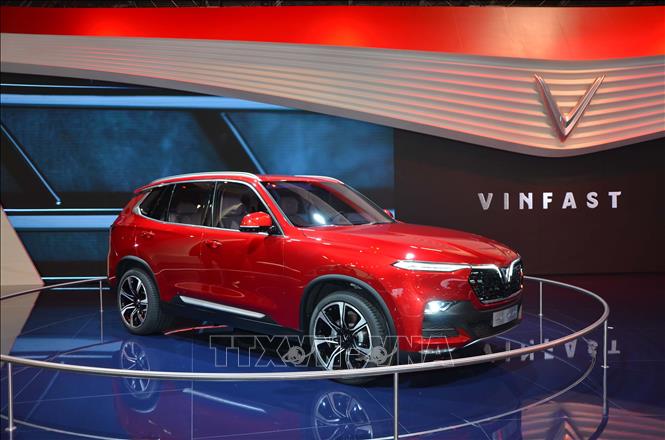
In November 2025, total market sales showed a slight increase compared to the previous month, but still reflected a clear differentiation between segments and supply. Consumer demand for vehicles continued to focus on SUVs, electric vehicles, and models imported from Indonesia, China, and Thailand – markets that hold the largest market share in ASEAN and the region.
Imported cars surge ahead, SUVs continue to dominate the market.
According to the VAMA report, November 2025 recorded total sales of 39,338 vehicles, a 4% increase compared to October but an 11% decrease compared to the same period last year. For the first 11 months of the year, VAMA member companies sold 328,669 vehicles, a 6.5% increase compared to 2024. Notably, while domestically assembled vehicles decreased by 3%, imported vehicles increased by 17% compared to the same period last year, marking a significant shift in market demand.
The passenger car segment led with 28,557 units sold, up 5%. SUVs continued to be the market's star, recording nearly 10,000 units sold in November, reflecting a growing preference for high-riding vehicles. The sedan, crossover, and MPV segments also saw positive sales figures, totaling over 24,600 units.
In the commercial and specialized vehicle group, slight fluctuations were recorded. Commercial vehicles reached 10,273 units, an increase of 1%, while specialized vehicles decreased by 3% to 488 units.
Experts point to three factors explaining why imported cars are superior: price advantage thanks to 0% import tax from ASEAN, continuously updated designs, and increased domestic production costs due to low localization rates.
Nguyen Minh Tuan, a customer residing on Truong Dinh Street in Hanoi , recently purchased an imported SUV. He shared: "I've been monitoring prices since the beginning of the year, but only decided to buy in November because of the significant price reduction. Imported SUVs have beautiful designs, lots of technology, and reasonable prices. Electric vehicles are also attractive, but there aren't many charging stations in my area, so I'm not yet confident about them."
According to a Kia sales consultant in Ha Dong ward, Hanoi, strong incentives are always needed during the year-end sales period, but this year the pressure is greater due to the attractiveness of imported and electric vehicles. Locally assembled cars are forced to offer deep discounts or generous accessory packages to retain customers.
Market feedback suggests that attractive pricing combined with a stable supply is the factor driving the return of car buying demand in the final months of the year – a period always considered the most important sales season.
Electric vehicles maintain growth momentum, VinFast sets new record.
November continued to see VinFast's breakthrough, with the company recording 23,186 electric vehicle deliveries – its highest level ever. Cumulatively over 11 months, VinFast has delivered 147,450 vehicles, solidifying its leading position in the Vietnamese automotive market.
The Limo Green model contributed 9,642 units, becoming the best-selling 7-seater MPV in the market. In addition, the VF 3, VF 5, VF 6, and VF 7 all experienced good growth, with the VF 3 continuing to lead the entire market in sales in 2025, with over 40,000 units sold.
TC Group, the manufacturer, assembler, and distributor of Hyundai, the second-largest brand in the market, achieved sales of 5,463 vehicles in November, a 3.8% increase. The Creta continued to be the brand's best-selling model with 1,236 units, followed by the Tucson and Accent. Year-to-date, Hyundai has sold 46,525 vehicles.
The hybrid segment recorded 1,340 vehicles in November, a slight decrease from the previous month but a 4% increase compared to the same period in 2024. Cumulatively over 11 months, hybrid sales reached 12,522 vehicles, a 49% increase, demonstrating a clear trend towards green and fuel-efficient vehicles.
Analysts predict that with fluctuating fuel costs and expanded policies encouraging electric vehicles, the green vehicle market will continue to be the main growth driver for Vietnam's automotive industry in 2026.
Car imports exceed 18,000 vehicles, with Indonesia and China increasing their market share.
According to statistics from the Customs Department, in November 2025, Vietnam imported 18,350 complete automobiles, an increase of 12.3% compared to October and the highest level in the last three months. The value reached nearly 445 million USD, showing a strong increase in supply to serve the year-end shopping season.
The three largest car export markets to Vietnam are: Indonesia with 7,189 vehicles, mainly MPVs and mass-market cars; China with 5,001 vehicles, leading in export value with $157.3 million; strong in SUVs, hybrids, and electric vehicles; and Thailand with 4,783 vehicles, focusing on pickup trucks and 7-seater SUVs.
In the first 11 months of the year, Vietnam imported 191,142 vehicles, an increase of 19% in volume and 30.6% in value compared to the same period in 2024. Simultaneously, domestic businesses imported up to $570 million worth of components in November to support production, and it is predicted that domestic assembly capacity will increase sharply in the final month of the year.
Domestic automobile production and assembly in November reached 50,900 vehicles, a 24.1% increase and the highest level since the beginning of the year. However, businesses acknowledge significant competitive pressure from imported and electric vehicles, especially in the context of rising component prices and rapidly changing market demand.
According to industry experts, with total sales of the Vietnamese automotive market reaching 522,644 vehicles after 11 months and based on the typical strong increase in consumption in December (usually accounting for 9-12% of the total annual sales), the market is likely to reach approximately 580,000-600,000 vehicles, equivalent to a growth rate of 7-10% compared to 2024.
Source: https://baotintuc.vn/kinh-te/cuoc-dua-cuoi-nam-xe-dien-but-pha-xe-nhap-ap-dao-20251211112613493.htm


![[Photo] General Secretary and President To Lam and the President of the Philippines hold talks.](https://vphoto.vietnam.vn/thumb/1200x675/vietnam/resource/IMAGE/2026/06/01/1780286997787_anh-man-hinh-2026-06-01-luc-11-09-43.png)


![[Photo] Reception to welcome General Secretary and President To Lam and his wife on their State visit to the Philippines](https://vphoto.vietnam.vn/thumb/1200x675/vietnam/resource/IMAGE/2026/06/01/1780295488620_vna-potal-chieu-dai-chao-mung-tong-bi-thu-chu-tich-nuoc-to-lam-va-phu-nhan-tham-cap-nha-nuoc-toi-philippines-8798060-7855-jpg.webp)









































































Comment (0)