

1. Recently, off-season dragon fruit in Binh Thuan has fetched relatively high prices, around 20,000 VND/kg (white) and over 30,000 VND/kg (red). At these prices, farmers who have a successful harvest are sure to make a considerable profit.
However, the reality shows that this year's off-season crop in Binh Thuan province has been marked by prolonged drought, causing thousands of hectares of crops, including dragon fruit, to suffer from water shortages. For example, Mr. Lam Hong Diep's family in Tan Lap commune (Ham Thuan Nam district), who owns 5,000 dragon fruit trees near Ta Mon lake, shared: "At the beginning of the off-season, due to the lack of irrigation water, we had to limit the use of artificial lighting. In addition, the dragon fruit trees were infected with pests and diseases, resulting in very low yields. To sustain the trees during the drought, we used the meager amount of water from a drilled well and a drip irrigation system, mulching the base of the dragon fruit trees with straw. But the drought is severe; if we continue without water, we fear we won't be able to save the trees, which are gradually wilting."
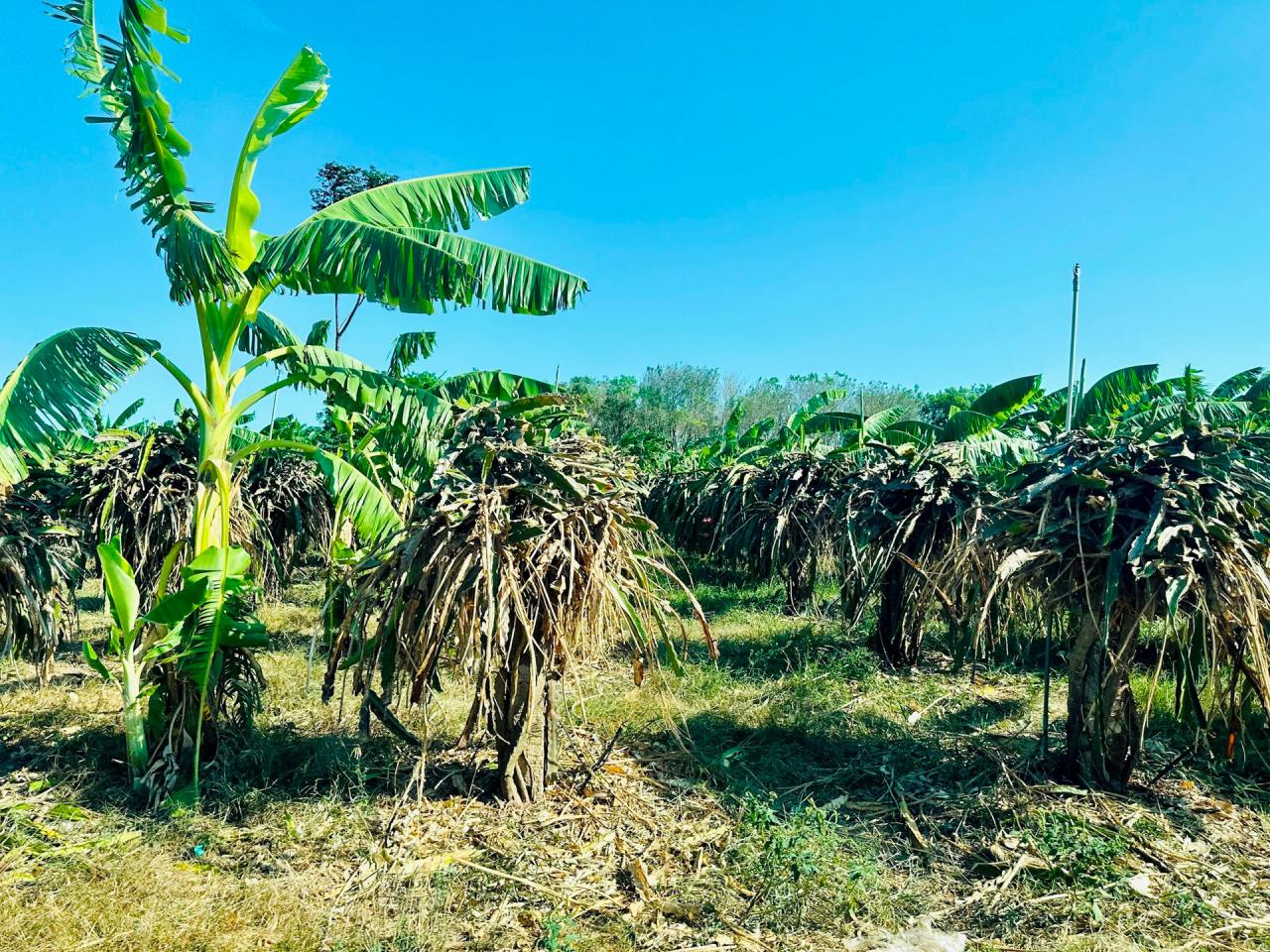
Meanwhile, Ms. Tran Thi Mong Linh from Hong Son commune (Ham Thuan Bac district) said that after a long period of unsuccessful dragon fruit cultivation and fluctuating prices leading to losses, her family recently removed hundreds of dragon fruit plants and renovated the land to switch to rice cultivation…
Undeniably, dragon fruit production has played a crucial role in the development of the agricultural and rural economy over the years. However, the value of the dragon fruit industry in the province has tended to decrease year after year in recent years. Currently, the province has approximately 26,498 hectares of dragon fruit, with a production of about 570,560 tons per year. Compared to the area at the end of 2020, when Binh Thuan had 33,730 hectares of dragon fruit with a production of about 650,000 tons per year, this shows a decline in both area and production.
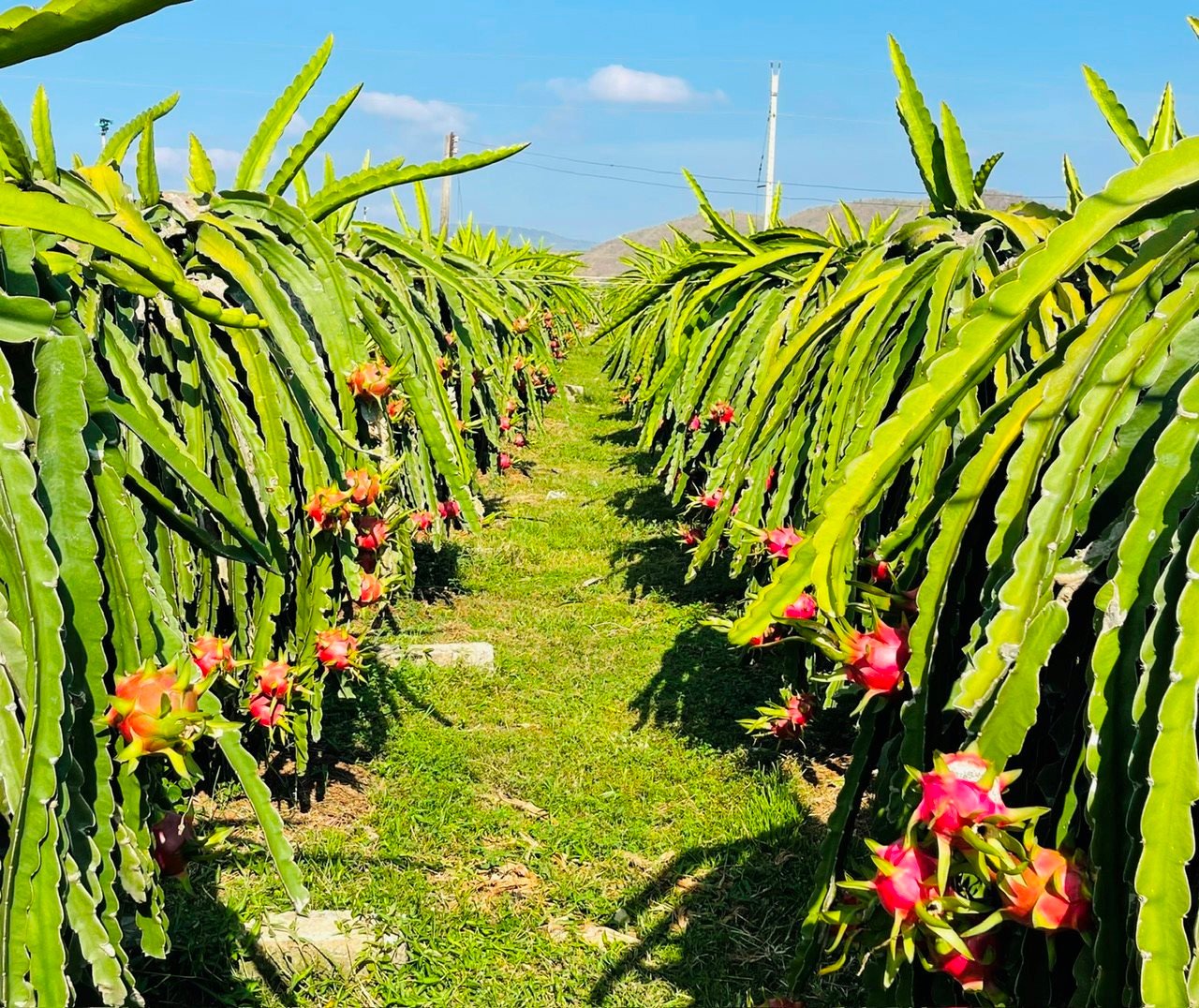
According to the provincial agricultural department, one of the reasons for this decline is the impact of the Covid-19 pandemic, which has made dragon fruit exports difficult at times. Fluctuating and low dragon fruit prices have negatively affected farmers' production. Therefore, from 2021 to the present, dragon fruit growers have either abandoned or switched to other crops.
Besides, many shortcomings and limitations have been pointed out, such as the small-scale and fragmented nature of production, and the lack of large-scale production areas. Furthermore, a large volume of competitive products has not yet been created, the consumer market is unstable, mainly relying on the Chinese market, and prices are volatile. A key issue is the lack of sustainable linkages between producers and export businesses, the shortage of preliminary processing facilities, and technological limitations in the production of processed and deep-processed products. Simultaneously, the impact of climate change, the emergence of various pests and diseases, and the degeneration of dragon fruit varieties are affecting investment in production…
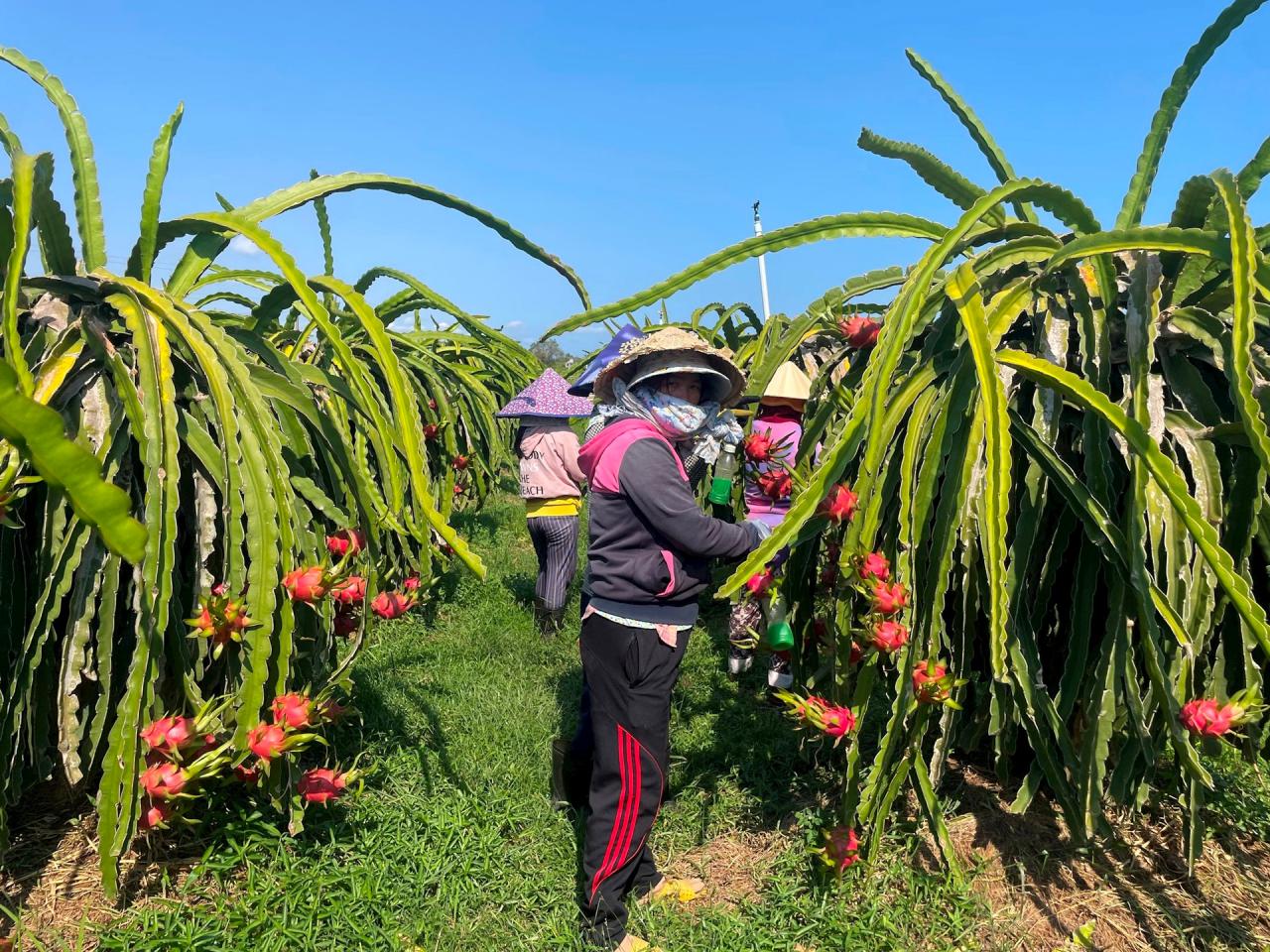
2. In late April 2024, the Provincial People's Committee officially approved the Sustainable Dragon Fruit Development Project until 2030. The goal is to stabilize the cultivated area and develop dragon fruit production towards large-scale, concentrated, ecological, clean, safe, and environmentally friendly commodity production, capable of withstanding diseases and climate change. Simultaneously, it aims to closely link with domestic and international markets, contributing to job creation, higher income, increased export value, and the promotion of the Binh Thuan dragon fruit brand. Alongside this, it seeks to establish production linkages and market access to stabilize the livelihoods of dragon fruit farmers, contributing to the development of green agriculture, ecological agriculture, circular agriculture, and emission reduction.
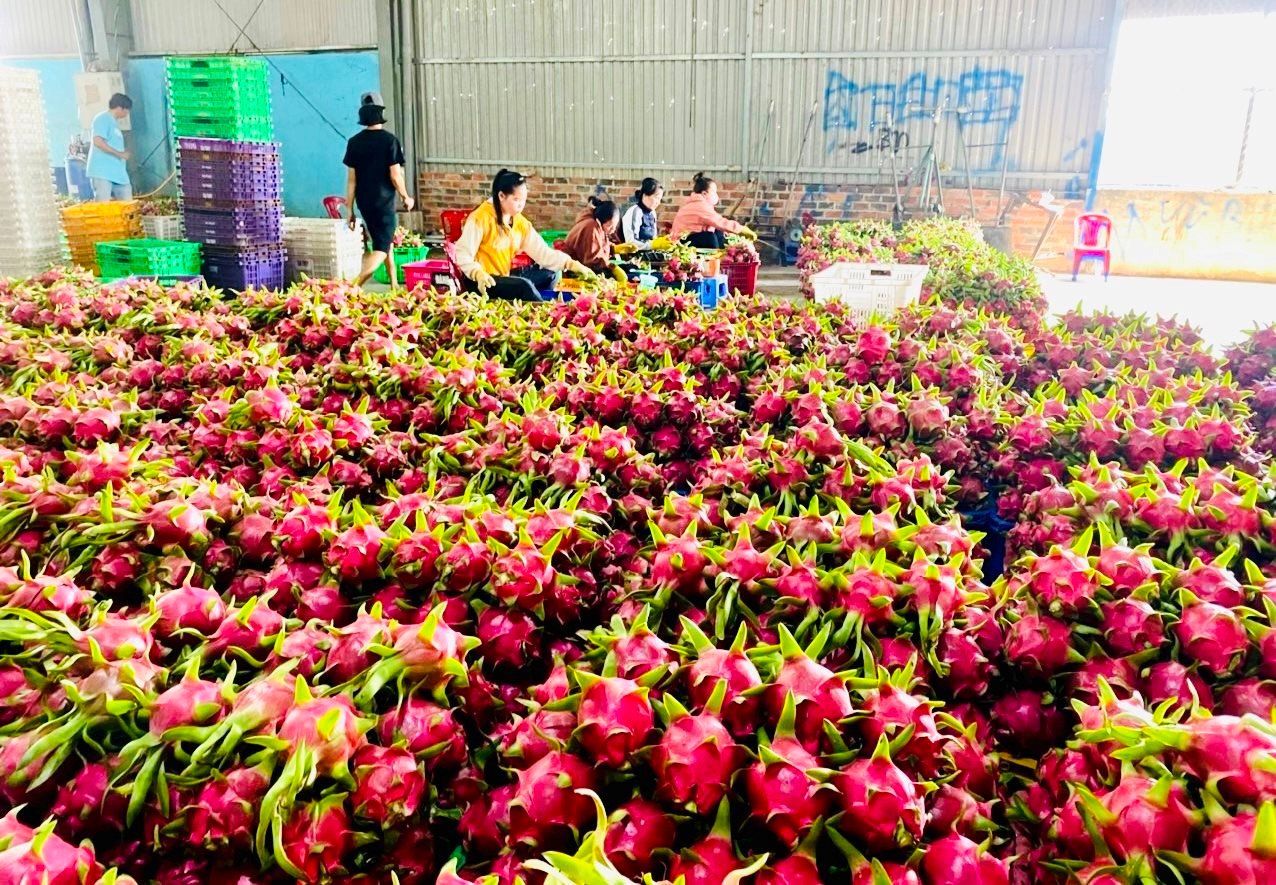
According to the objectives of this project, from the current dragon fruit area of nearly 26,500 hectares in the province, by 2030, Binh Thuan will stabilize the dragon fruit area at approximately 25,000 hectares (concentrated in key districts, including Ham Thuan Nam 12,600 hectares, Ham Thuan Bac 5,000 hectares, Bac Binh 3,000 hectares, Ham Tan 2,000 hectares...). Thus, in the coming years, the province's dragon fruit area will continue to be "purified," reducing by more than 1,000 hectares, including replacing old, low-yielding, and low-quality dragon fruit orchards.
The project also aims for approximately 70% of the value of products produced through cooperative and collaborative arrangements. The percentage of dragon fruit cultivation area applying good agricultural practices (VietGAP and equivalent) is targeted at around 70-75% of the total area. Furthermore, it aims to establish a processing plant for products derived from dragon fruit…
To achieve these goals, the Provincial People's Committee has set out many tasks and solutions. These include communication and unifying awareness and action regarding dragon fruit development. Strengthening the Binh Thuan Dragon Fruit Association to enhance its role as a representative and bridge with provincial leaders and relevant departments and agencies, ensuring its capacity to manage geographical indications; promoting and introducing products, finding partners and customers to expand and exploit export markets to countries that have protected geographical indication trademarks. Simultaneously, focusing on developing the domestic dragon fruit market, maintaining stability in traditional markets, and expanding and diversifying export markets… With high determination and the introduction of the Sustainable Dragon Fruit Development Plan until 2030, it is time for Binh Thuan dragon fruit to require the concerted efforts of the entire political system, gradually "purifying" the cultivated area and focusing on quality to meet the increasingly competitive market.
K. HANG
Source





















![[Photo] Prime Minister Pham Minh Chinh holds a phone call with the CEO of Russia's Rosatom Corporation.](/_next/image?url=https%3A%2F%2Fvphoto.vietnam.vn%2Fthumb%2F1200x675%2Fvietnam%2Fresource%2FIMAGE%2F2025%2F12%2F11%2F1765464552365_dsc-5295-jpg.webp&w=3840&q=75)














































Comment (0)