

Many concerns have been raised regarding Clause 10 of Article 56.
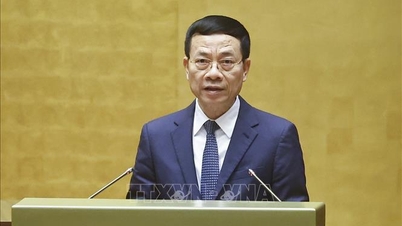
Speaking in the Assembly Hall, delegate Ta Thi Yen - a member of the National Assembly delegation from Dien Bien province - basically agreed with the draft Road Transport Law presented to the National Assembly this time. After studying the National Assembly Standing Committee's monitoring report on the topic "Implementation of policies and laws on ensuring traffic order and safety from 2009 to the end of 2023," it was found that road transport activities have developed strongly in recent years, meeting over 90% of the total volume of passenger transport and over 70% of the total volume of goods transport, with nearly 86,000 transport businesses having been granted licenses to operate road transport...
Representative Ta Thi Yen argued that this is a very large resource of society that we need to pay attention to when drafting this Law.
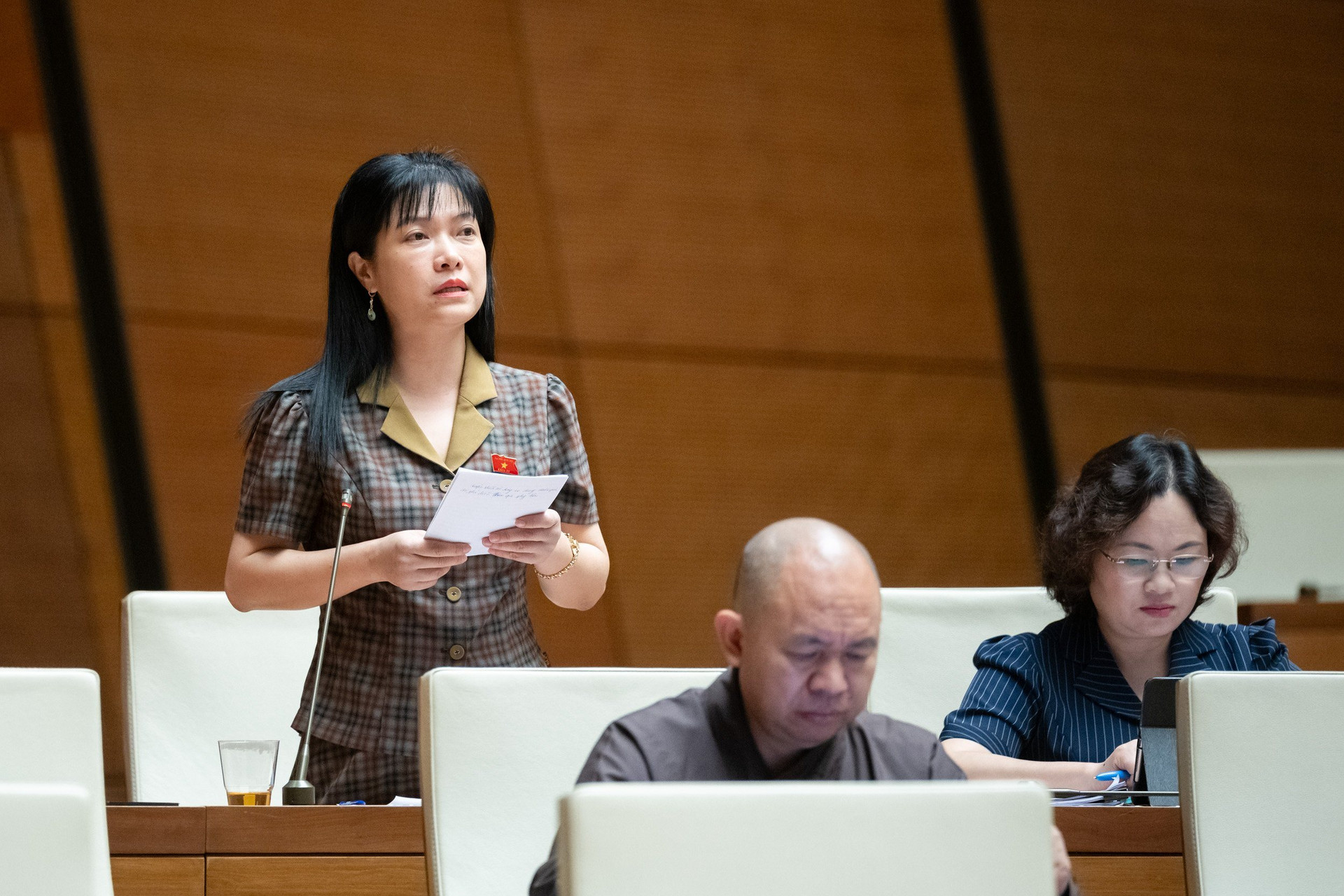
Regarding Clause 10 of Article 56, the draft Law stipulates that for contract-based passenger transport businesses, transport businesses may only sign passenger transport contracts with those who need to rent an entire vehicle, meaning that each contracted vehicle can only carry one passenger or a single group of passengers.
Representative Ta Thi Yen argued that the drafting committee's introduction of this regulation aimed to prevent the practice of operating inter-provincial passenger transport services on fixed routes under the guise of contract vehicles. However, this inadvertently restricts a popular form of passenger transport in many other countries: the model of sharing contract vehicles with fewer than 10 seats through online ride-hailing platforms.
Representative Ta Thi Yen noted that this model offers many benefits to society, as it can maximize the number of people traveling in a single trip, thus significantly reducing traffic volume on the roads and partially resolving traffic congestion.
Therefore, the delegates proposed that the drafting agency and the agency in charge of verification review and adjust Clause 10 of Article 56 in a way that both controls the situation of "illegal taxis and unauthorized bus stops" while still creating conditions for ride-sharing services with vehicles of less than 10 seats to operate.
Representative Ta Thi Yen argued that this is also a practical way to implement the Party's guidelines and the State's policies in gradually limiting private vehicles, developing public passenger transport, reducing greenhouse gas emissions, and using social resources rationally and effectively for rapid and sustainable national development.
Commenting on Clause 10, Article 56 of the draft Law, Representative Nguyen Anh Tri - from the Hanoi National Assembly Delegation - suggested that only passenger cars that need to rent an entire vehicle for a trip should be regulated.
According to delegate Nguyen Anh Tri, contract-based passenger transport business is a type of passenger transport business that uses passenger cars or four-wheeled motor vehicles to transport passengers under a written or electronic transport contract between the passenger transport business unit and the transport hirer who needs to hire the entire vehicle, including the driver.
The delegate proposed amending this provision to stipulate that only passenger cars are permitted to enter into transportation contracts requiring the hiring of an entire vehicle (including the driver). For other types of passenger vehicles that are not passenger cars, the regulation would only require transportation contracts in paper or electronic form to provide flexibility in the practical implementation of the law.
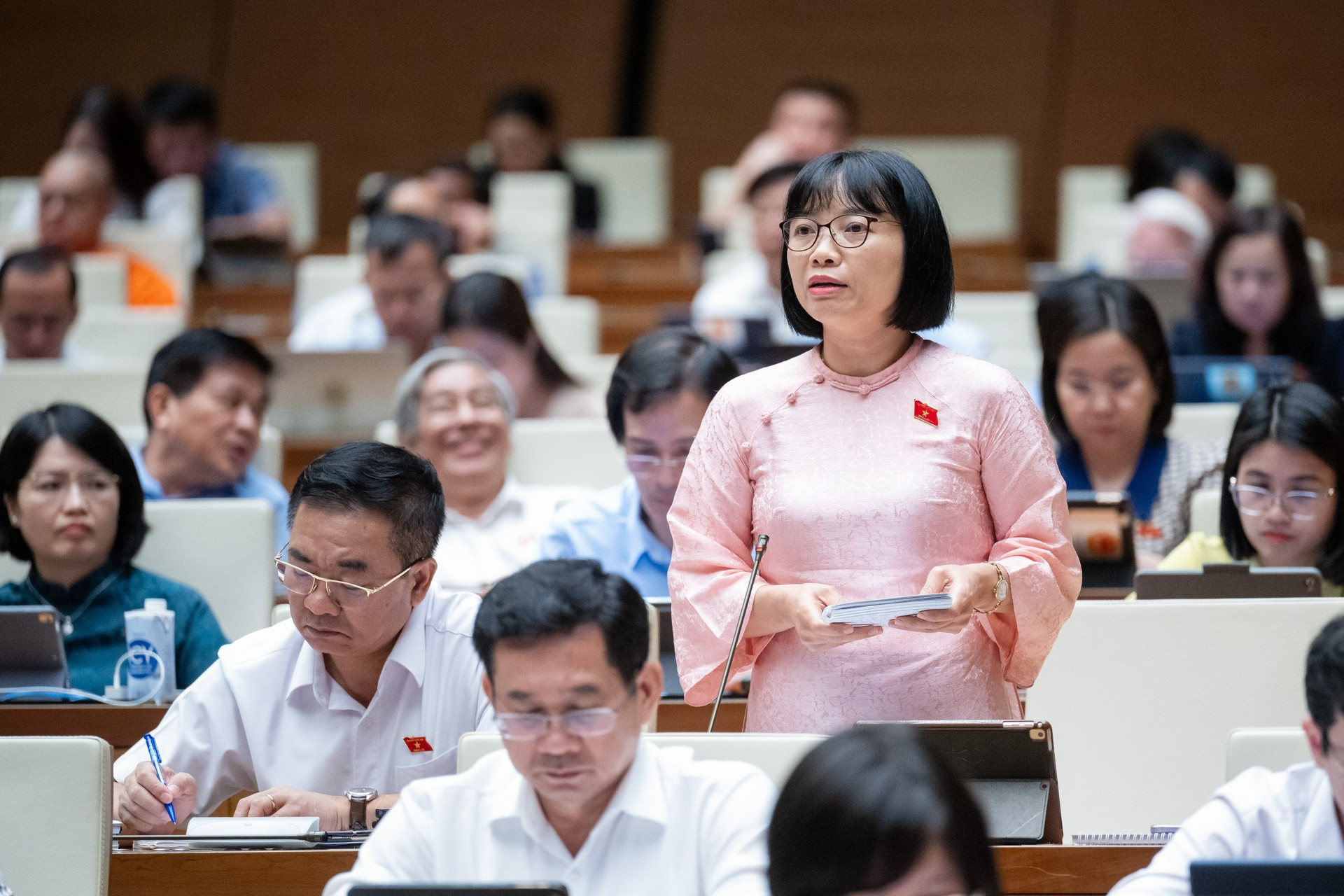
Also commenting on Clause 10, Article 56 of the draft Law, Representative Nguyen Thi Viet Nga - from the Hai Duong Provincial National Assembly Delegation - stated: Regarding passenger transport business under contract, as stipulated in Clause 10, Article 56, it is a type of passenger transport business using passenger cars or four-wheeled motor vehicles to transport passengers under a paper or electronic contract between the passenger transport business unit and the transport hirer who needs to hire the entire trip, including the driver.
According to Representative Nguyen Thi Viet Nga, the above regulation needs clarification on several points: Regarding four-wheeled motor vehicles for transporting passengers. The draft Road Law defines four-wheeled motor vehicles for transporting passengers as a type of vehicle other than a car, to distinguish them from cars. However, National Standard 6211 of 2003 defines a car as a type of vehicle with four or more wheels, not running on rails, and used for transporting passengers.
Therefore, according to Representative Nguyen Thi Viet Nga, the concept of a four-wheeled vehicle with an engine refers to a car according to national standards, so including the concept of a four-wheeled passenger vehicle with an engine is redundant. Representative Nguyen Thi Viet Nga suggested that a more accurate definition should be considered and added to the definition.
Regarding regulations on written or electronic transport contracts, Representative Nguyen Thi Viet Nga stated that the specific regulations on these two types of contracts do not encompass all forms of passenger transport contracts in practice. Contracts can be in written form, electronically, via text message, or even verbally. Therefore, Representative Nguyen Thi Viet Nga proposed adding the phrase "and other forms of contracts as prescribed."
According to Representative Nguyen Thi Viet Nga, Article 119 of the Civil Code (2015) stipulates three forms of civil contract conclusion: oral, written, or by specific actions. Civil transactions concluded electronically in the form of data messages are also considered written contracts. This concept of contract has been consistently used in other laws, such as Article 14 of the Labor Code (2019), which stipulates oral, written, and specific action-based contract forms.
According to Representative Nguyen Thi Viet Nga, regarding those who need to rent an entire vehicle for a trip, this provision does not fully cover all passenger transport rental needs. In reality, contract-based passenger transport business also includes those who rent vehicles but not for the entire trip.
Therefore, Nguyen Thi Viet Nga suggested that this draft Law should include adjustments and management for this type of transportation, removing the phrase "those who need to rent the entire vehicle" from the draft and entrusting the Government with the authority to regulate specific issues in detail to manage this type of passenger transportation business.
Consider regulating "transportation carried out directly by animals"
Commenting on Article 56 of the draft Law, National Assembly delegate Nguyen Hai Dung from Nam Dinh province suggested that the activity of "transportation carried out directly by animals" should be reviewed and adjusted.
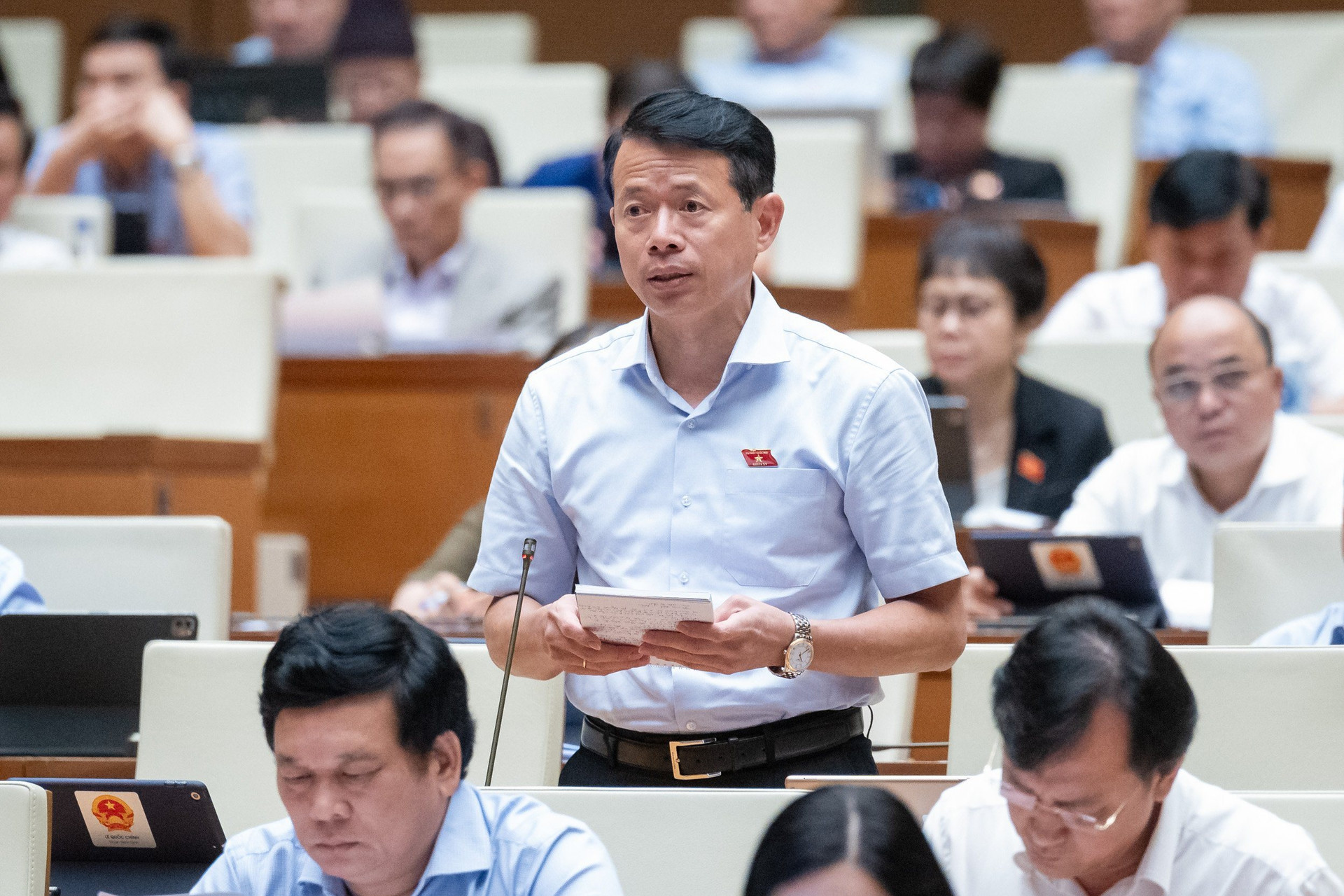
According to the delegates, Clauses 1 and 2 of Article 56 define road transport as the use by organizations and individuals of rudimentary and motorized vehicles to transport people or goods on roads. This means that the draft Law only regulates transport activities using rudimentary and motorized vehicles, and does not regulate transport activities carried out directly by animals.
“In Report 839/BC-UBTVQH15 explaining, accepting, and revising the draft Road Law, there is an explanation of the opinions of National Assembly deputies on this issue. The report refers to Article 35 of the draft Law on Road Traffic Order and Safety. Specifically, rudimentary road transport vehicles include animal-drawn vehicles. However, National Assembly deputies have suggested whether consideration should be given to regulating animals directly involved in transportation in this draft Law,” Deputy Dung clarified.
In addition, the delegates noted that in the northern mountainous regions, people still use pack horses to transport goods, which greatly reduces human labor. This is also a form of road freight transport. Therefore, it is suggested that the direct transportation of goods by animals should be considered for regulation in this draft Law.

Speaking at the discussion session, delegate Nguyen Phuong Thuy - from the Hanoi City National Assembly delegation - expressed her agreement with many of the contents of the report explaining, receiving feedback, and revising the draft Road Law by the National Assembly Standing Committee.
Commenting on the draft Law, delegates argued that Clause 2, Article 12, which stipulates the ratio of land allocated for road infrastructure in urban areas compared to urban construction land, states: The ratio of land allocated for road infrastructure in urban areas compared to urban construction land, but excluding the portion of road works built underground or on rivers and lakes, must ensure the following regulations: Special urban areas: 18% to 26%; Type I urban areas: 16% to 24%; Type II urban areas: 15% to 22%; Type III urban areas: 13% to 19%; Type IV urban areas: 12% to 17%; Type V urban areas: 11% to 16%.
And according to Clause 3, Article 12, urban areas with special characteristics have a ratio of land allocated for road infrastructure compared to urban construction land. This applies to urban areas with national borders, urban areas of type III, IV, and V; urban areas on islands, areas planned to become type V urban areas which are administrative centers of districts in areas with particularly difficult socio-economic conditions, areas planned to become urban areas, and other centrally-administered urban areas…
Representative Nguyen Thi Phuong Thuy argued that such regulations are too detailed and contain provisions that are not in line with the current and future realities of many localities. Therefore, she suggested that the draft Law should not specify in such detail the ratio of land allocated for road infrastructure in urban areas compared to urban construction land.
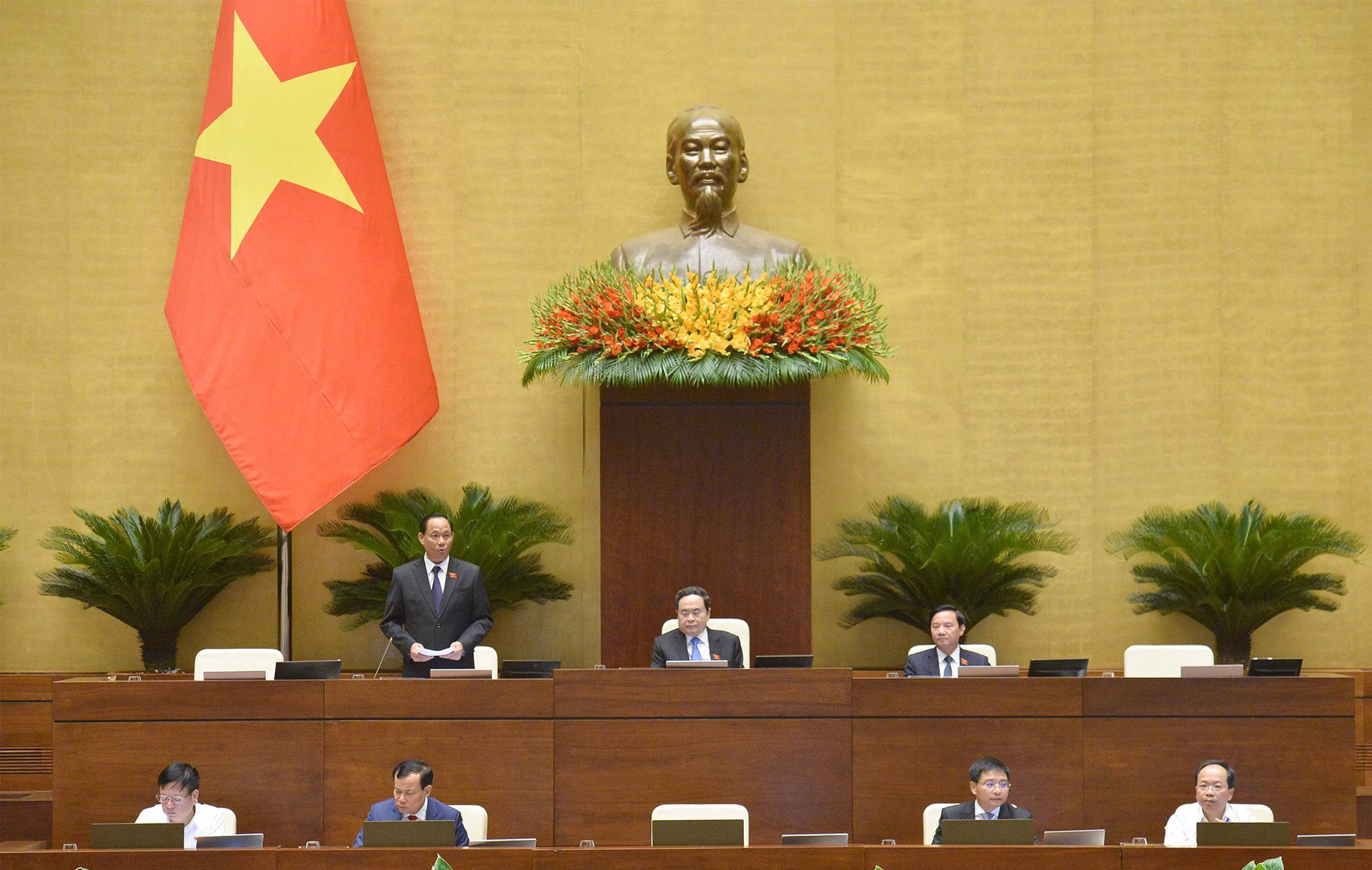
Concluding the discussion session, Vice Chairman of the National Assembly Tran Quang Phuong stated that there had been 23 contributions, all of which were based on clear, profound, and comprehensive political, legal, and practical grounds, demonstrating the high level of concern and responsibility of National Assembly deputies towards the draft law that has been incorporated and revised.
Deputy Speaker of the National Assembly Tran Quang Phuong emphasized that all opinions have been fully recorded and documented. The Secretary General of the National Assembly will compile a report to send to National Assembly deputies and forward it to the reviewing and drafting agencies for further study, incorporation, and revision of the draft law. The Standing Committee of the National Defense and Security Committee should promptly coordinate with relevant agencies to fully incorporate and explain the opinions of National Assembly deputies at the session, finalize the draft law, and report to the Standing Committee of the National Assembly for comments.
Article 56. Road transport operations
1. Road transport activities refer to the use by organizations and individuals of non-motorized and motorized vehicles to transport people and goods on domestic and international roads. Road transport activities include commercial transport operations and internal transport operations.
2. Domestic road transport activities are activities carried out by organizations and individuals using rudimentary vehicles and motorized vehicles.
This law is for the transportation of people and goods by road within the territory of Vietnam.....
10. Contract passenger transport business is a type of transport business.
Passengers using passenger cars, four-wheeled passenger vehicles with motors.
The basis for passenger transport under written or electronic transport contracts between transport businesses.
Passenger transport with a hirer who needs to rent the entire vehicle, including hiring a driver.Excerpt from Article 56 of the draft Road Law
Source: https://baotainguyenmoitruong.vn/dai-bieu-quoc-hoi-lam-ro-nhieu-noi-dung-trong-quy-dinh-ve-hoat-dong-van-tai-duong-bo-374446.html









































































Comment (0)