

In an extraordinary session on June 30, the 193 member states of UNESCO approved the US proposal to rejoin the organization with 132 votes in favor and 10 against.
The United States withdrew from UNESCO in 1984, under the administration of President Ronald Reagan, and then rejoined in 2004.
However, the US government 's relationship with UNESCO became strained in October 2011, when members of the organization voted to accept Palestine as a member.
This move angered the United States and its close ally Israel, forcing the Barack Obama administration to halt funding for the organization. In 2017, President Donald Trump announced that his country would withdraw entirely from UNESCO, accusing the organization of bias and anti-Israel sentiment. The US and Israel subsequently officially left UNESCO at the end of 2018.
"Shaping UNESCO's agenda"
U.S. officials said the decision to return was driven by concerns that China is filling the void left by Washington in UNESCO's policymaking, particularly in setting standards for artificial intelligence and technology education worldwide.
The U.S. has stood by and watched as Beijing exerted its influence through a number of UNESCO soft power mechanisms, including the World Heritage Committee.
Although this committee is best known for its role in designating and protecting cultural sites, Ashok Swain, a professor of Peace and Conflict Studies at Uppsala University in Sweden, says it actually plays a very important role.
"It has a huge impact on tourism and the economy, and it can be controversial when designating disputed or contested areas," Swain said.
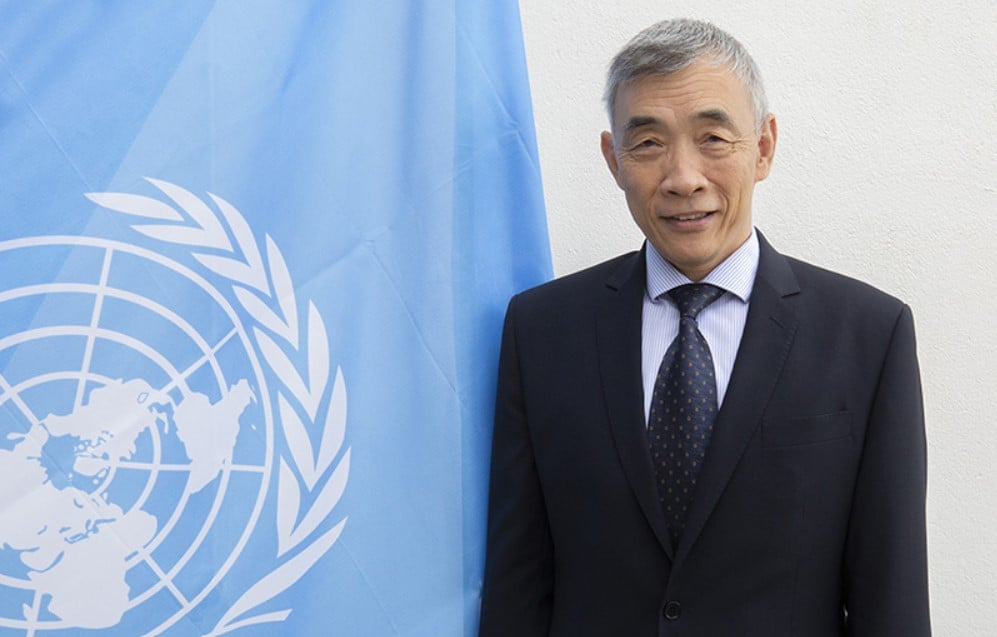
Mr. Xing Qu, a Chinese diplomat, was appointed Deputy Director-General of UNESCO in 2018. Photo: UNESCO
The professor cited the example of the committee's 2018 decision to recognize the ancient city of Hebron in the West Bank as a Palestinian World Heritage Site, which provoked outrage from Israel.
“And when China held the chairmanship from 2021 to 2022, this committee recommended that the world’s largest coral reef, the Great Barrier Reef in Australia, should be added to the list of ‘endangered’ reefs due to the severe impacts of climate change and ocean warming,” Swain said.
According to Swain, Sydney has strongly opposed the move, arguing that it risks costing the country thousands of jobs and leaving a significant dent in tourism revenue, which is crucial for the nation.
Following the US withdrawal, China increased its contribution to UNESCO to approximately $65 million, becoming the largest contributor to the organization's annual budget.
In March 2018, UNESCO appointed Xing Qu, a Chinese diplomat, as its deputy director-general. Since then, 56 Chinese heritage sites have been protected by the World Heritage Committee, making China the second most protected country in the world, after Italy.
John Brian Atwood, an American diplomat and former administrator of the U.S. Agency for International Development, warned that countries like China and Russia “are actively involved in trying to shape UNESCO’s agenda.”
Atwood pointed to Beijing's efforts to move UNESCO's Office for International Education to Shanghai, and its request for the agency to sign a cooperation agreement with the Belt and Road Initiative – a global project that some analysts fear could significantly expand China's power.
"A political and diplomatic victory"
According to U.S. Under Secretary of State for Administration and Resources John Bass, UNESCO is actively establishing standards for science and technology teaching worldwide.
"Therefore, if we are truly serious about competing with China in the digital age, we cannot afford to be absent any longer," Bass asserted.
U.S. Secretary of State Antony Blinken also supported this view. “I strongly believe we should return to UNESCO once again, not as a gift to UNESCO, but because what is happening at UNESCO really matters,” Blinken said.
"They are researching the rules, norms, and standards for artificial intelligence. We want to be a part of that," said Blinken.
According to Swain, although UNESCO's policy documents are merely reference materials, they still hold immense ideological importance. "UNESCO plays a subtle but crucial role in shaping the world's education and culture," he explained.
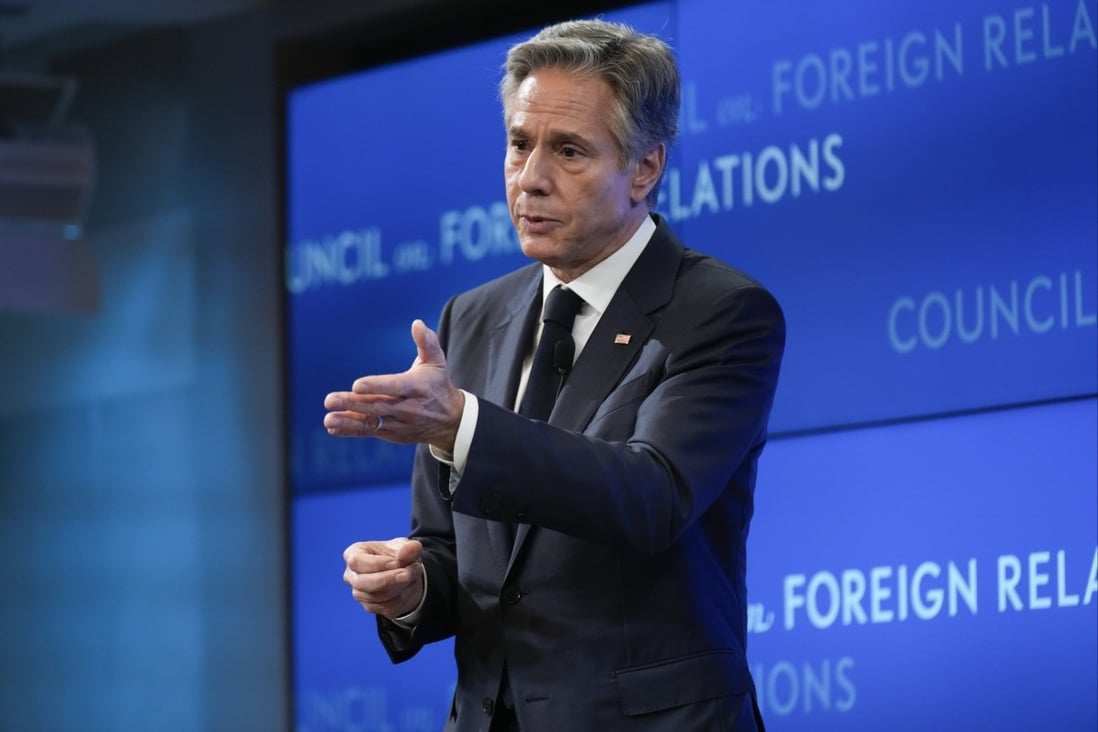
The US wants to participate in UNESCO's research process on rules, norms, and standards for artificial intelligence, according to US Secretary of State Antony Blinken. (Photo: SCMP)
In the case of artificial intelligence, Swain argues that the danger the U.S. might face is that China “has very different views on issues such as democracy and human rights.”
“America’s ideological interests and commitment to them would be challenged if China gained overall control over how AI rules and regulations are formulated. I think that’s a problem America definitely needs to be concerned about,” Swain asserted.
Re-engaging with UNESCO is also a goal of the Biden administration as they seek to rebuild alliances with international organizations.
Biden would hail the rejoining of UNESCO as a hard-fought political and diplomatic victory. In December 2022, his administration attempted to pass a $1.7 trillion federal spending bill through the U.S. Congress with bipartisan support.
The bill includes a clear statement that the U.S. government will seek to re-engage with UNESCO to “counter Chinese influence.”
The bill allocated over $600 million in overdue membership fees that the U.S. had owed to UNESCO before withdrawing from the organization in 2017. Full repayment of these overdue membership fees now allows the U.S. to return as a full member without delay.
This news will benefit UNESCO financially, which has an annual operating budget of $534 million. Previously, the US contributed approximately $80 million annually before withdrawing from the organization .
Nguyen Tuyet (Based on France 24, The Economist, Middle East Monitor)
Source

![[Photo] Closing Ceremony of the 10th Session of the 15th National Assembly](/_next/image?url=https%3A%2F%2Fvphoto.vietnam.vn%2Fthumb%2F1200x675%2Fvietnam%2Fresource%2FIMAGE%2F2025%2F12%2F11%2F1765448959967_image-1437-jpg.webp&w=3840&q=75)


![[Photo] Prime Minister Pham Minh Chinh holds a phone call with the CEO of Russia's Rosatom Corporation.](/_next/image?url=https%3A%2F%2Fvphoto.vietnam.vn%2Fthumb%2F1200x675%2Fvietnam%2Fresource%2FIMAGE%2F2025%2F12%2F11%2F1765464552365_dsc-5295-jpg.webp&w=3840&q=75)

































![[OFFICIAL] MISA GROUP ANNOUNCES ITS PIONEERING BRAND POSITIONING IN BUILDING AGENTIC AI FOR BUSINESSES, HOUSEHOLDS, AND THE GOVERNMENT](https://vphoto.vietnam.vn/thumb/402x226/vietnam/resource/IMAGE/2025/12/11/1765444754256_agentic-ai_postfb-scaled.png)





































Comment (0)