

Many rivers are polluted beyond acceptable limits.
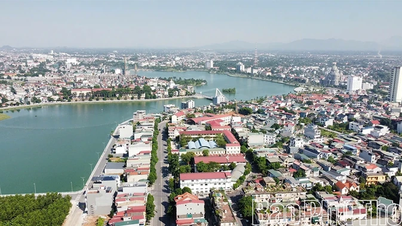
The Phan River originates from the Tam Dao mountain range, flowing through Vinh Yen city and several districts of Phu Tho province. It is an important water source for irrigation and flood control. However, according to a report by the Vinh Phuc Department of Agriculture and Environment (now the Phu Tho Department of Agriculture and Environment), for many years the river has been under significant pressure from untreated domestic wastewater, industrial wastewater, wastewater from craft villages, and agricultural chemical residues.
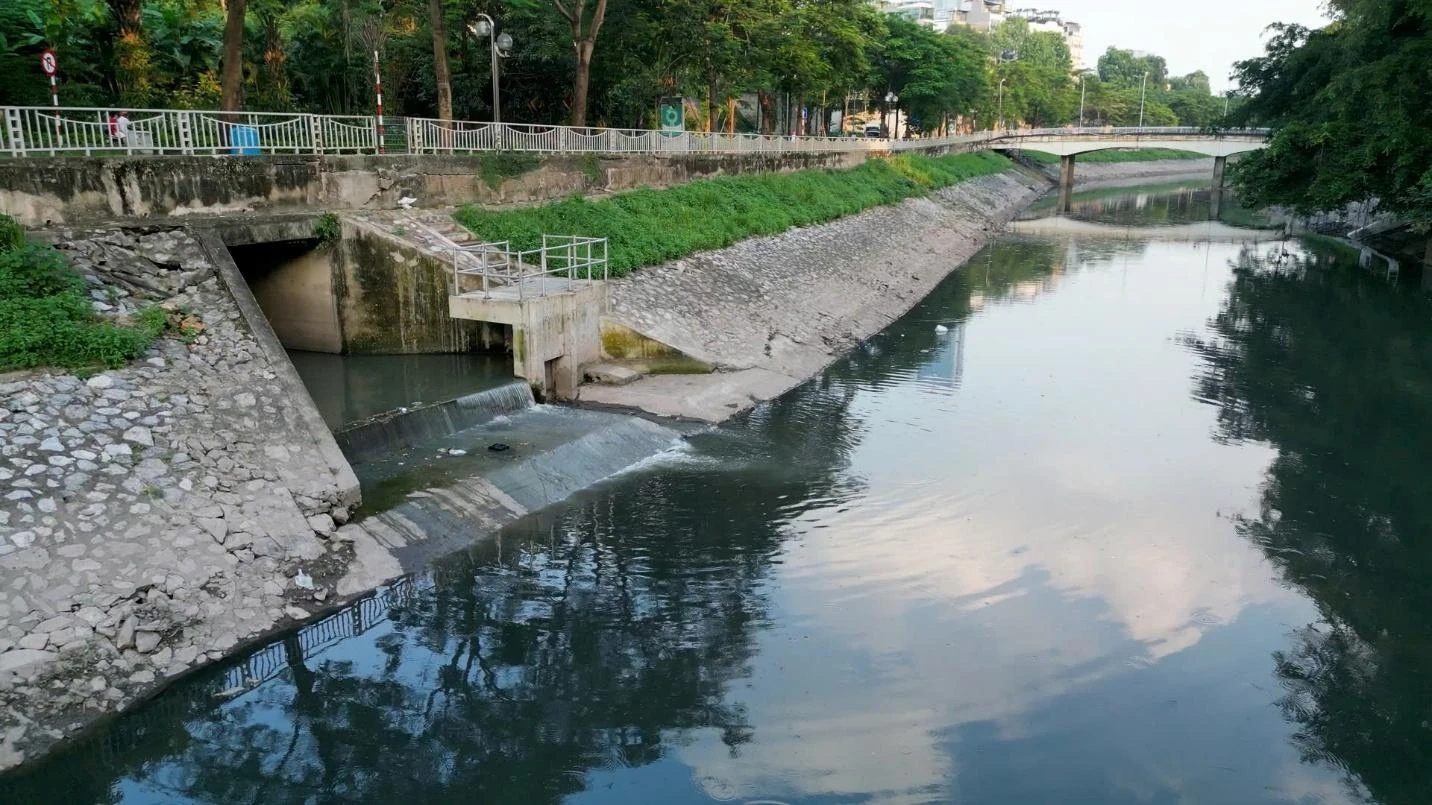
Some rivers in our country are severely polluted.
According to research by the Institute of Environmental Science and Technology (Hanoi University of Science and Technology) within the framework of the project "Integrating climate change resilience and environmental protection for the development of green cities" led by the Department of Environment, Ministry of Agriculture and Environment, many sections of the Phan River have exceeded their carrying capacity, especially in the Vinh Yen urban area. Dam Vac – an inner-city lake – also has limited self-cleaning capacity, especially during the dry season.
Monitoring results from the Project show that parameters such as ammonia, nitrite, and heavy metals at many points exceed the standards of QCVN 08-MT:2023/BTNMT, posing potential risks to public health and the ecosystem. Some sections are no longer able to receive more wastewater without proper treatment to meet standards.
This situation is not only occurring in Phu Tho but also in many cities where the project is being implemented, such as Ninh Binh, Hue, and Ha Tinh . In Ninh Binh, according to the August 2025 report on environmental quality in the Northern region by the Department of Environment, the Nhue-Day river basin is the most severely polluted area, with water quality ranging from poor to very poor.
The national environmental status report for the period 2016-2020 by the Ministry of Natural Resources and Environment (now the Ministry of Agriculture and Environment) shows that many sections of rivers belonging to various river systems such as the Cau, Nhue-Day, Huong, To Lich, and Kim Nguu rivers have very low water quality indices (WQI ≤ 30), reflecting severe and prolonged pollution levels that require urgent improvement solutions.
Assessing load capacity is an urgent requirement.
Assessing carrying capacity plays a central role in water resource management. It forms the basis for determining the maximum discharge threshold for each river section; zoning and delineating river sections that still have receiving capacity or have exceeded their capacity. This is crucial in controlling pollution and protecting water quality. The assessment results help management agencies determine the maximum load the river can receive, providing a basis for granting discharge permits, adjusting development plans, and limiting environmental overload. Simultaneously, it supports the identification of polluted river sections, prioritizing restoration, and allocating appropriate resources. It is also an important tool for localities to respond to climate change, ensure water security, and promote sustainable development of the river basin.
In Phu Tho, the QUAL2K dynamic model was applied to simulate the carrying capacity of the Phan and Dam Vac rivers with parameters such as DO, BOD, Ammonia, Nitrate, and Phosphate. The results allowed for the clear identification of overloaded river sections, thereby proposing treatment methods, wastewater discharge zoning, and the construction of appropriate environmental infrastructure. This represents a shift from reactive response to pollution to proactive control before pollution occurs.
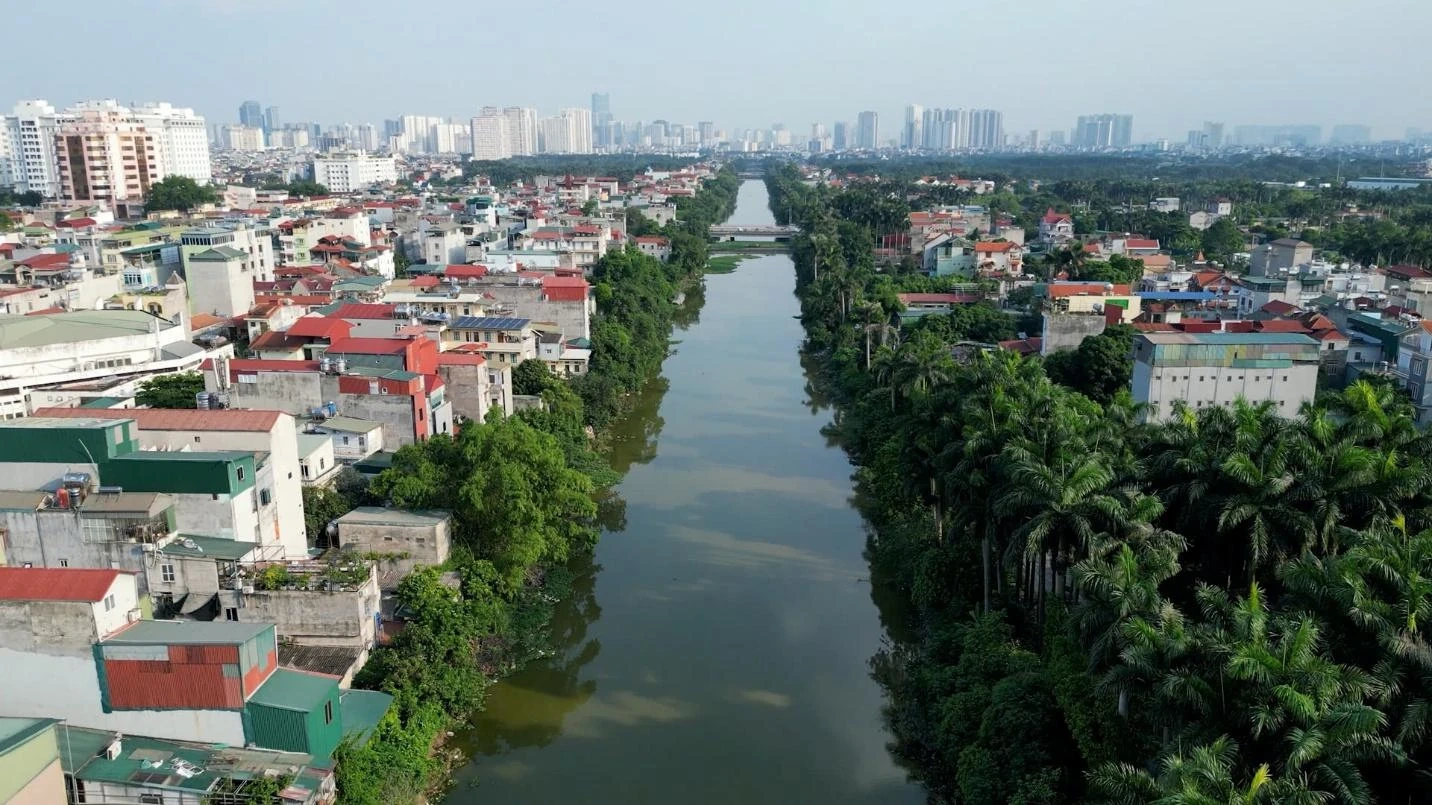
Experts recommend the early issuance of unified technical guidelines on assessing the carrying capacity of rivers.
In the context of rapid urbanization, without assessing and managing the carrying capacity, pollution control will only be a short-term solution, insufficient to "save" rivers that are being killed by untreated wastewater.
The assessment of rivers and lakes needs to be expanded nationwide.
International experience shows that carrying capacity assessment has become a mandatory management tool. In the United States, the regulatory framework for "maximum allowable total load" is implemented under the Clean Water Act, helping to determine the pollution receiving capacity of a river and setting maximum discharge levels for each source.
Japan employs a coordinated policy at both the central and local levels. Assessment of carrying capacity is linked to GIS mapping and pollution dispersion modeling to identify “priority discharge zones.”
The European Union implemented the Framework Directive on Water, requiring member states to conduct comprehensive assessments of water quality, identify targets, and develop management plans on a six-year cycle. This fosters cross-border coordination in river basin management, particularly in transboundary river systems such as the Danube.
Countries such as India, Malaysia, and Thailand have also adopted the Water Quality Index (WQI) to assess water quality in an easily understandable and accessible way for the community, while using automated monitoring systems and GIS technology to identify pollution hotspots.
In Vietnam, the assessment of river carrying capacity has been regulated and initially implemented in some localities. However, modeling capacity is limited, data is not synchronized, there is no unified technical guidance, and no interconnected national database.
Experts from the project "Integrating Climate Change Resilience and Environmental Protection for Green Urban Development" recommend the early issuance of unified technical guidelines on carrying capacity assessment, linked to socio-economic development planning and environmental licensing. Simultaneously, a national database integrating water quality, emission sources, and modeling results should be established; the pilot program for integrated river basin management should be expanded to urban areas; local modeling and data analysis capabilities should be strengthened; and international cooperation in training and technology transfer should be promoted.
Assessing carrying capacity is not just a technical process, but a long-term management strategy that helps restore river ecosystems, ensure water security, and lay the foundation for green, sustainable urban development.
If the carrying capacity is not assessed and managed soon, many other rivers will follow the same path, becoming unlimited wastewater receptacles, losing their self-purification ability, and leading to serious environmental and social consequences.
Source: https://baophutho.vn/danh-gia-kha-nang-chiu-tai-song-ho-giai-phap-phat-trien-do-thi-xanh-244005.htm



















































































Comment (0)