

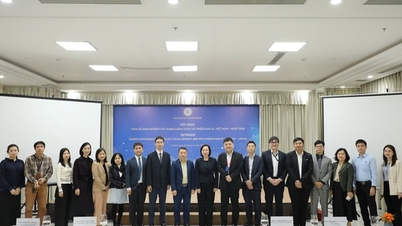
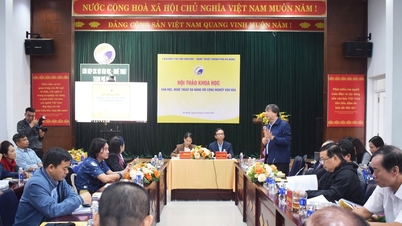
In the context of digital transformation, the application of information technology (IT) to auditing is a mandatory and inevitable trend globally, applicable to the State Audit (SA) as well as auditing enterprises. Deputy Director of the Department of IT, SAV Pham Huy Thong shared at the seminar "Strategic breakthrough - steady steps towards the future of digital auditing", organized by the Auditing Newspaper on the morning of December 5.

For the State Audit Office, the application of IT is even more important. Mr. Thong analyzed that in recent times, the workload of auditors has increased significantly. According to the roadmap, in the period of 2021 - 2026 and towards 2030, the State Audit Office will focus on operational audits and environmental audits. The change in the local government model from three levels to two levels has increased the number of audit points, creating a huge workload for regional State Audit Offices. At the same time, the pressure to complete local budget audits before June 30 every year requires the State Audit Office to have technological solutions to optimize work efficiency.
On the other hand, the State Audit is strongly transforming its auditing methods following the world trend - shifting from post-audit to pre-audit, from sample audit to comprehensive audit. This helps improve the quality of audit reports, but the increased workload requires the application of IT. For these reasons, the State Audit identifies IT application and digital transformation as one of the three strategic pillars in the coming time.
Not only for the State Audit, auditing enterprises also promote digital transformation. Deputy General Director of PwC Vietnam Do Duc Hau informed that the unit has built, applied and deployed many generations of auditing software. 100% of audits must be performed through auditing software; basically 100% of audit records have been digitized and only very few paper documents/records are retained. Each year, the unit conducts over 2,000 different audits. Thanks to the application of AI in analyzing, monitoring, improving the control system and measuring the quality indicators of auditing enterprises, timely warnings have been issued or timely handling measures have been taken.
However, digital transformation and IT application in auditing activities still face difficulties. Mr. Pham Huy Thong confirmed that although the State Audit Office is very convenient in connecting data with ministries, departments and branches, such connection poses many risks to safety, security and confidentiality. Another difficulty is infrastructure. To apply AI to auditing activities requires a very strong infrastructure, especially servers to run AI applications, but this takes time and must be implemented very carefully. In addition, the lack of good experts and leading personnel in the field of IT is also a barrier.
Putting people at the center
Citing international experience, Mr. Do Duc Hau said that for an auditing agency or an auditing firm to overcome challenges and optimize the value brought by the digital transformation process and AI application, building a strategy and roadmap is not enough. Organizations need to ensure three core elements, starting with placing the human factor at the center of all changes.
“No matter how much technology develops, the ultimate responsibility still belongs to the auditor. No technology or AI can replace human responsibility for audit reports.” Emphasizing this, Mr. Hau said that humans must always play a central role; only when the IT team and auditors possess high capacity, thinking, and expertise can they take full advantage of the advantages brought by AI. To do so, there needs to be strong investment in human resources, from high-quality recruitment to specialized training programs to ensure smooth coordination between auditing and technology.
In parallel, there needs to be a strong investment in IT infrastructure. Instead of designing AI programs individually, which is very expensive and has potential security risks, the audit agency must build a comprehensive, seamless system throughout the entire audit process.
Another important factor is that any AI tool that is applied must be absolutely reliable, that is, it must be trained on high-quality data sets and updated regularly. Therefore, the audit agency or audit firm needs to establish a formal, strict process for developing, testing, approving and regularly updating AI tools.
According to the roadmap, from 2027 to 2030, the entire auditing industry will deploy IT applications in auditing operations. Mr. Pham Huy Thong confirmed that the Department of Information Technology has proactively completed the technical construction of 5 AI Agents. Currently, the Department is coordinating with the industry's professional units to train and coach and will put them into application early next year.
The State Audit Office has also approved the Digital Transformation and AI Application Project in the auditing industry, which will start in 2026 and end in late 2027. This project will design an overall architectural strategy for building a data warehouse for the entire industry and integrating AI Agents for specific professional operations.
Source: https://daibieunhandan.vn/dau-tu-manh-cho-nguon-nhan-luc-kiem-toan-so-10399438.html

![[Photo] National Assembly Chairman Tran Thanh Man attends the VinFuture 2025 Award Ceremony](/_next/image?url=https%3A%2F%2Fvphoto.vietnam.vn%2Fthumb%2F1200x675%2Fvietnam%2Fresource%2FIMAGE%2F2025%2F12%2F05%2F1764951162416_2628509768338816493-6995-jpg.webp&w=3840&q=75)

![[Photo] 60th Anniversary of the Founding of the Vietnam Association of Photographic Artists](/_next/image?url=https%3A%2F%2Fvphoto.vietnam.vn%2Fthumb%2F1200x675%2Fvietnam%2Fresource%2FIMAGE%2F2025%2F12%2F05%2F1764935864512_a1-bnd-0841-9740-jpg.webp&w=3840&q=75)






























































































Comment (0)