

Continuing the agenda of the 5th Session, on the morning of May 31st, the National Assembly held a plenary discussion on the supplementary assessment of the results of implementing the socio-economic development plan and the State budget for 2022; and the situation of implementing the socio-economic development plan and the State budget in the first months of 2023.
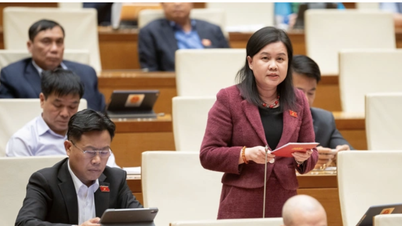
Delegate Bo Thi Xuan Linh ( Binh Thuan delegation) highlighted the difficulties facing the education sector, such as: Many educational facilities were built a long time ago, have small classrooms, and do not meet the regulations on classroom size standards, yet lack the resources to renovate or expand their structures, while the number of students continues to increase; and the shortage and surplus of teachers at the general education level.
Therefore, the delegates suggested that the Ministry of Education and Training pay attention to advising the Government to continue effectively implementing policies related to the development of education in ethnic minority and mountainous areas, and areas with particularly difficult socio-economic conditions; especially the policy of supporting textbooks for students from poor, near-poor, and disadvantaged households, in order to create learning conditions, maintain student enrollment, improve the quality of education and the intellectual level of people in mountainous and ethnic minority areas.
The delegates also noted that the problems of school violence and child abuse are on the rise. Delegate Bo Thi Xuan Linh proposed that the Government and relevant ministries and agencies should have policies and focus on raising awareness, educating, and supporting families to work together to prevent school violence and child abuse.
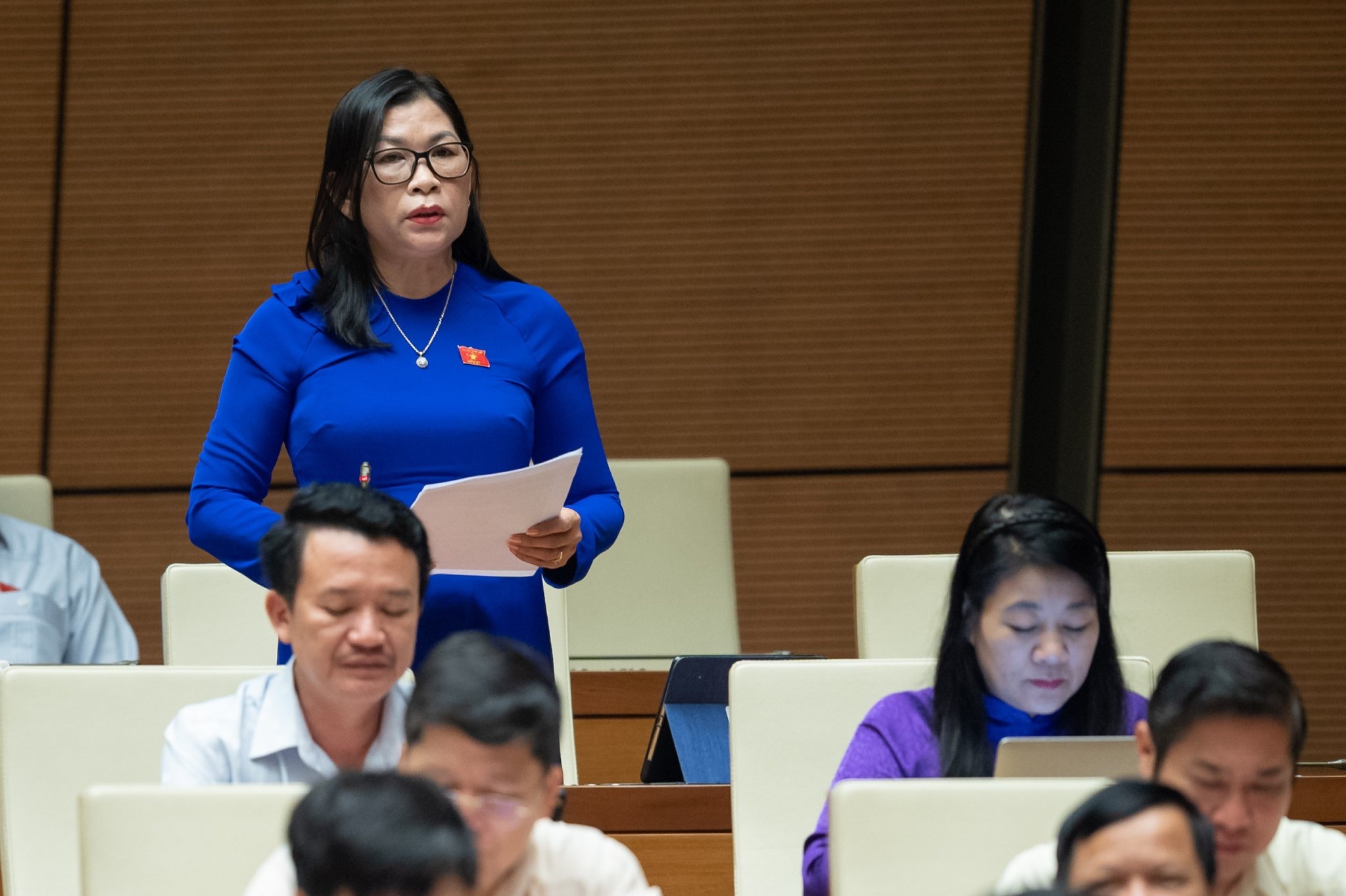
National Assembly Deputy Bo Thi Xuan Linh expressed concern about the increasing problem of school violence and child abuse.
"Especially during the annual Children's Action Month and in 2023, I propose that all levels and sectors should have specific and widespread action programs and plans focused on children in order to prevent the aforementioned situation," the delegate stated.
Speaking at the discussion session, delegate Nguyen Van Canh (Binh Dinh delegation) expressed concern about the increasingly complex situation of school violence. He analyzed that the cause of this situation is children's desire for more attention, therefore, the educational environment needs to meet this need.
Delegates argued that every child possesses abilities and talents in certain subjects and fields, and that the educational environment should create conditions to recognize and encourage these individual abilities of each child.
The education sector needs mechanisms to provide students with opportunities, whether individually or in groups, to appear before their class once a month or the school once a year to express themselves, integrate with their peers, and satisfy their need for recognition, thereby preventing them from resorting to violence in the school environment. This would also help them develop teamwork skills and public speaking skills, which students currently lack.
In addition, delegates argued that there needs to be a clear distinction between the responsibilities of the family and the responsibilities of the school regarding children.
The delegates stated that in the school environment, teachers possess better pedagogical skills and are more equitable towards all students, so priority should be given to teaching good values and principles, so that children develop exemplary thinking, lifestyles, and daily habits. Parents need to focus on caring for their children, setting a good example, and monitoring and reminding them to follow what their teachers have taught. There needs to be close cooperation and agreement between the school and the family to ensure the holistic development of children.
Ensuring social security
Concerned about ensuring social security rights, delegate Dinh Thi Ngoc Dung (from Hai Duong province) stated that the impact of the Covid-19 pandemic has caused a decline in the labor market, leading to many workers losing their jobs and primary sources of income.
Delegates argued that this has affected the lives and social security rights of workers. Job loss can be considered one of the biggest risks. Because when jobs are lost, workers are very vulnerable due to the loss of their main source of income, the economic foundation necessary to stabilize their lives and the lives of their dependents such as children or the elderly who are no longer able to work. They are no longer able to pay for essential needs such as healthcare, medical care, food, etc.
Furthermore, when facing unemployment, they risk experiencing pressure, even mental distress, which can lead to negative actions that affect not only themselves and their families but also have many repercussions for society, such as violence, dropping out of school, or social vices.
Delegates expressed concern about what would happen if workers suddenly lost their jobs, had their working hours reduced, had their benefits cut, or lost their monthly wages. In such a situation, if workers' social security is not adequately guaranteed, if their reduced income is not compensated, and if unemployment benefits are insufficient to cover their daily necessities, how would they react? Would strikes occur? Has the government anticipated these risks with timely and long-term solutions?
This affects not only businesses but also the national economy. Therefore, at this time, people and businesses urgently need practical policies to maintain and ensure social security .
Source


![[Image] Close-up of the newly discovered "sacred road" at My Son Sanctuary](/_next/image?url=https%3A%2F%2Fvphoto.vietnam.vn%2Fthumb%2F1200x675%2Fvietnam%2Fresource%2FIMAGE%2F2025%2F12%2F13%2F1765587881240_ndo_br_ms5-jpg.webp&w=3840&q=75)












































































Comment (0)