

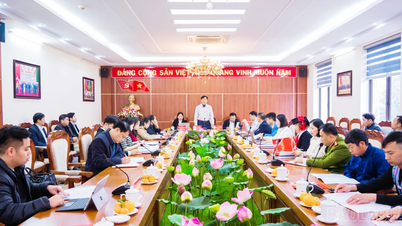
Representative Ta Thi Yen (Dien Bien) stated that in recent times, we must mention some unusual fluctuations in the real estate market. This shows instability and requires prompt guidance, solutions, and stabilization to avoid negative impacts on the economy and public sentiment.
Ms. Yen cited examples of the lack of affordable and mid-range commercial housing segments that suit people's financial capabilities, or the reality of social housing where there is an oversupply in some areas and a shortage in others.

Representative Ta Thi Yen
"The 120 trillion VND credit package for social housing has only disbursed 83 billion VND, which is very low. The responsibilities of the relevant agencies need to be clarified. Why is our policy, which is so good and humane, so slow to be implemented, while the people are eagerly waiting for it?", Representative Yen stated.
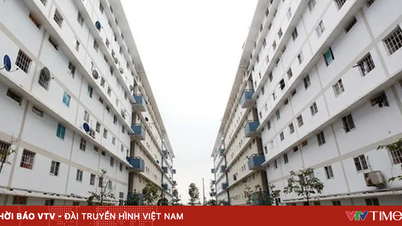
In particular, Ms. Yen emphasized that tens of thousands of resettlement houses in Ho Chi Minh City and Hanoi have been left abandoned, causing a huge waste of public financial resources , while people still lack housing. " I believe we need to clarify the responsibilities of the relevant agencies, organizations, and individuals," Ms. Yen frankly stated.
Concurring with this view, delegate Nguyen Lan Hieu (Binh Dinh) stated that he had also witnessed numerous apartment buildings and resettlement housing in Gia Lam district, Hanoi, lying abandoned, causing significant waste.
"Meanwhile, apartment prices have recently increased significantly, and there is high demand from the public, but we are letting these apartments go to waste. Therefore, decisive solutions are needed to put these apartments into use," Mr. Hieu said.
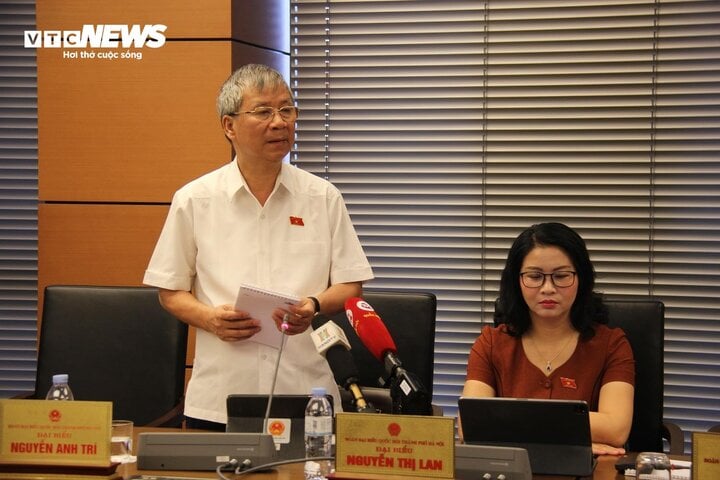
Representative Nguyen Anh Tri.
Discussing this issue, delegate Nguyen Anh Tri (Hanoi) stated that in recent years, a series of new laws have been amended, creating many new, more open, better, and stricter policies in land and resource management. Therefore, we must further strengthen land and resource management to avoid wasting land and resources.
"There is a situation where housing projects and constructions are completed but then abandoned, causing immense waste. Recently, I surveyed several provinces and found many projects and housing complexes that were built in a rough state, or even completed, but looking at the reality of those areas, it can be predicted that no one will live there for another ten years."
"In Hanoi, there are many abandoned buildings, especially in the Dong Tru Bridge area (Dong Anh district), with no idea when they will be occupied. This is a huge waste and extremely regrettable. Therefore, it is necessary to review and adjust these abandoned projects to avoid waste, while many low-income people still lack housing," Representative Tri said.
Recently, according to data from the Vietnam Association of Real Estate Brokers (VARS), the phenomenon of abandoned resettlement apartments has become prevalent in major cities such as Hanoi, Ho Chi Minh City, and Da Nang . These large-scale buildings, constructed with investments of trillions of dong, are either left vacant or used inefficiently, leading to serious deterioration of the entire infrastructure and facilities.
In Hanoi, approximately 4,000 apartments are currently abandoned. Many resettlement projects, even those with designated commercial spaces, remain vacant for years, with no businesses renting or using them commercially.
Similarly, in Ho Chi Minh City, there are more than 14,000 vacant resettlement apartments, concentrated most heavily in the Binh Khanh resettlement area (District 2) with over 12,000 apartments and in the Vinh Loc B resettlement area (Binh Chanh District) with over 2,000 apartments...
Explaining this situation, Mr. Nguyen Van Dinh, Chairman of VARS, analyzed: many resettlement areas are built in areas far from the city center, lacking amenities and public services. This reduces their attractiveness and makes it difficult for people to commute and live.
Some resettlement projects face problems with construction quality, such as poor-quality materials, unreasonable designs, and substandard construction. These issues discourage residents from moving in.
In addition, many resettlement areas often lack basic infrastructure such as schools, hospitals, markets, and transportation systems, which reduces the quality of life and convenience for residents.
Furthermore, inadequate compensation and unreasonable resettlement policies under the current Land Law have led many people to be unwilling to move to new homes or unable to afford living in resettlement areas because the total compensation received is insufficient to purchase the allocated resettlement plot.
To avoid waste, VARS suggests that, in addition to the fund for auctioning houses, the State could consider combining resettlement housing and social housing into the same segment.
Source



































































Comment (0)