

Edit and condense one option for six items.
On the morning of November 16, the Standing Committee of the National Assembly gave its opinion on the draft Law on Land (amended).
Reporting on some major contents that have been received, explained, and revised in the draft Law on Land (amended), the Chairman of the National Assembly's Economic Committee, Vu Hong Thanh, said that, based on the majority opinions of the Standing Committee of the National Assembly on the major contents of the draft Law submitted to the National Assembly at the 6th session, and on the basis of opinions of National Assembly deputies and opinions of agencies, the draft Law has been revised and streamlined by one option for 6 contents.
Specifically, firstly, Clause 7 of Article 45 stipulates that individuals not directly engaged in agricultural production must establish an economic organization and have a plan for using rice-growing land when receiving the transfer of rice-growing land exceeding the limit prescribed in Clause 1 of Article 177.
Secondly, the Law (Articles 65 and 66) does not specify the particular types of land that need to have their targets determined in provincial and district-level land use plans. Instead, localities determine the targets for land types already allocated in higher-level land use plans and according to the needs of each level in the provincial and district-level land use plans. The Government is tasked with providing detailed regulations on this matter.
Thirdly, Clause 3 of Article 139 stipulates the consideration and recognition of land use rights for households and individuals using land before July 1, 2014.
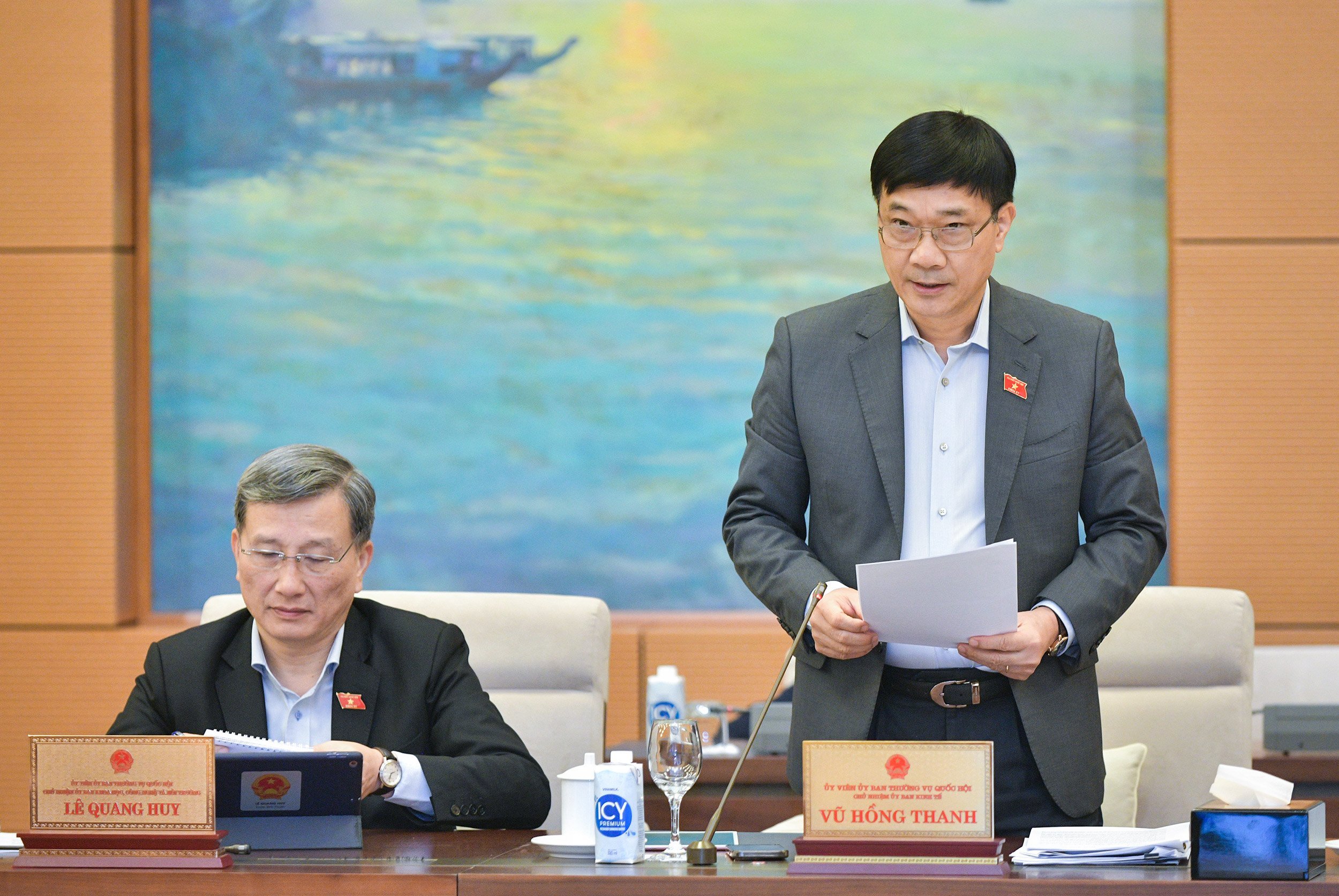
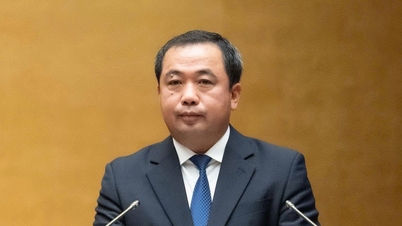
Chairman of the National Assembly's Economic Committee Vu Hong Thanh (Photo: Quochoi.vn).
Fourth, Clause 3 of Article 154 stipulates that land rent is paid annually and remains stable for a 5-year period from the time the State decides to lease the land. The land rent for the next period is calculated based on the land price table of the first year of the next period. If the land rent increases compared to the previous period, the payable land rent will be adjusted according to the rate prescribed by the Government, but not exceeding the total CPI of the preceding 5-year period.
Fifth, Article 191 stipulates the fundamental principles regarding land reclamation activities in accordance with the scope of the Law, including the principle that investors with land reclamation projects whose investment policies have been approved by competent state agencies are allocated sea areas to carry out land reclamation activities along with land allocation or land lease for the investment project.
The Government shall regulate investment projects involving land reclamation, the methods for selecting investors to implement such projects, and land reclamation costs, etc.
Sixth, amend Articles 14, 49, and 254, stipulating that the National Assembly and the Standing Committee of the National Assembly shall only consider and decide on matters where the resolution of disagreements regarding administrative boundaries leads to the merging, division, or adjustment of administrative boundaries.
The Chairman of the Economic Committee stated that, based on the opinions of National Assembly deputies and relevant agencies, the Standing Committee of the Economic Committee will report to the Standing Committee of the National Assembly for consideration and feedback on 14 issues with 2 remaining options. Additionally, regarding the issue requiring clarification, it concerns the entities eligible to use land for national defense and security combined with labor, production, and economic development activities (Clause 1, Article 202).
More time is needed to ensure the best quality.
Regarding the proposed amendments to the Land Law, Mr. Vu Hong Thanh stated that the Standing Committee of the Economic Committee noted that, based on the opinions of National Assembly deputies discussed in the Assembly Hall on November 3, 2023, the provisions in the draft Law have been further refined. However, the opinions of National Assembly deputies on many major policy contents, with differing views or approaches to policy design, are still unfocused, making it difficult to determine trends and lacking consensus on many complex issues.
Some important policies have not yet had optimal solutions designed. A summary of opinions from National Assembly deputies discussed in the plenary session shows that 5 out of 22 opinions suggested passing the draft law at the 6th session;
Meanwhile, 6 out of 22 opinions clearly stated the necessity of promptly passing the draft Law but emphasized the need to ensure its quality. 11 out of 22 opinions suggested a thorough review, allocating more time to incorporate feedback and revise the draft Law in the most comprehensive manner, carefully considering whether to pass the draft Law given the numerous differing opinions within it. Therefore, they proposed not passing the draft Law at this session.
The adoption of the draft law is expected to create a legal basis for more effective utilization of land resources and better meet the demands of reality.
Nevertheless, the process of reviewing and refining key policy options, fully incorporating and addressing all feedback, and completing the entire draft Law still requires more time to ensure the best possible quality of the draft Law.

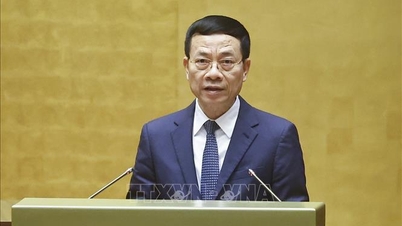
The Standing Committee of the Economic Committee proposed not to approve the draft Law on Land (amended) at the 6th session (Photo: Huu Thang).
Given the crucial role of the Land Law, the quality of the draft law must be prioritized to avoid situations where, after enactment, the law has shortcomings that could cause significant impacts and consequences on socio-economic activities and people's lives.
The draft decrees and guiding documents for the Law also need more time to be finalized and synchronized, ensuring they take effect simultaneously with the Law after its promulgation, especially some new provisions on land prices, issuance of land use right certificates, land allocation, land leasing, etc., which require detailed regulations so that the Law's policies can be implemented effectively.
This matter has been reported to the competent authority for comments, prioritizing the quality of the draft Law to be submitted to the National Assembly for consideration and approval. Therefore, the Standing Committee of the Economic Committee reports and seeks the opinion of the Standing Committee of the National Assembly for consideration and reporting to the National Assembly for consideration, and will not approve the draft Law at the 6th session (scheduled for November 29, 2023).
Based on the opinions of the Standing Committee of the National Assembly on the contents of the draft Law, the Standing Committee of the Economic Committee will coordinate with relevant agencies to continue to enhance their sense of responsibility and strive to research and refine the Report and the draft Law to report to the National Assembly for further discussion and feedback according to the agenda of the 6th session, as a basis for further revision of the draft Law.
Following the 6th session, several aspects of the draft Law will be reported to the competent authorities for their opinions, in order to provide guidance for further refinement of major, complex policy contents as well as the overall draft Law.
The Government is requested to provide official feedback on the draft Law after it has been finalized, report to the Standing Committee of the National Assembly for consideration and comments, and send it to the Legal Committee for review to ensure its constitutionality, legality, and consistency with the legal system as prescribed, ensuring quality before submitting it to the National Assembly for consideration and decision .
Source























![[Photo] Prime Minister Pham Minh Chinh holds a phone call with the CEO of Russia's Rosatom Corporation.](/_next/image?url=https%3A%2F%2Fvphoto.vietnam.vn%2Fthumb%2F1200x675%2Fvietnam%2Fresource%2FIMAGE%2F2025%2F12%2F11%2F1765464552365_dsc-5295-jpg.webp&w=3840&q=75)












































Comment (0)