

A "locking valve" is needed to control the accuracy of land valuation results.
On the morning of January 15th, continuing the program of the 5th Extraordinary Session, the National Assembly held a plenary discussion on some new contents or contents with differing opinions in the draft Law on Land (amended).
Contributing to the clarification of some contents in the draft law, National Assembly Deputy Nguyen Hoang Bao Tran ( Binh Duong delegation) highly appreciated the work of the Drafting Committee in incorporating and revising important contents and the explanatory report of the Economic Committee.
Comments on Clause 5, Article 158 of the draft law, which stipulates that "The land valuation methods at point c regarding the surplus method in land valuation are carried out by subtracting the total estimated development costs of the land parcel from the total estimated development revenue."
Delegates suggested that the drafting committee should not include the surplus method in land valuation for the following reasons:
Firstly, there are many methods for land valuation, but the valuation results obtained from different methods are similar for that particular plot of land.
However, land valuation results obtained using the surplus method are based on assumptions and estimates, and their reliability is not high, especially in areas with limited factual information and revenue-cost data available as a basis for estimation.
In addition, the value of the land plot is likely to increase over time due to its historical context, commercial activities, and other operations.
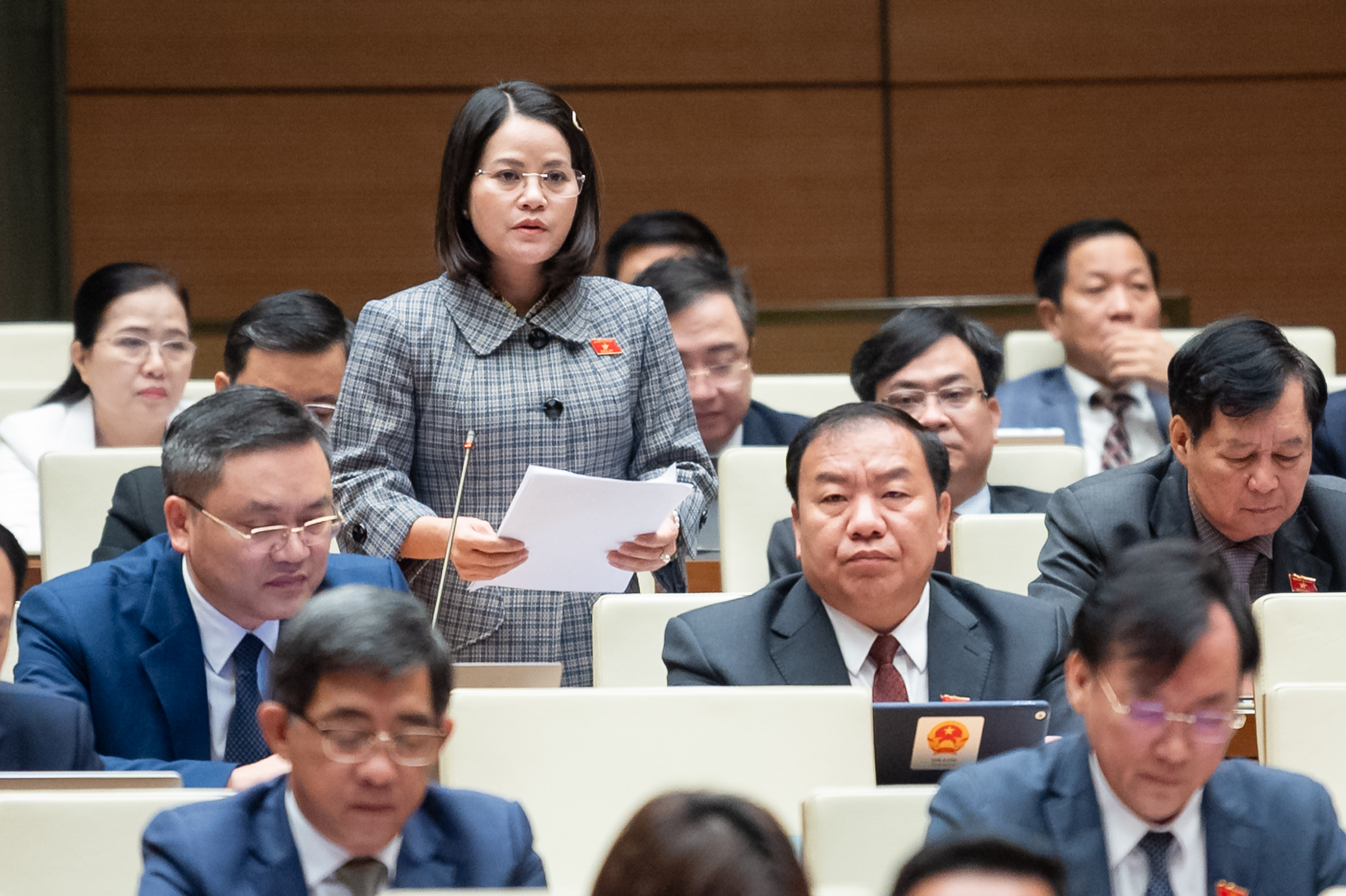
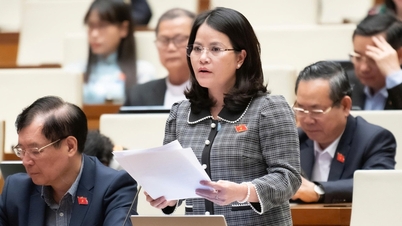
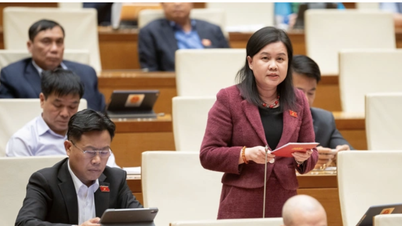
National Assembly Deputy Nguyen Hoang Bao Tran.
"However, determining that land value always increases gradually is unreasonable because the value of a plot of land can decrease during an economic downturn or when facing unfavorable factors. For example, currently, with the real estate market almost frozen, this method does not accurately measure the risk factors and adverse impacts on the economy," Ms. Tran stated.
Secondly, calculating these assumed factors is very complex, resulting in uncertain, inaccurate valuations with large errors.
According to the delegates, for the same plot of land, changing just one of the assumed factors will alter the valuation result. This is the main reason for the difficulties and delays in determining, appraising, and deciding on specific land prices in the past, and the interpretation varies from person to person in different circumstances and at different times.
Furthermore, according to the delegates, although the surplus method is stipulated in Government Decree No. 44 of 2014 and Circular No. 36 of 2014 of the Ministry of Natural Resources and Environment, its implementation has encountered many difficulties and obstacles. The estimated total revenue and total development costs of a real estate project are based on investigations, surveys, and the collection of information on transfer prices, rental prices, and factors contributing to revenue and costs of projects with similar characteristics to the project being valued.
The factors that determine revenue and costs are still vaguely defined, lacking specific standards, norms, or criteria, making pricing a challenging task.
Furthermore, the investment project description is one of the important documents that forms the basis for using data applied in the project implementation surplus method, business progress, and investment capital rate, as these indicators play a decisive role in the valuation results.
Currently, investment project descriptions are very rudimentary, lacking sufficient information, data, or supporting figures. In the context of an incomplete database on prices and land, including land price data, and an underdeveloped and non-transparent land use rights market, removing a land valuation method requires careful consideration of its feasibility to ensure it does not hinder the land valuation process.
"If it is necessary to retain this method, there needs to be a 'locking valve' to control the accuracy and appropriateness of the land valuation results," Representative Tran suggested.
Furthermore, in the current process of land compensation and acquisition, there are instances of land being reclaimed for dredging projects of streams, ditches, canals, and waterways. However, the Land Law and its guiding decrees and circulars on compensation and land clearance do not yet regulate this, causing significant difficulties. This is because people do not agree and have repeatedly petitioned, even filing prolonged complaints against the State's compensation decisions, hindering land clearance. Therefore, the representative proposes reviewing this issue.
Unlocking land resources
Contributing to the improvement of the draft law aimed at unlocking land resources for the overall development of the country, delegate Nguyen Thi Ngoc Xuan (Binh Duong delegation) raised the opinions of many businesses in Binh Duong province regarding the conditions for implementing commercial housing projects and agreements on the transfer of land use rights at point b, clause 3, Article 122 and point b, clause 1, Article 127.
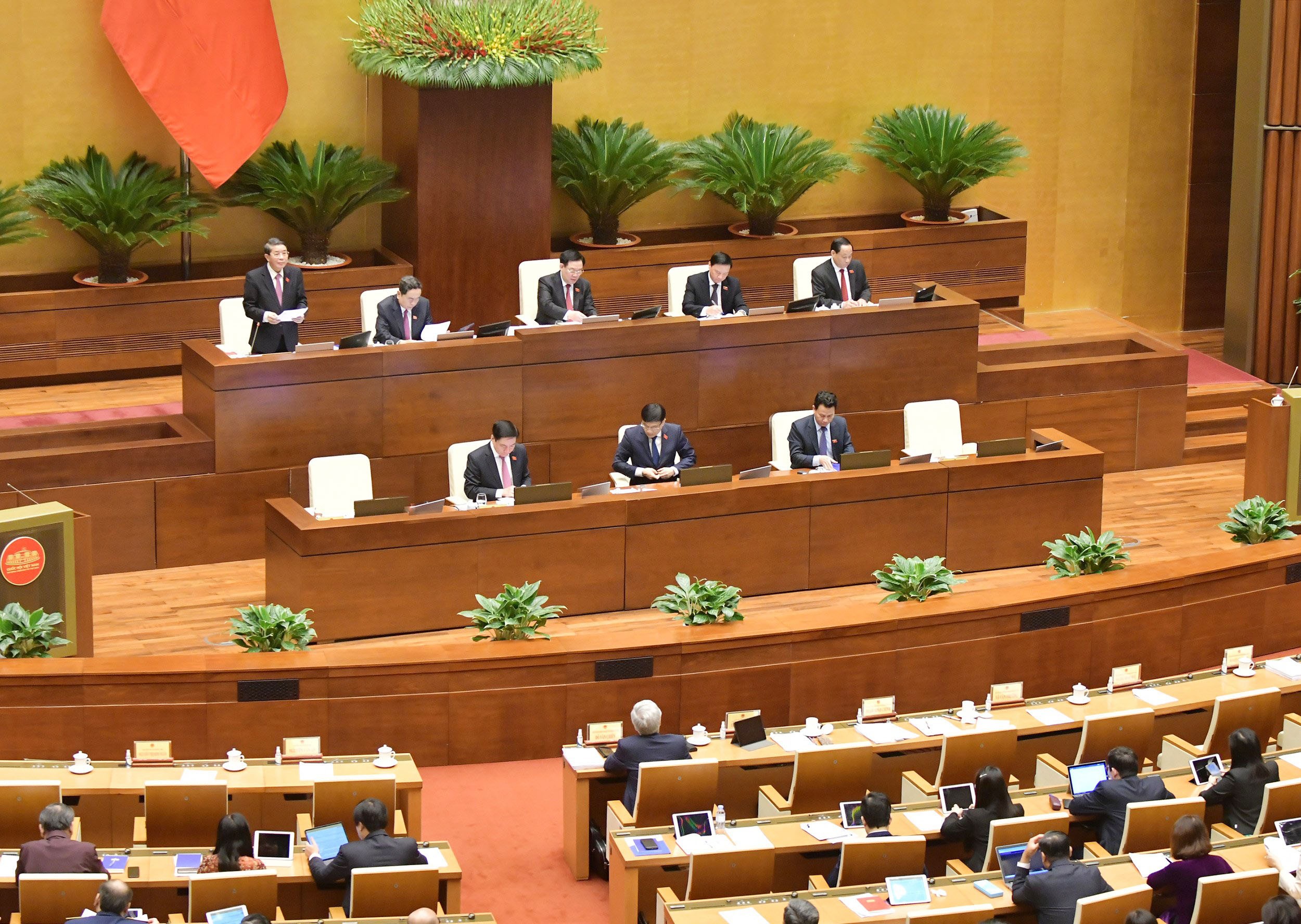
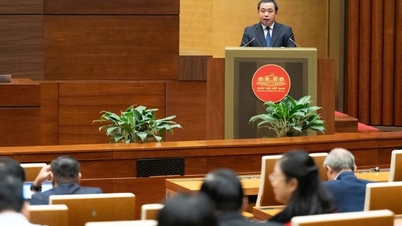
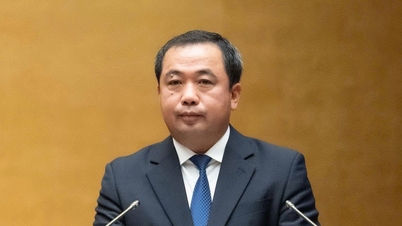
Deputy Speaker of the National Assembly Nguyen Duc Hai presided over the session.
The delegates proposed adding other land categories if they are consistent with the approved plan, suggesting that the National Assembly carefully consider and vote separately on this clause, or entrust the Government with implementing a pilot program for 5 years, after which a summary report would be submitted to the National Assembly.
According to the delegates, the reason stems from past practices where, when the State called for investment and economic development, many citizens and businesses willing to engage in business accepted handing over various types of land to the State, including residential land, in order to lease it for production and business purposes. This created jobs and significantly contributed to the development of the locality.
Now, as the State changes urban planning and seeks to renovate and upgrade the city, there needs to be a mechanism that prioritizes giving them the opportunity to continue investing and developing on the very land they have preserved and used for production and business for generations.
On the other hand, the State has sufficient grounds to clearly determine the origin of the land owned by the enterprise. If the land previously owned the enterprise itself (through inheritance, donation, or transfer), then this issue needs to be thoroughly investigated.
Furthermore, delegates proposed that the legal regulations on taxation and finance should be amended and improved soon to harmonize the interests arising from converting land use from other purposes to residential land for commercial housing projects among three groups: current land users, investors, and the State. This would allow the State to redistribute the benefits proportionally to the land users themselves and invest in socio-economic development projects in the locality .
Source






































































Comment (0)