

Presenting the report, the Head of the Delegation Affairs Committee under the National Assembly Standing Committee, Nguyen Thi Thanh, stated that the draft includes amendments and additions regarding the subjects of confidence votes. Specifically, it adds the position of Secretary General of the National Assembly to conform with the Law on the Organization of the National Assembly and Regulation No. 96-QĐ/TW, and adjusts some positions according to the amended and supplemented Law on the Organization of Local Government in 2019.
In addition, the draft amends and supplements the cases in which a vote of confidence will not be taken for individuals who have announced their resignation pending retirement, announced their retirement, or have been appointed or elected in the year of the vote of confidence.

Nguyen Thi Thanh, Head of the Committee on Delegate Affairs under the Standing Committee of the National Assembly, presented the draft Resolution.
According to Nguyen Thi Thanh, Head of the National Assembly's Delegation Affairs Committee, the Standing Committee of the National Assembly is seeking the National Assembly's opinion on the proposal to exclude individuals on leave for treatment of serious illnesses, with confirmation from a medical facility, and who have not been in charge of work for six months or more, as decided by a competent agency or individual up to the time of the opening of the session where the confidence vote is to be held.
Regarding the criteria for assessing the level of trust, the Head of the Delegation Affairs Committee, Nguyen Thi Thanh, stated that Resolution No. 85/2014/QH13 only outlines two criteria: political qualities, ethics, and lifestyle; compliance with the Constitution and laws; and the results of fulfilling assigned tasks and powers.
This draft resolution has specified in detail the content of appropriate evaluation criteria and added content regarding the responsibilities of those being evaluated in implementing resolutions and conclusions on the supervisory work of the National Assembly, its agencies, People's Councils, and People's Council Committees; the results of resolving complaints and denunciations in their respective fields and scopes of responsibility; respecting, listening to, and studying to resolve the opinions and recommendations of voters and the people; and the results of fulfilling commitments and promises (if any).
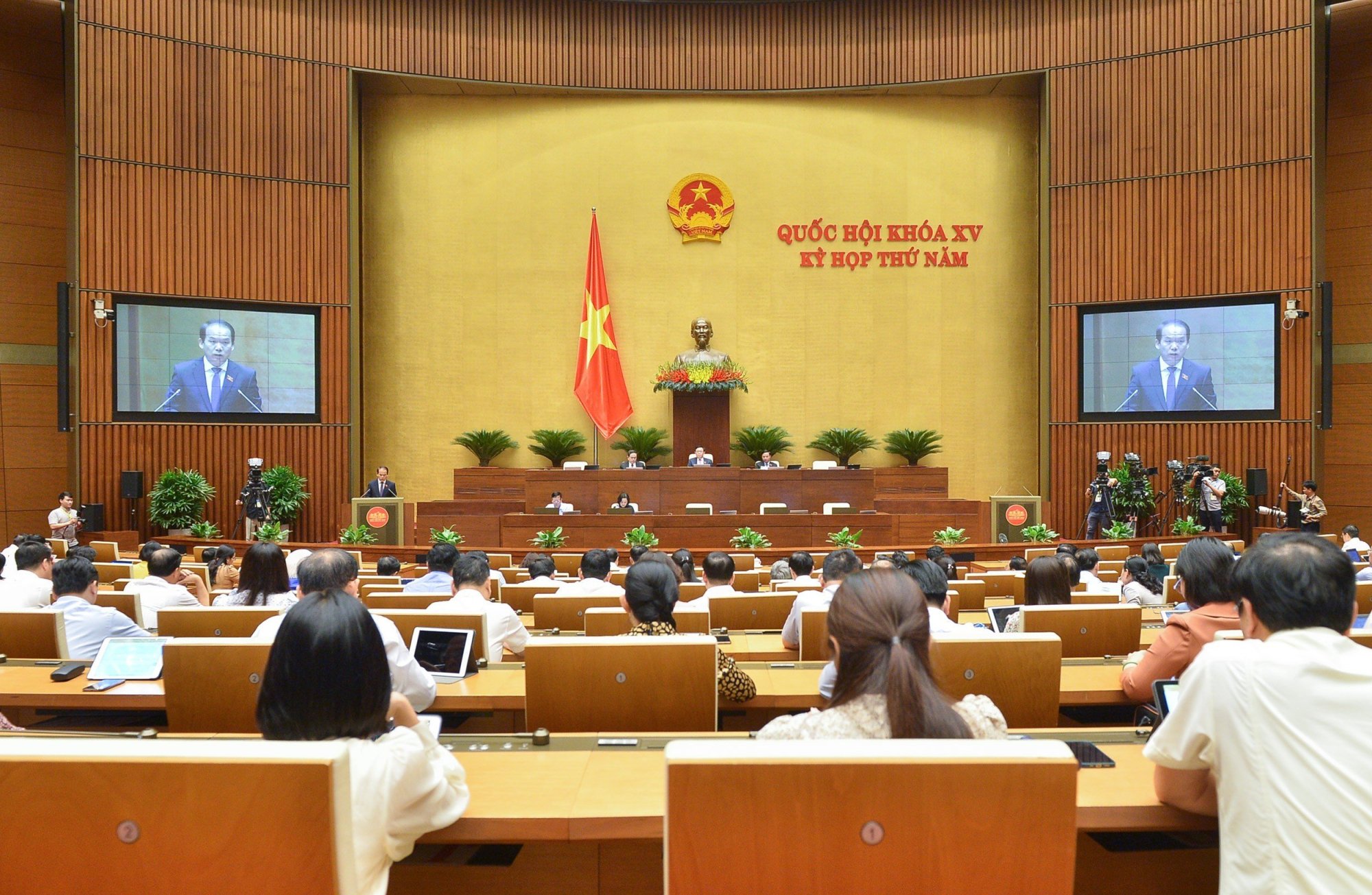
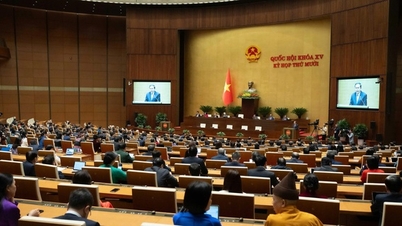
The National Assembly session on the afternoon of May 30th.
Regarding the consequences for those subject to a vote of confidence, Ms. Nguyen Thi Thanh stated that the draft regulations stipulate that if more than half but less than two-thirds of the total number of National Assembly Deputies or People's Council Deputies rate a person as having "low confidence," they must resign. If they do not resign, the competent authority or person will submit a proposal to the National Assembly or People's Council to conduct a vote of confidence at that session or the nearest session.
If a person subject to a vote of confidence receives a "low confidence" rating from 2/3 or more of the total number of National Assembly deputies or People's Council deputies, the competent agency or person shall submit a proposal to the National Assembly or People's Council to dismiss them.
For individuals holding multiple positions simultaneously, votes of confidence and dismissal are conducted only once for all those positions.
Presenting the report on the draft Resolution, the Chairman of the National Assembly's Law Committee, Hoang Thanh Tung, stated that the addition of a provision waiving the vote of confidence for individuals on sick leave due to serious illnesses, as proposed, is based on practical grounds, demonstrates humanity, and aligns with the requirements of votes of confidence in the National Assembly and People's Councils. In addition, some opinions suggested that the period of non-operation should be clearly stated as six consecutive months or more to ensure strict adherence to regulations.
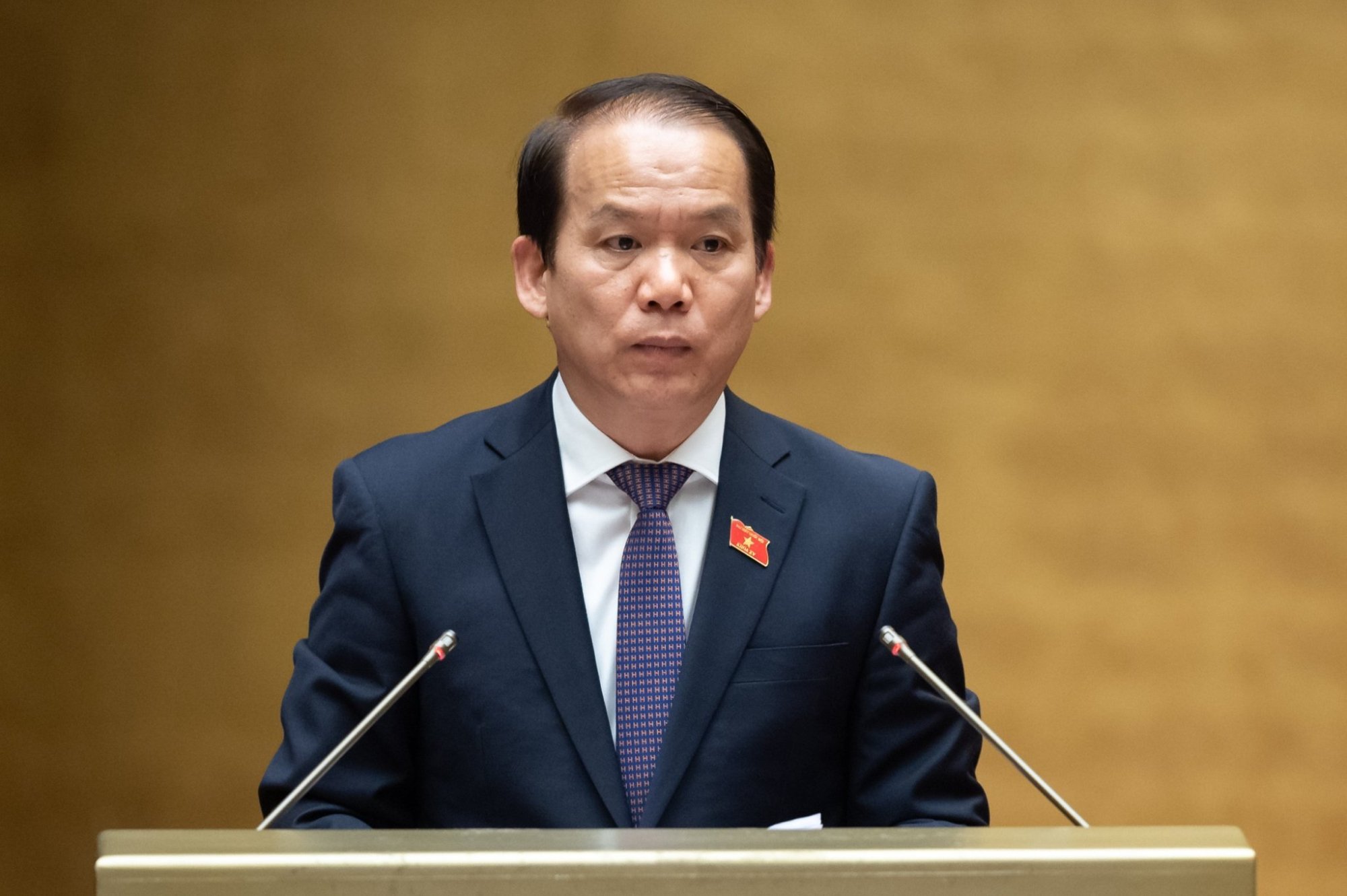
Chairman of the National Assembly's Law Committee, Hoang Thanh Tung, presented the review of the draft Resolution.
According to the Chairman of the Legal Committee, some opinions suggested that the drafting agency needs to provide a clearer explanation for not including certain positions elected or approved by the National Assembly and People's Councils in the scope of confidence votes, such as Supreme People's Court judges, members of the National Defense and Security Council, Deputy Heads of People's Council committees, and People's Court assessors.
Some members of the National Assembly's Law Committee suggested adding a regulation strictly prohibiting other organizations and individuals (not just those being voted on or those recording the votes) from engaging in actions that affect the objectivity and accuracy of confidence votes, such as filing complaints, making accusations, or providing false information; along with clarifying the meaning of the act of "lobbying" in the prohibited regulation...
Chairman of the Legal Committee Hoang Thanh Tung stated that some opinions suggest that the vote of confidence should be defined as a step in the disciplinary process for officials holding positions elected or approved by the National Assembly and People's Councils. This is because, according to the draft, cases subject to a vote of confidence in the National Assembly and People's Councils are usually those where signs of wrongdoing are discovered or where the confidence vote indicates a low level of trust in the individual.
Therefore, this opinion suggests that if more than half of the total number of delegates vote against a person subject to a confidence vote, a more severe form of disciplinary action should be applied, namely, the National Assembly or People's Council should dismiss or approve a proposal to remove that person from office.
If the resolution is passed by the National Assembly, it will take effect from July 1, 2023.
Source

![[Photo] Closing Ceremony of the 10th Session of the 15th National Assembly](/_next/image?url=https%3A%2F%2Fvphoto.vietnam.vn%2Fthumb%2F1200x675%2Fvietnam%2Fresource%2FIMAGE%2F2025%2F12%2F11%2F1765448959967_image-1437-jpg.webp&w=3840&q=75)












































![[OFFICIAL] MISA GROUP ANNOUNCES ITS PIONEERING BRAND POSITIONING IN BUILDING AGENTIC AI FOR BUSINESSES, HOUSEHOLDS, AND THE GOVERNMENT](https://vphoto.vietnam.vn/thumb/402x226/vietnam/resource/IMAGE/2025/12/11/1765444754256_agentic-ai_postfb-scaled.png)











































Comment (0)