

Tokyo is preparing a plan to maintain the stability of US-Japan relations as the results of the US presidential election are about to be finalized.
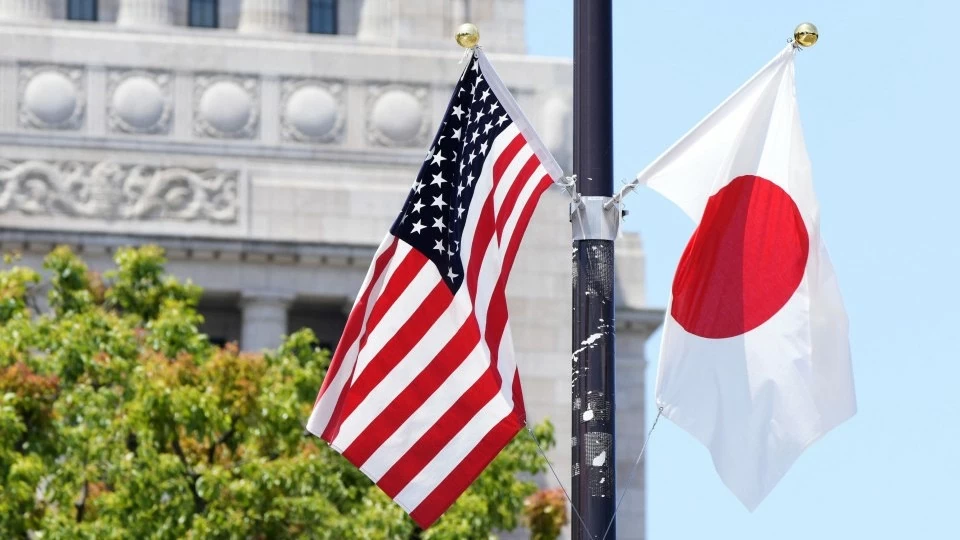 |
| The U.S. has always considered Tokyo a priority partner in Asia. (Illustrative image. Source: Kyodo News) |
The Center for Strategic International Studies (CSIS), a renowned independent policy research institute in the United States, recently published an analysis and assessment of Tokyo's preparations ahead of the US elections.
Accordingly, the US-Japan security alliance has existed and developed strongly over the years under different administrations. Amidst deteriorating regional security conditions, Washington is strengthening coordination with Tokyo to enhance its deterrence capabilities against Beijing.
Under former President Donald Trump, the White House considered Tokyo a priority partner in Asia and agreed to advance the strategic vision of a free and open Indo- Pacific region, maintaining security, stability, and prosperity in one of the world's most dynamic regions. This trend of cooperation accelerated under President Joe Biden and Prime Minister Kishida Fumio.
Against this backdrop, according to CSIS analysis, Japan is preparing contingency plans for various scenarios in the US presidential election. If Republican candidate Donald Trump returns to the White House, Tokyo will seek to maintain a unified stance with Washington on a tough approach toward China, while simultaneously mitigating Trump's unilateral policies on North Korea and encouraging Pyongyang to increase cooperation.
As a leading trading partner of the United States, the East Asian nation will strive to maintain foreign investment and strengthen Washington's leadership role in the international economic system in the face of the prospect of Trump reimposing protectionist trade policies.
In addition, the new Ishiba Shigeru administration is likely to upgrade the domestic defense industry to reduce dependence on the US, as well as encourage the White House to strengthen alliances with regional partners, including Australia and the Quad group.
Conversely, CSIS experts believe that, should Kamala Harris win the election, Tokyo expects to continue the momentum of bilateral relations, closely monitoring the Democratic candidate's approach to China, economic policies, and partnership building in the Indo-Pacific region.
In addition, the Ishiba Shigeru administration will lobby Harris to implement progressive economic policies, alleviating concerns about a scenario in which the US withdraws from the multilateral trading system, which would force Japan and other countries to rebuild new economic rules and norms without Washington's leadership.
Regardless of who wins the November election, Japan will remain an indispensable partner for the United States in the Indo- Pacific region. No other Washington ally has the power to strongly shape a rules-based regional order like Tokyo.
Therefore, the White House needs to strengthen relations with East Asian nations and like-minded countries in order to maintain the central role of the US-led alliance network in ensuring regional peace and prosperity.
Based on that, according to CSIS, the next US President may consider the following policy suggestions:
One key is to enhance the alliance's coordination capabilities. During Prime Minister Kishida Fumio's visit to Washington in April 2024, the U.S. and Japan agreed to upgrade the alliance's command structure, improving coordination between the two militaries in emergency situations. The new U.S. president should seek to further this mechanism by requesting congressional funding and maintaining defense industry cooperation.
Secondly, it is crucial to strengthen the Indo-Pacific partnership network. Recently, the U.S. and Japan have made significant progress in building linkages with third-party partners, including South Korea, Australia, and the Philippines, thereby preventing China from attempting to disrupt Washington's deployed alliance network in the region. Furthermore, mechanisms like the Quad should play a greater role in providing funding to developing countries for the stable and prosperous future of the Indo-Pacific.
Source: https://baoquocte.vn/dinh-hi-nh-cuc-dien-quan-he-my-nhat-truc-the-m-ba-u-cu-290876.html





































































Comment (0)