

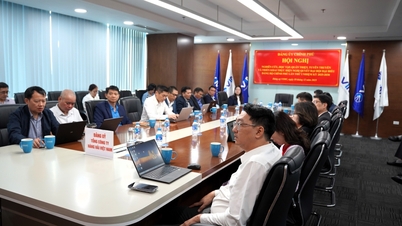
“I think this is a content that has a direct impact on the investment environment and growth prospects of Da Nang in the medium and long term,” Mr. Hung said, adding that first, it is necessary to recognize the fact that land prices in Da Nang have increased continuously in recent years.
In 2025 alone, the city has adjusted the land price list twice, in January and July, with an average increase of 10-12%. Some key urban locations have approached the level of 300-340 million VND/m². According to the next draft price list, many areas have proposed increases of 7% to 82%. In that context, if prices for production land in industrial parks continue to increase, cost pressure will weigh on businesses and directly affect Da Nang's competitiveness.
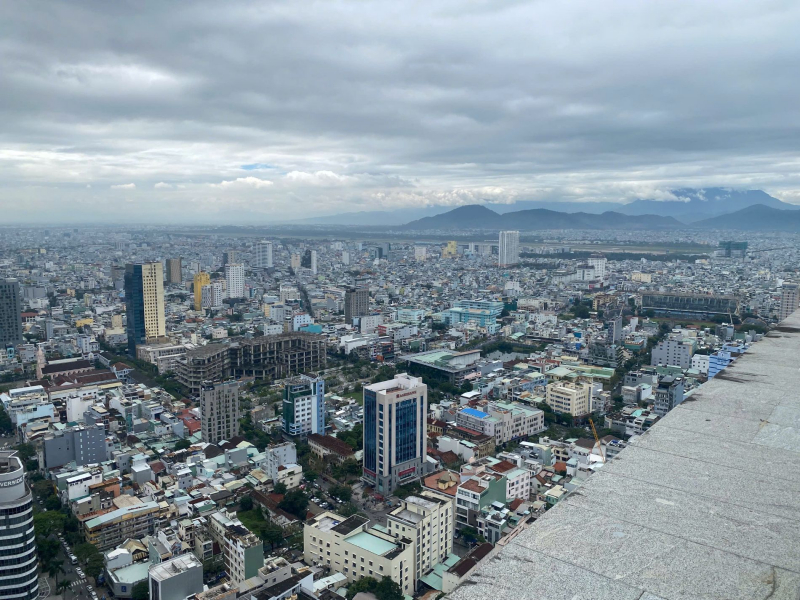
Second, Da Nang is currently in the process of building an industrial – logistics – innovation ecosystem after the merger. Unlike other localities that have completed their industrial ecosystems for decades, Da Nang is having to invest heavily in infrastructure, large-scale clean land funds, seaports, logistics centers, FTZs (free trade zones) and one-stop shop models.
“In this transition period, we cannot compete on price. And more importantly, if land prices increase faster than supply capacity, investors will not choose Da Nang. They do not necessarily have to go far; they simply do not bring projects to Da Nang. Losing an investor means losing jobs, losing import-export turnover, losing a stable source of income and losing long-term growth momentum,” Mr. Hung expressed his opinion.
Third, Da Nang’s core goal is not to collect budget revenue from land prices, but to attract strategic investors, create new industries, high-quality jobs, large import and export, technology transfer, and contribute to sustainable GRDP growth. Revenue from land prices is only a short-term source; the economic value from a strategic project can be dozens of times higher. “Therefore, increasing land prices at this time can cause more damage than benefits,” Mr. Hung said.
Fourth, in the context that the city needs to urgently do many big things, including focusing on completing the infrastructure of industrial parks and FTZs; speeding up site clearance to create a large clean land fund; improving the administrative procedure index; and restoring growth momentum after the merger, increasing land costs is an unnecessary risk, even counterproductive.
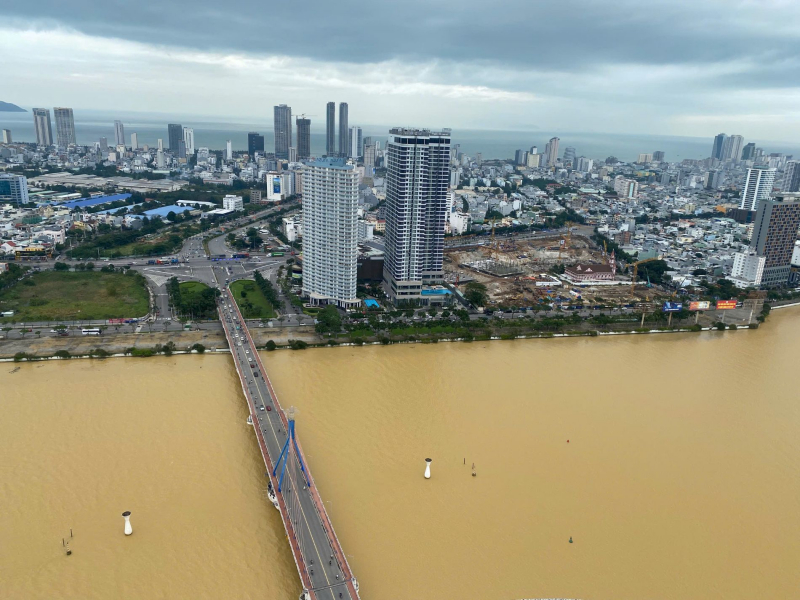
Therefore, Mr. Vu Quang Hung suggested that the City People's Council and People's Committee not increase industrial park land prices in the current period, and focus on a number of key tasks in the immediate future. First is to stabilize production land prices to protect investment attractiveness. Next is to complete infrastructure and large-scale clean land funds, creating long-term competitiveness. Third is to upgrade the investment ecosystem: logistics, seaports, on-site one-stop shop models, business support services. And fourth is to increase service productivity and reduce informal costs, because this is the reason that helps investors decide to set foot in Da Nang.
“A few percent increase in land prices may bring immediate revenue, but if Da Nang loses investors, we will lose the entire development path ahead. Therefore, we need to be extremely cautious and put the biggest priority on the goal of attracting strategic investment, creating jobs and sustainable economic growth for the city,” Mr. Hung added.
Source: https://cand.com.vn/Xa-hoi/dung-vi-nguon-thu-truoc-mat-ma-de-vuot-mat-ca-chang-duong-phat-trien-phia-sau-i790623/

![[Photo] The captivating scenery of the fragrant maple forest in Quang Tri](/_next/image?url=https%3A%2F%2Fvphoto.vietnam.vn%2Fthumb%2F1200x675%2Fvietnam%2Fresource%2FIMAGE%2F2025%2F12%2F10%2F1765353233198_lan09046-jpg.webp&w=3840&q=75)

![[Photo] Explore the US Navy's USS Robert Smalls warship](/_next/image?url=https%3A%2F%2Fvphoto.vietnam.vn%2Fthumb%2F1200x675%2Fvietnam%2Fresource%2FIMAGE%2F2025%2F12%2F10%2F1765341533272_11212121-8303-jpg.webp&w=3840&q=75)
















![[Video] The craft of making Dong Ho folk paintings has been inscribed by UNESCO on the List of Crafts in Need of Urgent Safeguarding.](https://vphoto.vietnam.vn/thumb/402x226/vietnam/resource/IMAGE/2025/12/10/1765350246533_tranh-dong-ho-734-jpg.webp)













































Comment (0)