

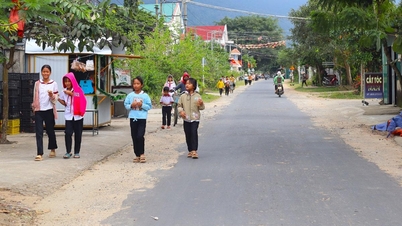
In Nấm Dẩn, a highland commune in northwestern Tuyên Quang province, the end of the year brings a bustling atmosphere. The cool climate and the interspersed hills and valleys create ideal conditions for sturgeon growth, opening up new business opportunities for the Hmong people in the area.
Thanks to government investment policies, the Dai An Agricultural, Forestry, and Fisheries Cooperative was established, becoming a hub for training and supporting product consumption. Since the beginning of 2025, the cooperative has purchased over 16,000 commercial fish, a figure that demonstrates this model is becoming a real source of income for the local people.
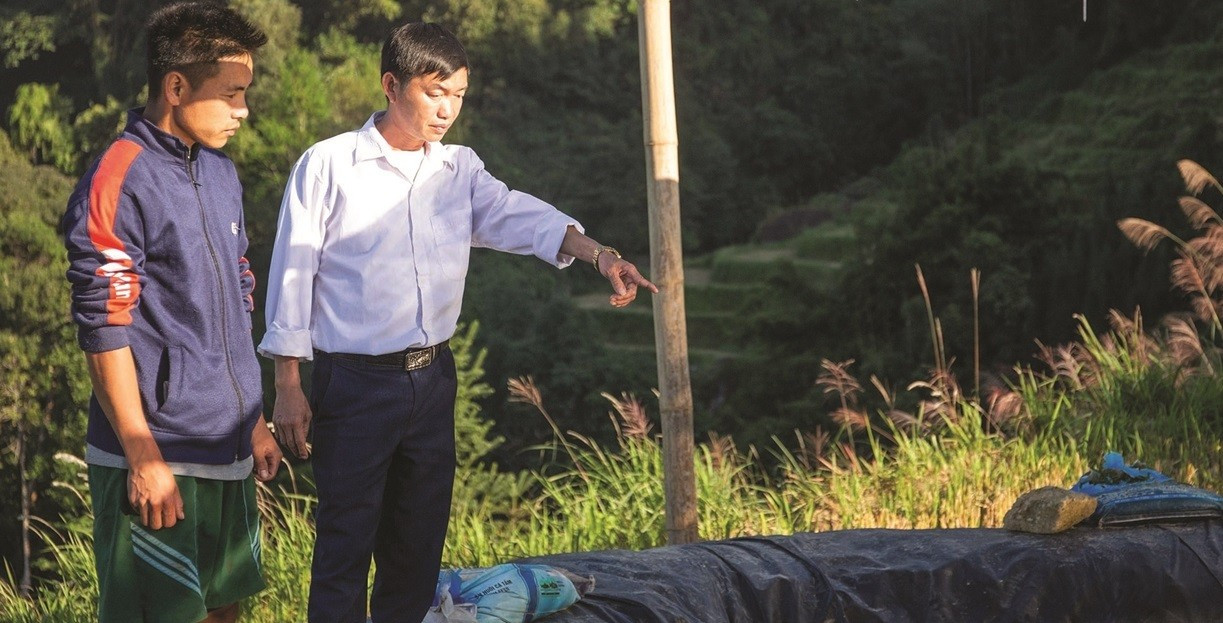
Mr. Ly Seo Lin was one of the first households to boldly follow suit. His plot of land, which could only grow one rice crop per year, was transformed into three ponds for raising sturgeon. After a year, each fish reached 2-2.5 kg, yielding approximately 5 tons and bringing in over 100 million VND in the first harvest. Mr. Lin said that the fish grew well, sold at a good price, and his family now has a stable income. Thanks to this, he can now even think about escaping poverty.
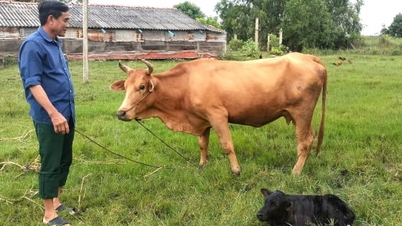
Not only in Nam Dan, but new livelihoods are also spreading to Tan Tien commune, where many Co Lao ethnic minority households have received financial support. In November 2024, Cao Diu Pao's family received funding to buy three breeding buffaloes. After a year of proper care, the herd has grown to six healthy buffaloes that reproduce well.
Mr. Pao said that with the government's support in providing good breeding stock and training on how to raise them, he felt confident expanding his barns and stockpiling feed for the winter. The buffaloes serve both as laborers and as a source of capital for the future. For the people in the highlands, a buffalo is not just an asset but a "savings," a foundation for economic stability and progress.
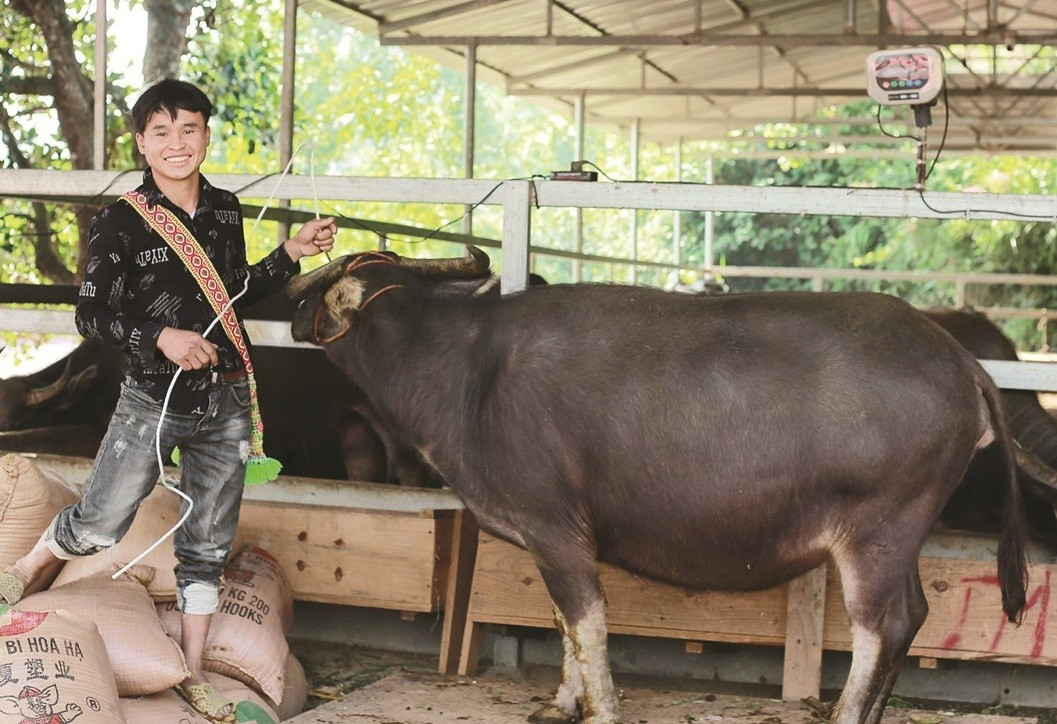
Livelihood models such as cold-water fish farming in Nam Dan or buffalo and cattle farming in Tan Tien demonstrate a clear shift in poverty reduction approaches: support is coupled with technical training, capacity building, guaranteed market access, and fostering a proactive spirit among the people. As a result, lives in ethnic minority areas are changing day by day.
The numbers speak for themselves, proving this transformation: the poverty rate in Ha Giang province before the merger decreased from 42.85% (2021) to 25.93% in 2024; in Tuyen Quang, it decreased from 23.45% to 10.19% during the same period. It's not just numbers; it's thousands of stories of families who have become financially secure, learned to plan their businesses, and dared to expand their livelihoods.
According to the leaders of the Department of Ethnic Minorities and Religions of Tuyen Quang province, thanks to the support policies of national target programs, many poor households have changed their production mindset, applied new techniques, and confidently managed their family economy. The socio-economic effectiveness is evident, creating a foundation for the province to continue replicating sustainable livelihood models.
To ensure that capital continues to be used effectively, localities are focusing on improving management capacity, expanding technical training, replicating market-appropriate models, and increasing linkages between the government, cooperatives, and specialized agencies. The goal is not only to alleviate poverty in the short term but also to create stable, long-term livelihoods for people in mountainous areas.
Source: https://tienphong.vn/giam-ngheo-ben-vung-o-vung-cao-tuyen-quang-khi-sinh-ke-moi-mo-duong-doi-doi-post1803498.tpo

















![[Photo] Prime Minister Pham Minh Chinh holds a phone call with the CEO of Russia's Rosatom Corporation.](/_next/image?url=https%3A%2F%2Fvphoto.vietnam.vn%2Fthumb%2F1200x675%2Fvietnam%2Fresource%2FIMAGE%2F2025%2F12%2F11%2F1765464552365_dsc-5295-jpg.webp&w=3840&q=75)













































Comment (0)