

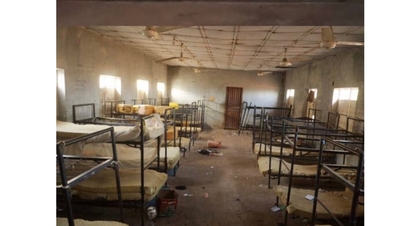
This resulted in over 50,000 students being unable to attend school.
Teachers in Abuja, Nigeria, have been on strike for months in protest over wages, forcing hundreds of schools to close due to staffing shortages. The dispute stems from the government's delay in raising the minimum wage.
Specifically, President Bola Tinubu signed into law an increase in the minimum wage to 70,000 naira from July 2024 to mitigate the impact of inflation following extensive economic reforms. However, nearly a year later, many localities, including Abuja, have yet to implement this wage increase for teachers.
The Nigerian Teachers' Union (NUT) in Abuja insists it will not end its strike until the government fully implements the minimum wage and addresses outstanding wage and benefit payments. Union leader Abdullahi Mohammed Shafas stated, “We have already staged two warning strikes and now this is the third. Despite numerous promises, the government has yet to deliver anything concrete.”
Meanwhile, the Minister for the Federal Capital Territory, Nyesom Wike, said the Ministry had approved the new salary levels but blamed local councils for failing to make the payments.
This impasse not only affects teachers but also profoundly impacts the lives of students and their families. Elisha Goni, a teacher at a primary school in the Garki area, said he can barely cover his living expenses with his current salary.
"I live 50 kilometers from my workplace to save on rent. But I can't teach on an empty stomach," said teacher Elisha.
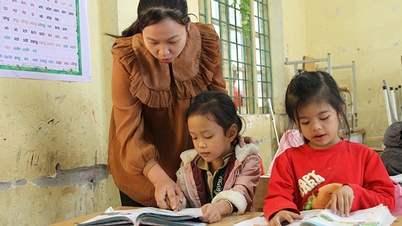
For students like 10-year-old Blessing, teachers being off means a disruption to their studies. Instead of studying for entrance exams, Blessing helps her mother grind chili peppers at a roadside shop. Her mother is considering transferring her to a private school, "even if the quality isn't good," just so she doesn't stay home for too long.
This strike is another blow to Nigeria's already fragile education system. The prolonged disruption to students' learning not only affects their academic performance but also has numerous social consequences: increased child labor, loss of motivation to learn, and the risk of children dropping out of school permanently.
With Nigeria facing its most severe cost of living crisis in decades, resolving the wage dispute between teachers and local authorities is not only crucial for educational recovery but also a matter of social justice.
At some schools, classrooms are empty, and the schoolyards are devoid of the laughter and chatter of students. Abdu, 54, a security guard at a LEA school, shared: “I used to help teachers supervise students and keep an eye on the school gate every hour when parents dropped off or picked up their children. Now, all I do is sleep all day.”
Source: https://giaoducthoidai.vn/giao-vien-nigeria-nghi-day-trong-nhieu-thang-post738473.html






































































Comment (0)