

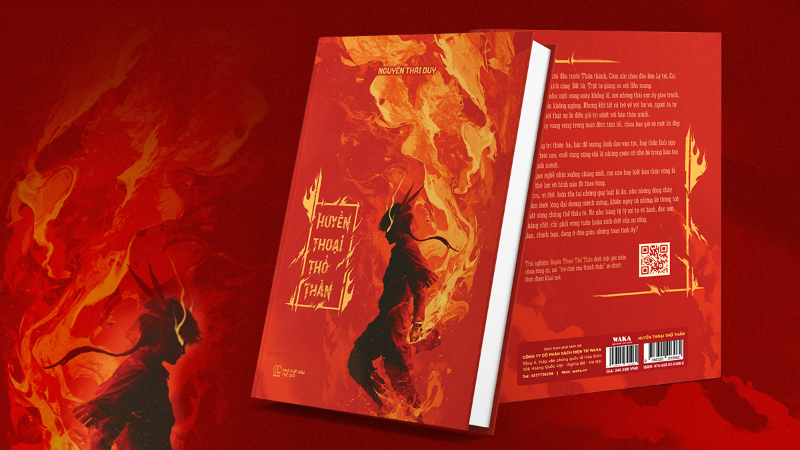
The work is considered a bold step forward for domestic fantasy literature, expanding the creative range and shaping a new approach to the god-demon-planet genre.
For many years now, fantasy works on the Vietnamese market have mostly come from translations, while domestic creations have only appeared sporadically. "The Legend of the Earth God" therefore has a meaning beyond the role of a book, marking the aspiration to create completely new worlds with Vietnamese imagination, in the spirit of integration while still maintaining its own identity.
The work revolves around the character Kea, a teenager who carries the soul of the Fire God Agnis and the mark of a dark ego. On the planet Noah - where the sun is only a legend and storms become an immutable law - Kea is forced to enter a life-and-death battle between light and darkness, between his assigned destiny and his own final choice. The story is fast-paced, rich in cinematic quality, with many battle scenes described sharply, creating the feeling of reading like watching a large-scale action movie.
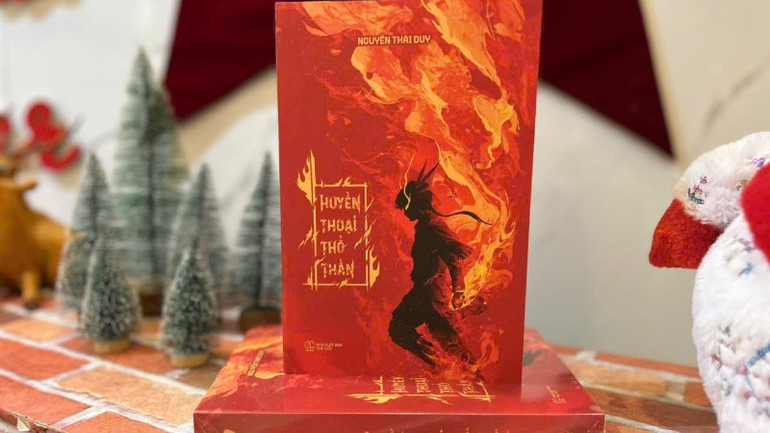
What makes "Legend of the Earth God" special, besides its massive world structure, is the way the author puts the character into thorny moral questions: if all that remains is pain, what will people do with it? Where does Akanis - the rejected and abandoned one - become a villain: from personal choice, from the community, or from the divine system that imposes fate?
As for Kea, the child who suffered much loss and possessed the power of destruction, he was faced with the choice of revenge or forgiveness. At the decisive moment, he chose to embrace the pain of his enemies to end the spiral of destruction. That choice highlights the consistent message of the work: power does not come from light or darkness, but from the ability to decide for oneself, from daring to choose the right thing.
Against the backdrop of conflict between races, gods and demonic forces, the story raises profound questions about dignity and freedom. In a world controlled by theocracy, where faith is turned into a tool of domination, are humans still free or are they just pawns serving the ancient secrets of the universe? The work offers a straightforward perspective: dignity can only be protected when people dare to doubt, dare to stand up and dare to choose.
The novel expands the range of reflection on sacrifice, redemption and the nature of heroes. Heroes are not the strongest survivors, but those who dare to sacrifice themselves to free the world and give others a chance to live. In the harsh world of Noah, where people must fight in the humid forests of Sylvinas or the vast desert of Terrias, the battle to remain human is more difficult than any battle with the gods.
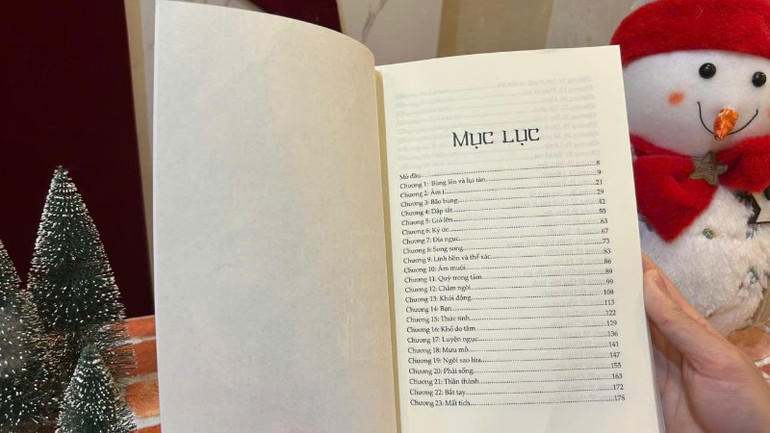
The appearance of "The Legend of the Earth God" also shows a positive cultural signal, that is, young Vietnamese literature is boldly entering genres that require open imagination, structural thinking and world-building skills. The project, in some ways, contributes to diversifying the creative market, encouraging young people to try their hand at fantasy - a field that has long depended mainly on translated books.
The novel is published by Waka, published by The Gioi Publishing House, released in December 2025 with a capacity of 608 pages. Although it is a work of fiction, "Legend of the Earth God" brings very close reflections to today's readers about pain, the desire for goodness, the right to choose and being human in an ever-changing world.
In the flow of contemporary literature, creative experiments are increasingly appreciated. The birth of this work can be seen as a mark, affirming that the writer's imagination is strong enough to step out into the world with his own stories.
Source: https://nhandan.vn/huyen-thoai-tho-than-dau-an-moi-cua-van-hoc-fantasy-viet-nam-post928299.html
![[Photo] National Assembly Chairman Tran Thanh Man attends the VinFuture 2025 Award Ceremony](/_next/image?url=https%3A%2F%2Fvphoto.vietnam.vn%2Fthumb%2F1200x675%2Fvietnam%2Fresource%2FIMAGE%2F2025%2F12%2F05%2F1764951162416_2628509768338816493-6995-jpg.webp&w=3840&q=75)


![[Photo] 60th Anniversary of the Founding of the Vietnam Association of Photographic Artists](/_next/image?url=https%3A%2F%2Fvphoto.vietnam.vn%2Fthumb%2F1200x675%2Fvietnam%2Fresource%2FIMAGE%2F2025%2F12%2F05%2F1764935864512_a1-bnd-0841-9740-jpg.webp&w=3840&q=75)










![[Photo] National Assembly Chairman Tran Thanh Man attends the VinFuture 2025 Award Ceremony](https://vphoto.vietnam.vn/thumb/402x226/vietnam/resource/IMAGE/2025/12/05/1764951162416_2628509768338816493-6995-jpg.webp)
![[Infographic] Air pollution and recommendations from the Ministry of Health](https://vphoto.vietnam.vn/thumb/402x226/vietnam/resource/IMAGE/2025/12/05/1764950568593_screen-shot-2025-12-05-at-222015-png.webp)












































Comment (0)