

What's remarkable is that lightning strikes in the same location and at the same time, repeating itself for 300 days each year. It's at sunset over Lake Maracaibo – a large brackish lake in northwestern Venezuela – that strong winds rise and thunder and lightning begin to tear through the sky. For years, locals have regularly witnessed this "fury" of nature, with thunderstorms lasting about 10 hours each night.
Because thousands of lightning strikes hit the lake every night, the sky over Lake Maracaibo is almost always brightly lit. Locals even use this light to determine direction when navigating boats at night. The Guinness World Records has awarded Lake Maracaibo the title of "the place with the most lightning strikes in the world".
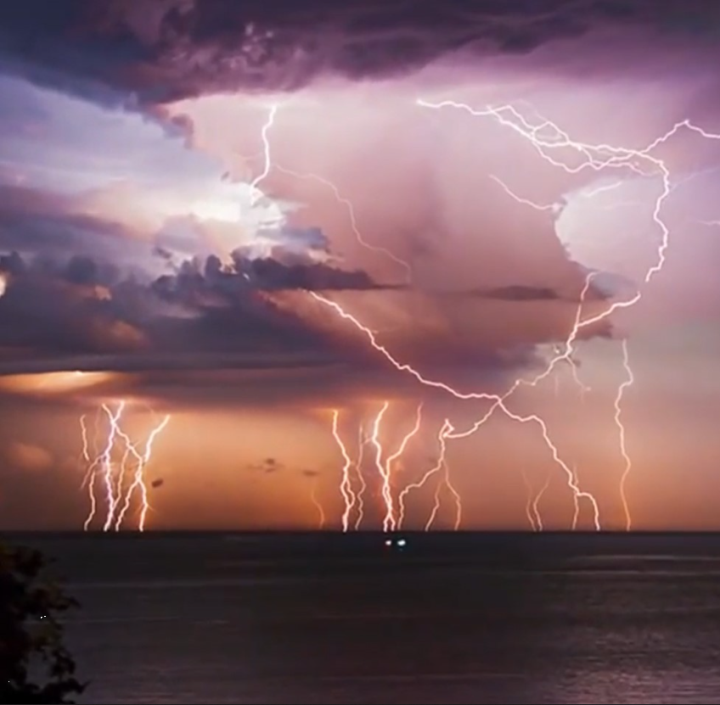
The Guinness Book of Records has awarded Lake Maracaibo the title of "The most lightning-struck place in the world." (Photo: AS)
For centuries, sailors used lightning strikes as natural markers. They called them "Maracaibo beacons" or "Catatumbo lightning." Locals could see these lightning strikes from over 400 kilometers away.
The time of year when Lake Maracaibo is most heavily struck by lightning is in October. That's when a series of storms bring heavy rain and thunder. At times, the area experiences up to 28 lightning strikes in a single minute – enough energy to power 100 million light bulbs.
Experts have spent years trying to find an explanation for this unusual phenomenon. One hypothesis suggested that the area around Lake Maracaibo was home to many uranium mines, which attracted lightning. However, due to a lack of evidence, this argument was rejected.
Scientists later concluded that the air above Lake Maracaibo became more electrically conductive due to methane rising from the oil fields below. When the ionized methane met the colder air from the mountain range, it created a collision between the two currents, generating a large positive charge that was discharged as lightning.
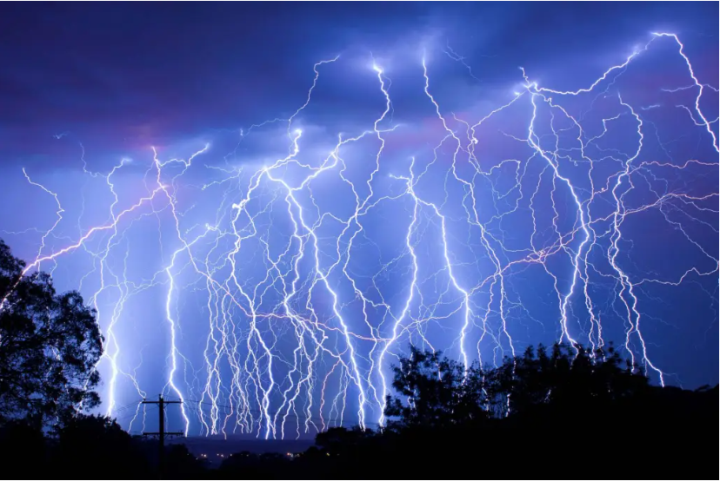
For 300 days each year, Lake Maracaibo is struck by lightning. (Photo: AS)
In addition, the unique topography and wind patterns of the area also contribute to this phenomenon. Maracaibo lightning originates from large storm clouds at altitudes above 5,000 meters. Depending on the humidity of the air on different nights, the lightning strikes appearing in the Maracaibo Lake area have different colors.
When the air humidity is high, lightning flashes are bright red, pink, orange, or even purple. When the air humidity is low, the lightning flashes are white. In a single evening, people can see lightning flashes of countless different colors.
Therefore, more and more adventurous tourists are flocking to this place to witness the spectacular sound and light "show" of nature. Many are amazed and delighted to admire this special phenomenon.
Some scientists have also revealed that the ideal time to observe the unique lightning strikes that appear at Lake Maracaibo is between September and November each year.
Quoc Thai (Source: AS)
Beneficial
Emotion
Creative
Unique
Source
























































































Comment (0)