

Regulations should establish names for different types of media that conform to international terminology.
Commenting on the draft Law on Journalism (amended), National Assembly deputies from Group 9 stated that the draft law demonstrates a significant effort in institutionalizing the Party's views and guidelines on the national journalism development strategy. At the same time, it adds many provisions on the economics of journalism, online journalistic activities, digital transformation, and human resource development for journalism in the current period.
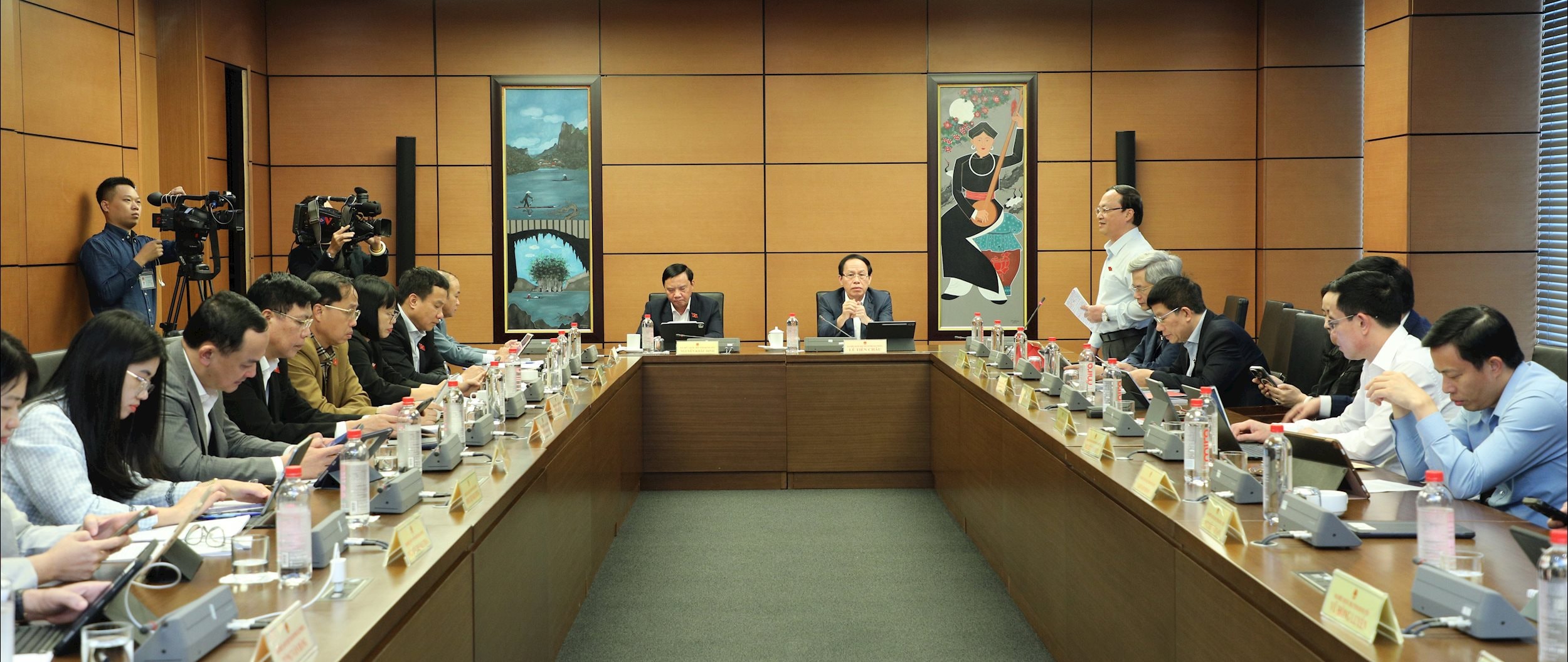
National Assembly Deputy Do Tien Sy ( Hung Yen ) emphasized that the draft Law once again affirms that revolutionary journalism is closely linked to the national liberation revolution, the building and protection of the Fatherland, and operates professionally, humanely, and modernly.
Regarding types of media in the context of digital transformation, the draft Law inherits current regulations, identifying four types of media: radio, print, television, and online.
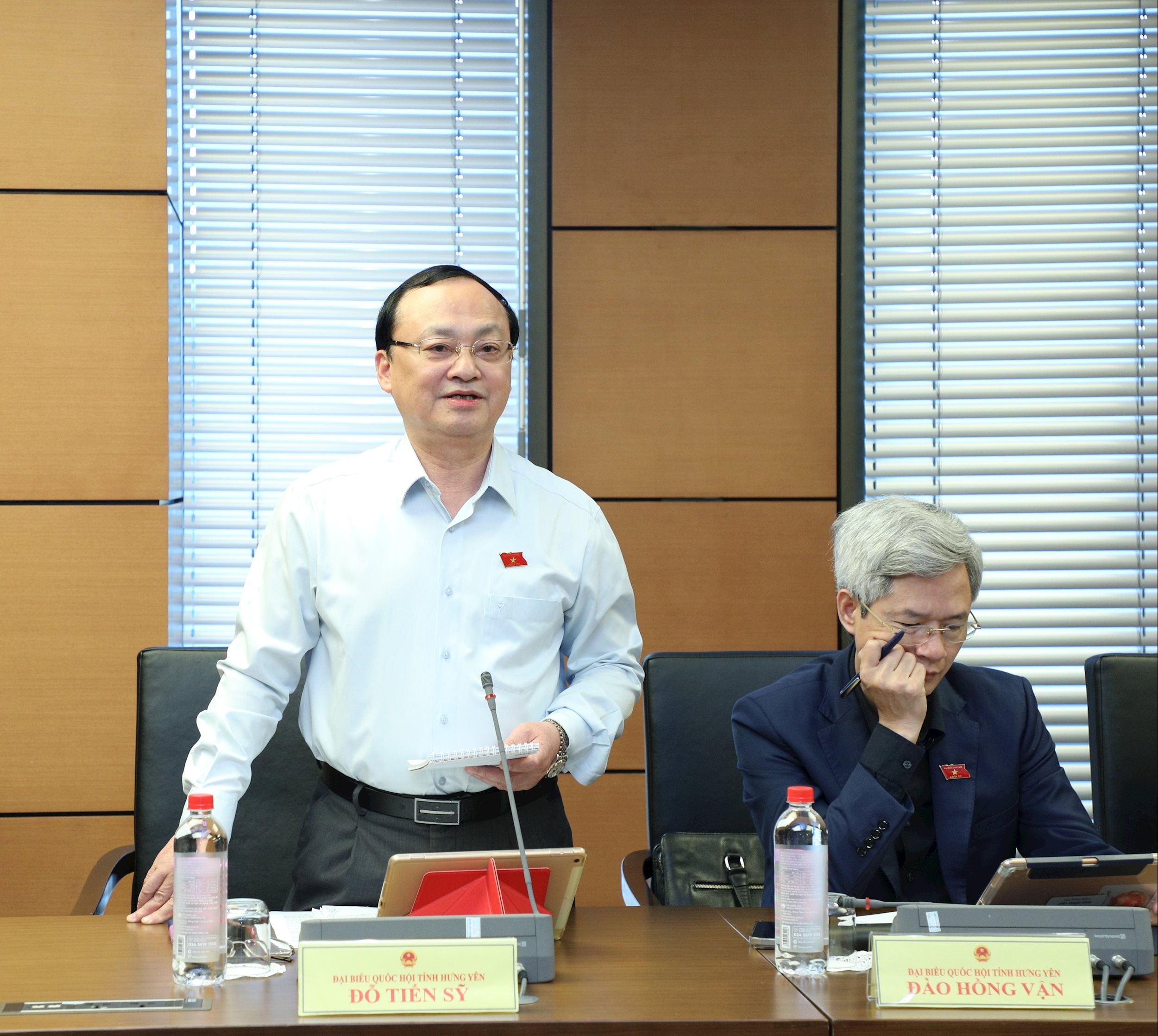
Analyzing the terminology and based on international practice, National Assembly Deputy Nguyen Thi Viet Nga (Hai Phong) noted that the regulations are not truly consistent with the classification methods commonly used in the region and around the world .
Representative Nguyen Thi Viet Nga suggested that the names of different types of media should be revised to ensure they align with international terminology. For example, instead of "spoken news, print news, television news, and online news," she proposed using the terms "print news," "radio and television news," and "electronic news." She argued that these terms are universal, compatible with international professional terminology, accurately reflect the technological nature of each type of media, and are highly significant in the integration process, facilitating international cooperation, training, research, and state management of journalism.
Sharing the same view, delegate Do Tien Sy suggested replacing the phrase "spoken news, visual news" with "radio and television broadcasting" to align with the currently popular definition.
In light of the digital transformation trend, delegate Do Tien Sy suggested considering and boldly adding a fifth category: "multimedia, multi-platform journalism," which is a type of journalism published and transmitted over the internet. This would involve media organizations releasing digital products integrating articles, videos, audio, livestreams, etc. If this category is not added, the drafting agency needs to provide a clearer definition of "digital content channels of media organizations" in the draft Law.
Avoid the trend of commercializing content or "journalizing" magazines.
Regarding the economic development of journalism and the financial mechanisms for media organizations, Article 21 of the draft Law clearly stipulates the revenue sources of media organizations, including: allocated budget; revenue from advertising, copyright sales, service provision, sponsorship, business cooperation, etc.
According to delegate Nguyen Thi Viet Nga, this is a very important step forward, demonstrating a new awareness of the development of journalism as a field that is both socio-cultural and creative economically. And, current practice shows that many press agencies are also facing difficulties in securing operational resources.
Meanwhile, the need for investment in technology, digital transformation, and improved content quality among media organizations is growing and requires significant funding.
Therefore, establishing a mechanism for the economics of journalism is absolutely essential.
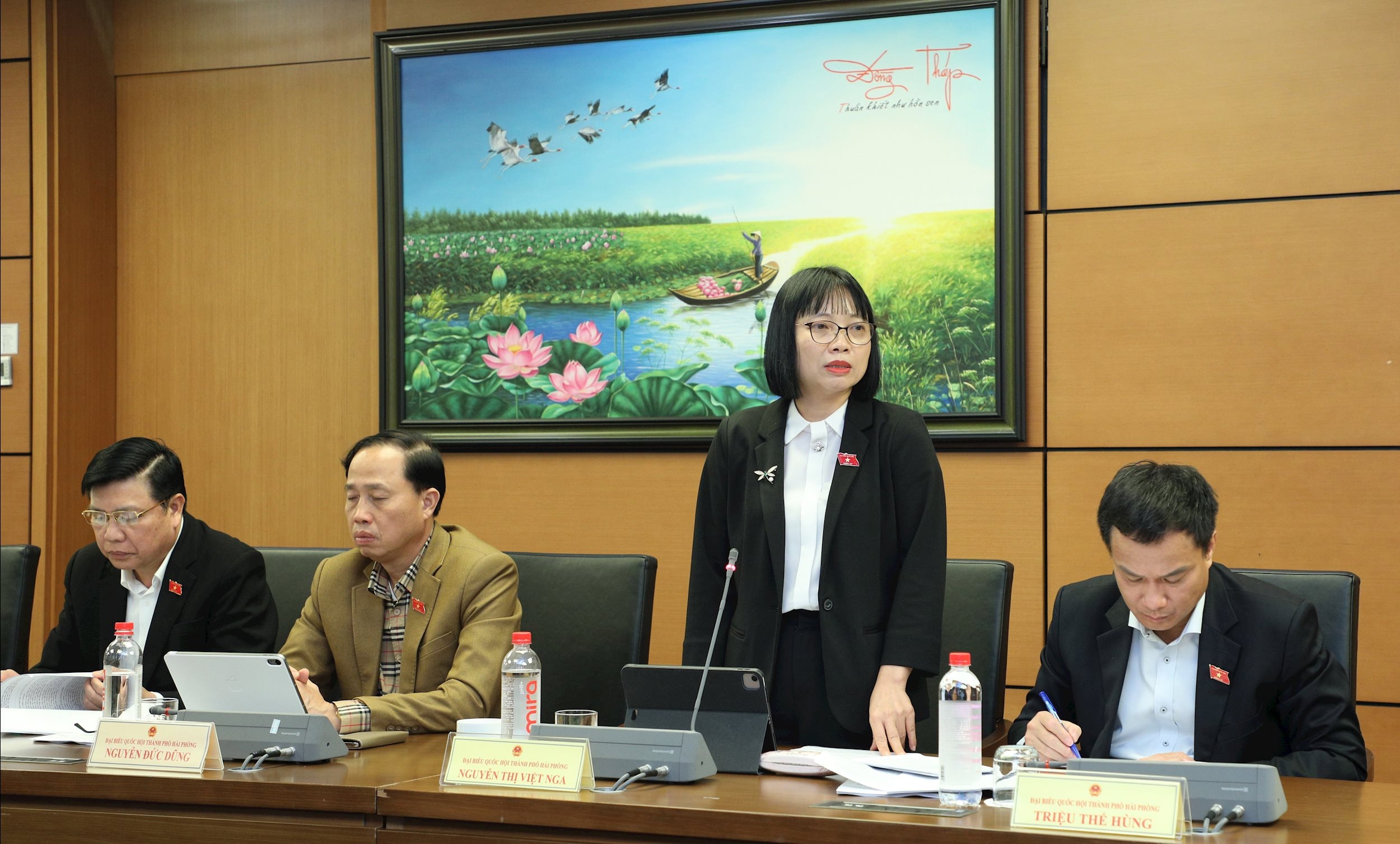
However, the concept of "journalistic economics" in the draft Law remains vague and lacks a clear definition. Representative Nguyen Thi Viet Nga suggested that a review is needed to add an official definition of journalistic economics; clarifying the scope and limits of investment, partnerships, and advertising activities, avoiding the trend of commercializing content or "journalizing" magazines.
In addition, research should be conducted on the mechanism of a Journalism Development Fund to support media organizations in fulfilling their socio-political tasks, serving remote areas, and supporting digital transformation. The establishment of Journalism Funds has been implemented in many countries around the world.
Regarding the conditions for granting press operating licenses, point b, clause 1, Article 17 of the draft Law stipulates that the entities eligible to apply for a press operating license are higher education institutions as prescribed by the Law on Higher Education; science and technology organizations organized in the form of academies or institutes as prescribed by the Law on Science, Technology and Innovation; and provincial-level hospitals or equivalent or higher.
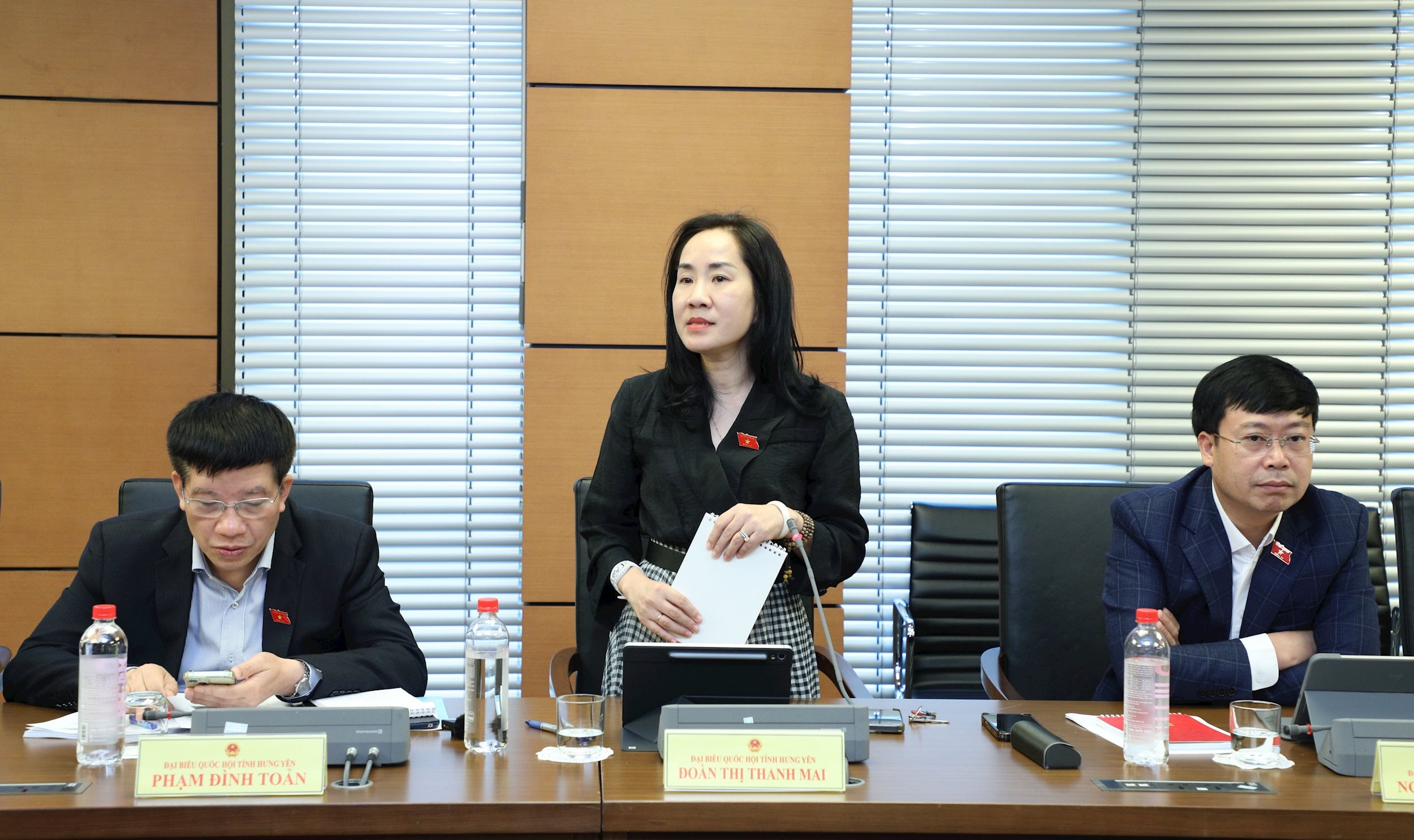
National Assembly Deputy Doan Thi Thanh Mai (Hung Yen) stated that while educational institutions and scientific and technological organizations have clear legal basis and regulations, the legal basis for the category of "provincial-level hospitals or equivalent and above" is unclear. Therefore, the deputy requested the drafting agency to clarify these points further.
In addition, delegates also suggested reconsidering the regulation in Clause 1, Article 26, regarding "press agencies submitting five printed copies of their publications and one digitized copy for archiving at the National Library of Vietnam" to align with the reform of archiving methods, the reduction of paper documents, and the enhancement of digital archiving. Is it necessary to submit five printed copies of publications for archiving, or are there many other forms of digital archiving that can reduce paper documents?
Source: https://daibieunhandan.vn/lam-ro-pham-vi-va-gioi-han-trong-hoat-dong-dau-tu-lien-ket-quang-cao-10392670.html


![[Photo] Closing Ceremony of the 10th Session of the 15th National Assembly](/_next/image?url=https%3A%2F%2Fvphoto.vietnam.vn%2Fthumb%2F1200x675%2Fvietnam%2Fresource%2FIMAGE%2F2025%2F12%2F11%2F1765448959967_image-1437-jpg.webp&w=3840&q=75)

![[Photo] Prime Minister Pham Minh Chinh holds a phone call with the CEO of Russia's Rosatom Corporation.](/_next/image?url=https%3A%2F%2Fvphoto.vietnam.vn%2Fthumb%2F1200x675%2Fvietnam%2Fresource%2FIMAGE%2F2025%2F12%2F11%2F1765464552365_dsc-5295-jpg.webp&w=3840&q=75)



































![[OFFICIAL] MISA GROUP ANNOUNCES ITS PIONEERING BRAND POSITIONING IN BUILDING AGENTIC AI FOR BUSINESSES, HOUSEHOLDS, AND THE GOVERNMENT](https://vphoto.vietnam.vn/thumb/402x226/vietnam/resource/IMAGE/2025/12/11/1765444754256_agentic-ai_postfb-scaled.png)















































Comment (0)