

Localities such as Ho Chi Minh City, Dong Nai and Tay Ninh take advantage of infrastructure, human resources and new policy mechanisms to create a development boost, open up opportunities for international connection and enhance regional economic competitiveness.
Infrastructure and policies to promote regional connectivity
According to data from the Workshop on the publication of the report "Increasing logistics linkages to promote socio-economic development in the Southeast region" organized by the Vietnam Chamber of Commerce and Industry , Ho Chi Minh City Branch (VCCI-HCM) in coordination with the Australian Embassy in August 2025, the Southeast region, including Ho Chi Minh City, Dong Nai and Tay Ninh, currently contributes nearly 32% of GDP and 44.7% of the national budget. However, rapid urbanization, lack of synchronous transport infrastructure, and overlapping administrative procedures have increased logistics costs and reduced business competitiveness.
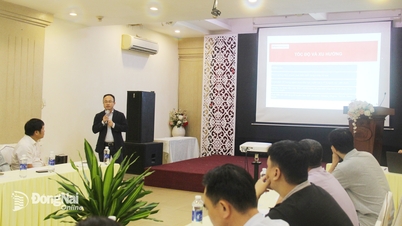
The research report proposes three breakthrough solutions: optimizing infrastructure by connecting transport modes; synchronizing institutions and processes, applying common electronic customs clearance; standardizing and improving the quality of human resources through a unified training system and cooperation between businesses and educational institutions.
VCCI Vice President Vo Tan Thanh emphasized that the report provides a comprehensive picture of infrastructure, institutional, process and human resource bottlenecks. Professor Thai Van Vinh (RMIT University) said that businesses, relevant agencies and vocational training institutions are important links in promoting regional logistics linkages.
Ho Chi Minh City after merging with Binh Duong and Ba Ria - Vung Tau will form a "super urban - financial - industrial - seaport". According to the Ho Chi Minh City Center for Enterprise Support and Development (CSED) Le Minh Trung, this is the basis for the city to become an international logistics center, competing in Southeast Asia by 2030 and Asia and the world by 2045. The city focuses on developing smart warehouses, inter-regional logistics chains, and training high-quality human resources, applying IoT, RFID, WMS, robotics and AI technology to optimize costs, increase efficiency and move towards environmentally friendly smart warehouses.
Dong Nai Province is also promoting the development of logistics infrastructure, taking advantage of Long Thanh International Airport, large industrial parks and a system of concentrated logistics centers. The province plans to have four modern logistics centers to serve domestic production and international export, and to establish the Dong Nai Logistics Association in December 2025.
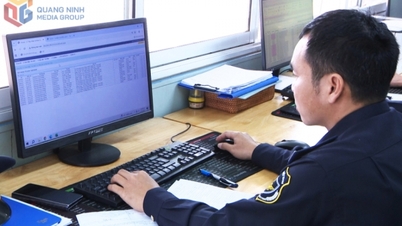
Mr. Tran Van Hoan, representative of a transport company in Bien Hoa ward, said that improving inter-regional infrastructure and synchronizing customs clearance processes is a turning point for the development of logistics in the Southeast. Enterprises can connect ports, warehouses and distribution centers faster, reduce storage and transportation costs, and improve import and export efficiency. Applying modern management technology and cooperating with training institutions helps logistics human resources meet international standards, creating a competitive advantage for enterprises and economic regions.
New logistics center, growth driver
After the merger from July 1, 2025, Tay Ninh province has a 369 km long border with Cambodia, 4 international border gates and 4 national border gates, the province becomes a strategic gateway connecting the Southeast with the Mekong Delta. Transport infrastructure plays a key role. The Ho Chi Minh City - Moc Bai Expressway project (expected to open in 2027), Ring Road 3, Ring Road 4 and Ben Luc - Long Thanh Expressway are being urgently implemented. Tay Ninh has 46 industrial parks, oriented to expand to 59 parks by 2030, creating a foundation to attract industrial - logistics investment.
The Vietnam Real Estate Research Institute (VIRES) believes that the communes of Duc Hoa, An Ninh, Hiep Hoa, etc. in Tay Ninh have the same development potential as Binh Duong in 2015, with abundant industrial land, ready labor and convenient infrastructure connections. The area bordering Ho Chi Minh City is expected to become a satellite city - a logistics and industrial center.
Tay Ninh authorities are preparing to open Tan Nam international border gate (December 2025), start construction of Binh Hiep (2026), and invest in traffic infrastructure at Xa Mat and Chang Riec border gates with a total capital of nearly 340 billion VND. These are key projects to improve freight transport capacity, promote logistics, border trade, tourism and increase budget revenue.
The recent conference “Connecting the supply chain of import-export goods and e-commerce in Tay Ninh province 2025” with the participation of 142 enterprises from 25 countries, including Amazon, Walmart, Aeon, Central Retail, etc., affirmed the international appeal of Tay Ninh. Deputy Minister of Industry and Trade Phan Thi Thang emphasized that this success is thanks to infrastructure planning, reform policies, synchronous logistics chains and a vision for sustainable development.
According to VIRES, logistics is the “blood vessel” connecting the economy, helping businesses reduce costs, increase product value and expand exports. Tay Ninh, with its geographical advantages, modern infrastructure, improved investment environment and the participation of large corporations such as Becamex, Vingroup, Sun Group, is making a breakthrough, aiming to become the new industrial - logistics - urban center of the Southeast.
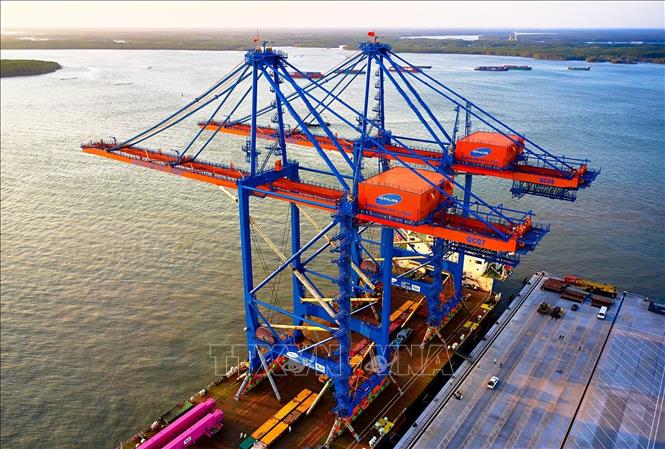
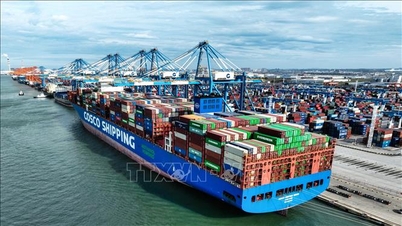
Meanwhile, Long An International Port develops the model of “Seaport - Industry - Logistics - Urban”, connecting the international supply chain, reducing costs and shortening delivery time. The friendship agreement between Long An Port and Portland Port (USA) and Gothenbury (Sweden) opens up opportunities to learn from experience, develop maritime transport routes, and enhance global logistics connectivity.
With only one month left until 2025, the Southeast region is witnessing a breakthrough in the logistics sector, from Ho Chi Minh City, Dong Nai to Tay Ninh. Infrastructure connectivity, institutional reform, human resource development and international cooperation are the main driving forces helping this dynamic economic region improve its competitiveness, reduce costs, expand import-export markets and move towards becoming the leading logistics center in the region. With the concerted efforts of the government and businesses, the Southeast region is on track to become the national logistics “locomotive”, opening up opportunities for sustainable development in the coming decade.
Source: https://baotintuc.vn/kinh-te/logistics-dong-nam-bo-troi-day-manh-me-cuoi-nam-2025-20251202105930273.htm























![[Photo] Worshiping the Tuyet Son statue - a nearly 400-year-old treasure at Keo Pagoda](/_next/image?url=https%3A%2F%2Fvphoto.vietnam.vn%2Fthumb%2F1200x675%2Fvietnam%2Fresource%2FIMAGE%2F2025%2F12%2F02%2F1764679323086_ndo_br_tempimageomw0hi-4884-jpg.webp&w=3840&q=75)
![[Photo] Parade to celebrate the 50th anniversary of Laos' National Day](/_next/image?url=https%3A%2F%2Fvphoto.vietnam.vn%2Fthumb%2F1200x675%2Fvietnam%2Fresource%2FIMAGE%2F2025%2F12%2F02%2F1764691918289_ndo_br_0-jpg.webp&w=3840&q=75)






















































Comment (0)