

In addition to its practical value, Ngom Thung baskets are now also souvenirs serving local tourism development, promoted at many major events inside and outside the province.
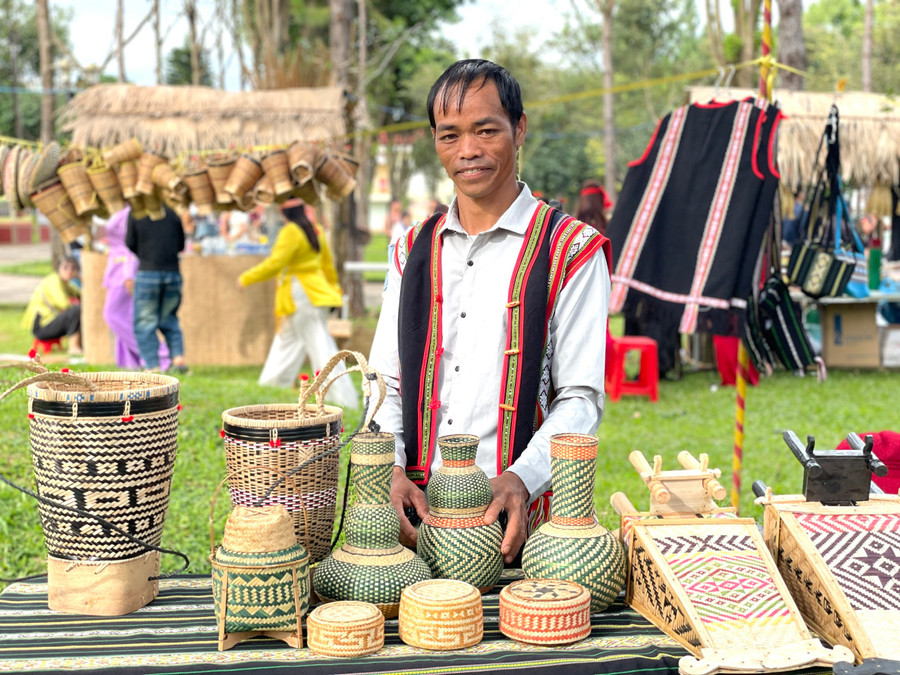
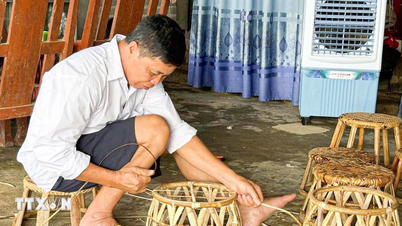
Artisan Rinh said he learned to weave baskets when he was 12-13 years old thanks to his uncle's teaching. The most difficult step is splitting the bamboo strips, which requires great skill and meticulousness so that all the bamboo strips are the same.
The patterns on the basket are common patterns on traditional brocade. You also have to master how to combine each bamboo thread to get the shape of an octagonal sun, diamond, fringe...
Not to mention, there are many types of baskets, some with lids, some without. There are types that at first glance do not have a mouth because the outside is completely woven, but in fact the mouth of the basket is "designed" to fit the wearer's back, helping to perfectly protect the items inside.
Notably, Ngom Thung village is famous for its 2-layer baskets to increase durability. The inner bamboo is shaved very thin, smaller than the outer bamboo and has no patterns. These 2 layers are pressed close together and you have to look closely to notice them.
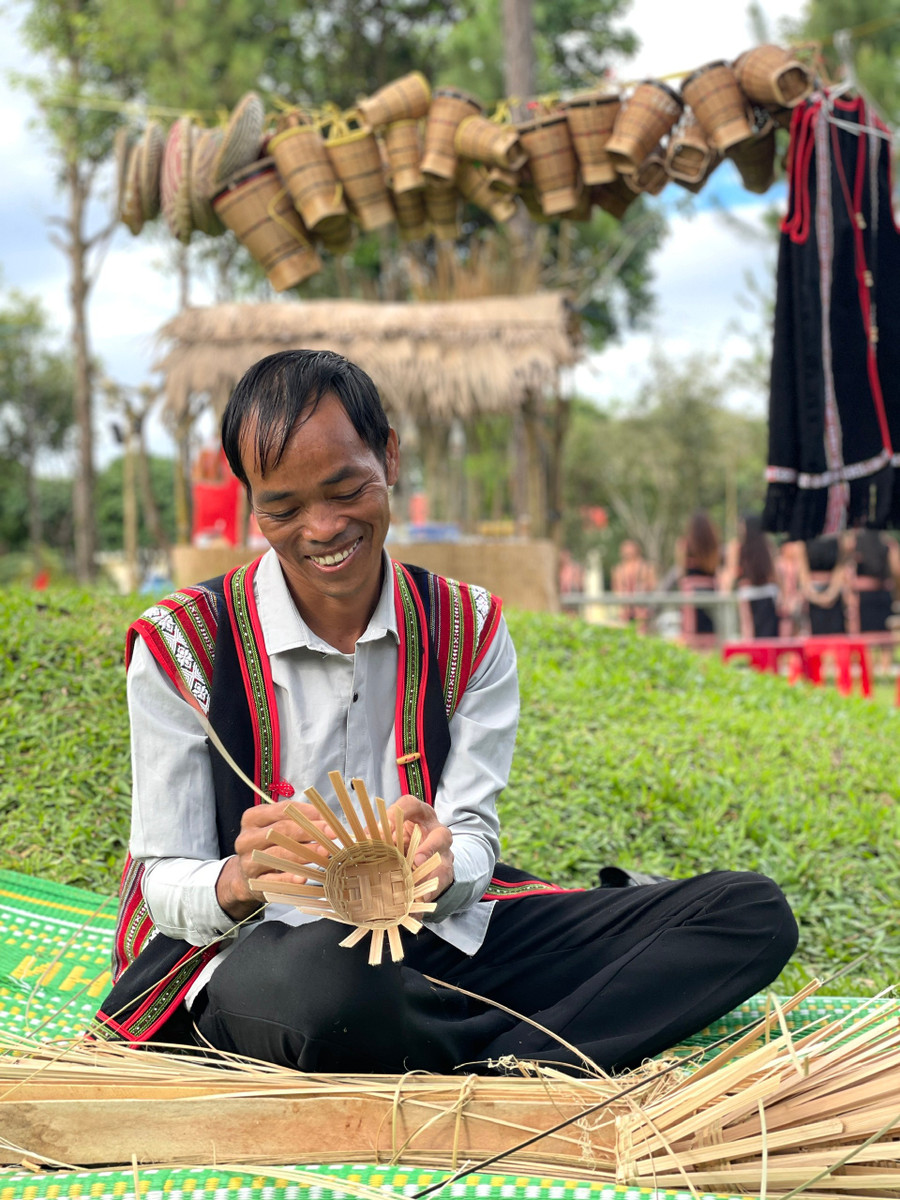
Currently, almost every household in the village of more than 240 households knows how to weave baskets and make some additional tourism products such as models of communal houses and stilt houses.
Mr. Rinh is not satisfied but still wants to create more unique products.
That's why recently he has learned and experimented with weaving many more sophisticated models of vases, trays, storage boxes, backpacks, etc.
Holding up one of the newly launched dried flower vases, Mr. Rinh said that this one was inspired by the fish basket that the Jrai people often wear on their hips when wading in the fields.
The colors are also very “organic” when taking orange from the bark of the forest, green from the leaves of vegetables. Or like a round box with a lid that fits in the palm of your hand with beautiful patterns, can be used to hold jewelry or small items.
Artisan Rinh shared that orders from within and outside the province help his family “live well” thanks to the weaving profession. In months when there are many orders, he has more than 10 million VND in addition to the income from farming; the remaining average is 5-6 million VND/month.
Currently, his two eldest children are very skilled in the profession thanks to their father's teaching. With his high skills, he was invited by the Department of Culture, Sports and Tourism to teach in some localities in the province.
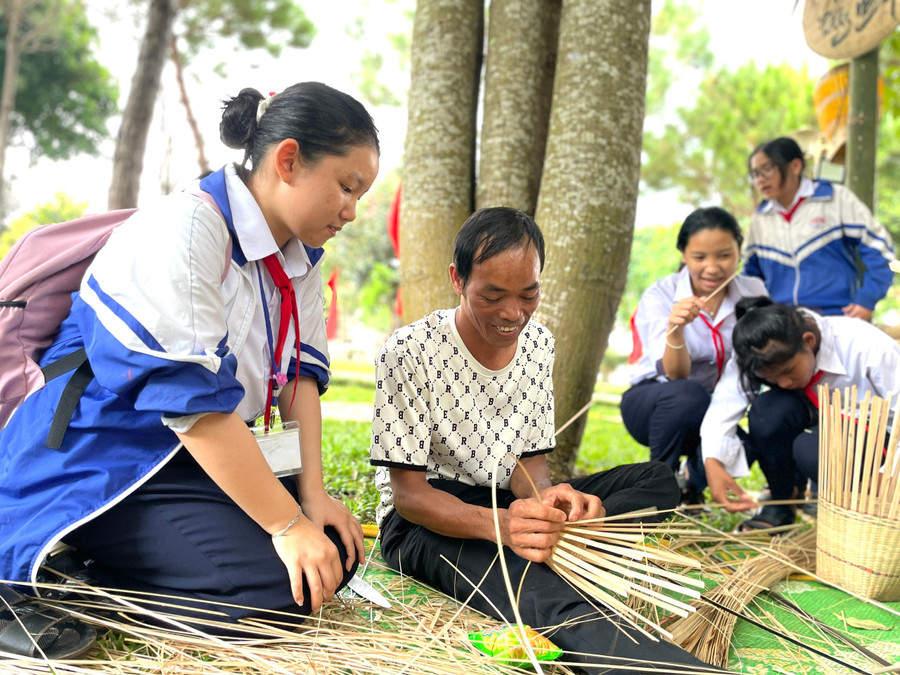
For many years, Ms. Nguyen Thi An, Deputy Head of the Professional Department (Pleiku Museum), has been in charge of inviting Mr. Rinh to participate in cultural events organized by Pleiku Museum. She also expressed surprise at the creativity of this artist with a gentle smile.
“A few years ago, Mr. Rinh mainly made traditional products such as baskets and communal houses. But recently, he has been very diligent in researching and creating new, beautiful and unique products.
In addition to large and small programs in the province, the Museum also invited him to participate in the 1st Cultural, Sports and Tourism Festival of Ethnic Groups in the Central Highlands in Kon Tum province in 2023.
It is no exaggeration to say that Mr. Rinh is a person who can tell stories with bamboo sticks. From his hands, a corner of Jrai culture has vividly appeared" - Ms. An said.
Having been guided by Mr. Rinh to experience weaving at a recent program, Ms. Le Thi Kieu Dung (Pleiku ward) could hardly believe that she had been able to weave a small basket by herself within 2 hours, which could be used to hold pens on her desk.
As for making the backpack base and strap, she received support from Mr. Rinh. Ms. Dung commented: "Looking at the new products with beautiful decorative patterns, you can see that Mr. Rinh is a person full of passion for traditional culture."
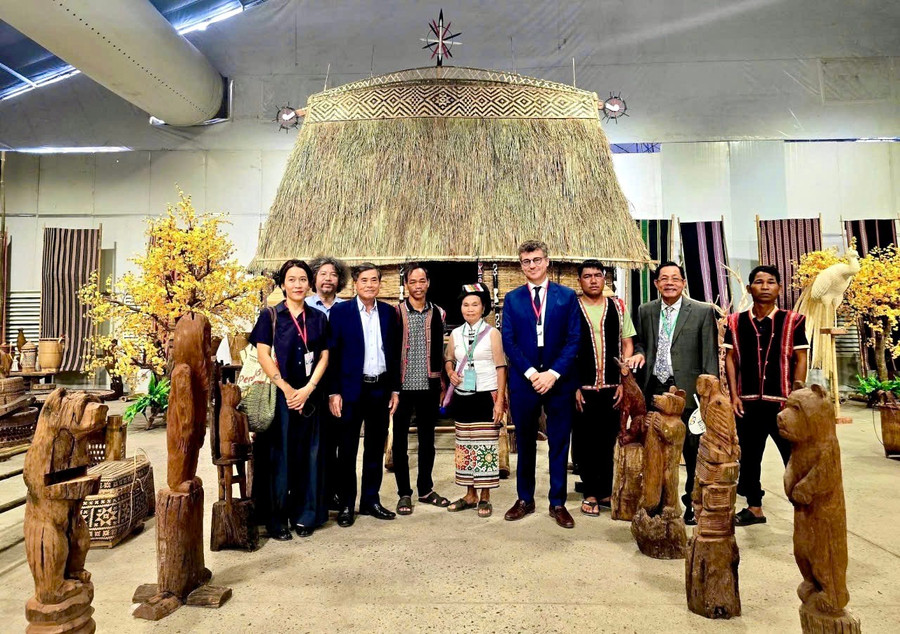
Most recently, in October 2025, Mr. Rinh was invited to participate in the 16th International Trade Fair for Decorations, Household Goods and Gifts in Ho Chi Minh City.
At this event, in addition to traditional hand-woven products, this artisan also showed his versatility by displaying a large-scale model of a communal house and many folk wooden statues.
He confided: "In the near future, I will try to continue learning to make new products, helping more people know about our national culture."
Source: https://baogialai.com.vn/loi-nua-tre-ke-chuyen-buon-lang-post574200.html

![[Photo] Cat Ba - Green island paradise](/_next/image?url=https%3A%2F%2Fvphoto.vietnam.vn%2Fthumb%2F1200x675%2Fvietnam%2Fresource%2FIMAGE%2F2025%2F12%2F04%2F1764821844074_ndo_br_1-dcbthienduongxanh638-jpg.webp&w=3840&q=75)


























































Comment (0)