

Six months after signing the protocol, despite seven businesses being approved, Vietnam had not exported any frozen durian shipments to China by mid-February.
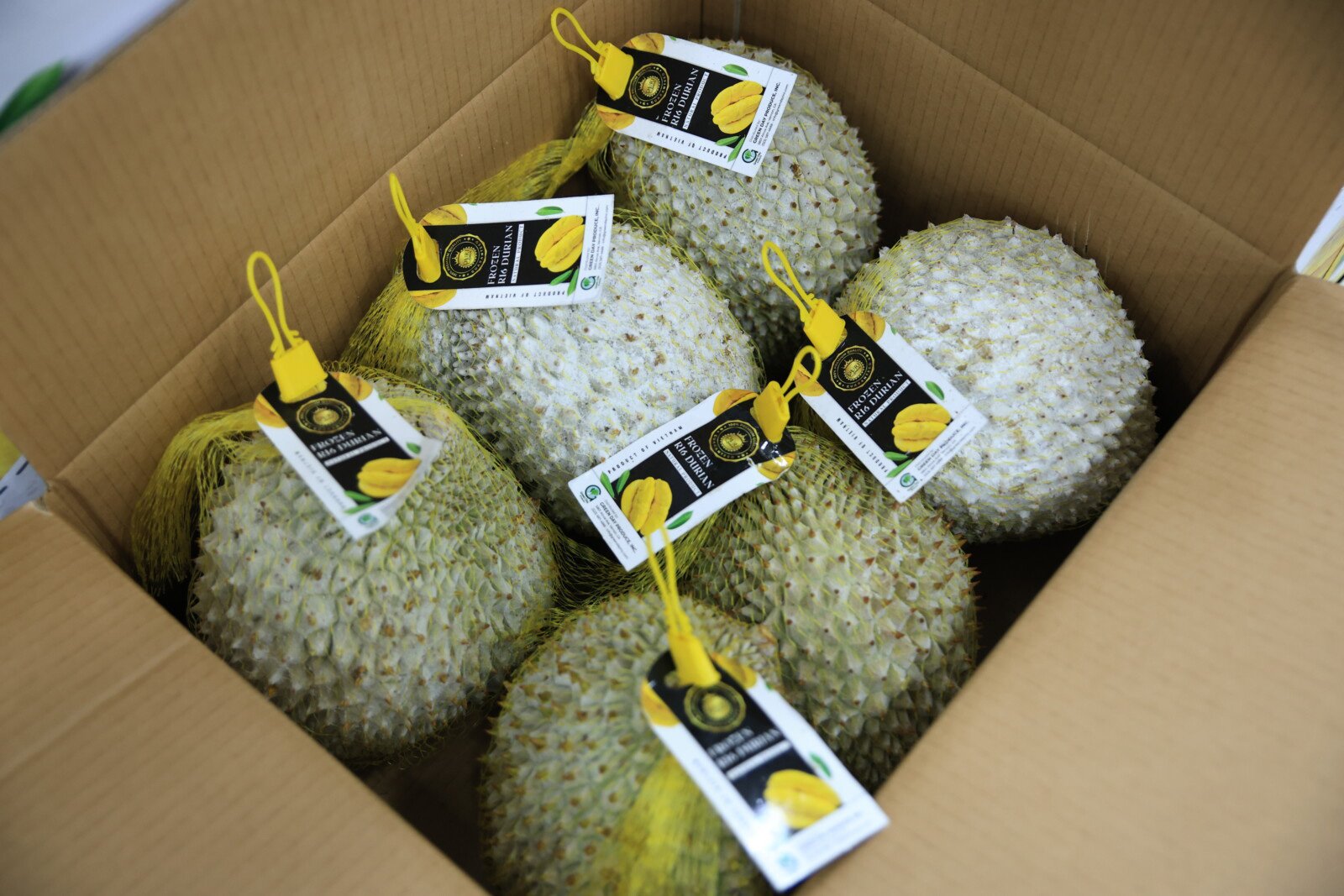
Frozen whole durian - Photo: T.VY
Speaking to Tuoi Tre Online, Deputy Minister of Agriculture and Rural Development Hoang Trung said the ministry is creating all conditions to promote the export of frozen durian in 2025.
Currently, seven Vietnamese businesses have been recognized by China for export. In addition, 25 other businesses have submitted applications and are awaiting approval from the Chinese side.
According to Mr. Trung, businesses have already signed contracts to export frozen durian to China. The first shipments of frozen durian will be exported soon.
"Technically, the Ministry has already provided training and guidance on the export standards for frozen durian. The export of frozen durian now only depends on the signing of contracts between Vietnamese and Chinese businesses."
The Ministry has requested that businesses report any difficulties or obstacles encountered during the export process so that the Ministry, together with the General Administration of Customs of China, can resolve them.
"The businesses said that the only remaining obstacle is negotiating and finalizing the contract and delivery terms, as each container of frozen durian is of very high value," Mr. Trung said.
Mr. Truong A Vung, director of Toan Thang Import-Export Trading Company, said that the company has had its registration application approved and is currently waiting for notification from China regarding approval for exporting frozen durian.
According to Mr. Vung, the company expects to export its first batch of frozen durian at the end of May.
"China also has a huge demand for imported frozen durian. The biggest challenge right now is testing for certain chemical residue levels as required by China."
Meanwhile, the issue of residue levels in our durian is sometimes not guaranteed. This is a concern for the company, so we must control the quality of durian in order to export it," Mr. Vung said.
It is understood that the approved businesses are still hesitant to export frozen durian for a rather surprising reason: concerns about not meeting China's requirements and regulations, especially regarding food safety.
If the durian is returned, the business will suffer huge losses (3-4 times the value of fresh durian), along with the risk of export suspension, revocation of the growing area code and packaging facility.
Previously, on August 19, 2024, the Ministry of Agriculture and Rural Development of Vietnam and the General Administration of Customs of China officially signed a protocol on plant inspection, testing, and food safety for frozen durian exported from Vietnam to China.
Frozen durian for export includes whole durian (with peel), pureed durian (without peel), and durian pulp (without peel).
According to the Plant Protection Department (Ministry of Agriculture and Rural Development), units wishing to export must register and obtain approval from the Chinese side.
Exporting businesses, packing facilities, and growing regions must strictly comply with the regulations in the protocol, especially regarding frozen durian originating from durian growing regions that are registered, managed, and monitored in Vietnam.
All relevant laws, regulations, and standards regarding food safety and plant quarantine in China must be complied with.
Frozen durian must be processed at a temperature of -35°C or lower for at least 1 hour until the core temperature reaches at least -18°C or lower, and this temperature must be maintained throughout storage and transportation.
Source: https://tuoitre.vn/ly-do-bat-ngo-khien-viet-nam-chua-the-xuat-khau-sau-rieng-dong-lanh-sang-trung-quoc-20250218151211626.htm














![[Photo] Prime Minister Pham Minh Chinh holds a phone call with the CEO of Russia's Rosatom Corporation.](/_next/image?url=https%3A%2F%2Fvphoto.vietnam.vn%2Fthumb%2F1200x675%2Fvietnam%2Fresource%2FIMAGE%2F2025%2F12%2F11%2F1765464552365_dsc-5295-jpg.webp&w=3840&q=75)

















































Comment (0)