

On the morning of August 22nd, in Thien Cam commune, the North Central Agricultural Science and Technology Institute, Green Carbon Japan Vietnam Co., Ltd., in coordination with the Ha Tinh Department of Agriculture and Environment, organized a field workshop to evaluate a model of rice production with reduced emissions, aiming towards generating carbon credits.
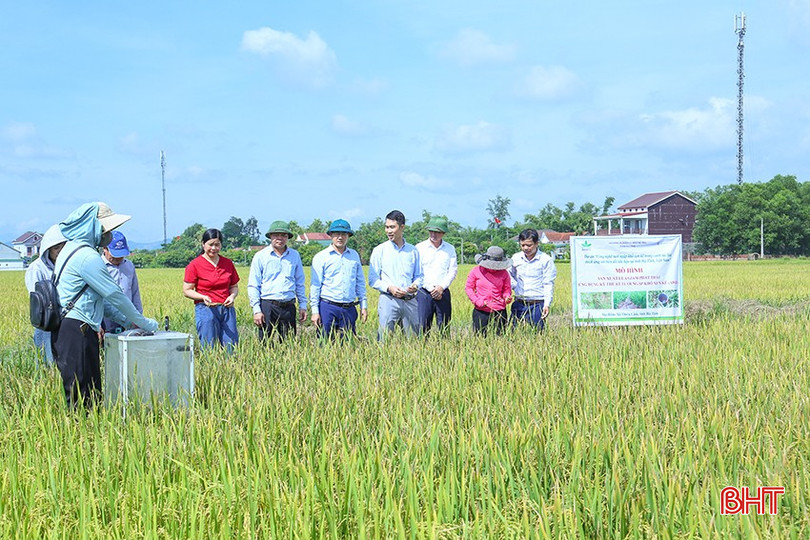
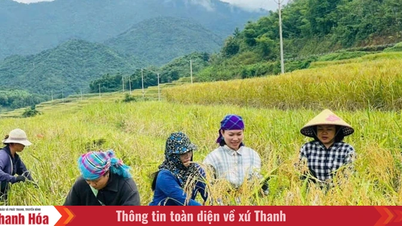
As part of the program, delegates visited a pilot model for generating carbon credits in rice production in Thien Cam commune and directly exchanged information with technical staff about the model's implementation process.
The model will be implemented in the summer-autumn crop season of 2025 on an area of 250 hectares in Trung Dong, Ha Phuc Dong, and Hung Loc villages of Thien Cam commune, with the participation of more than 750 households.
Previously, during the spring planting season, the model was also piloted on 50.7 hectares in Trung Dong village with 163 participating households, initially yielding positive results in production.
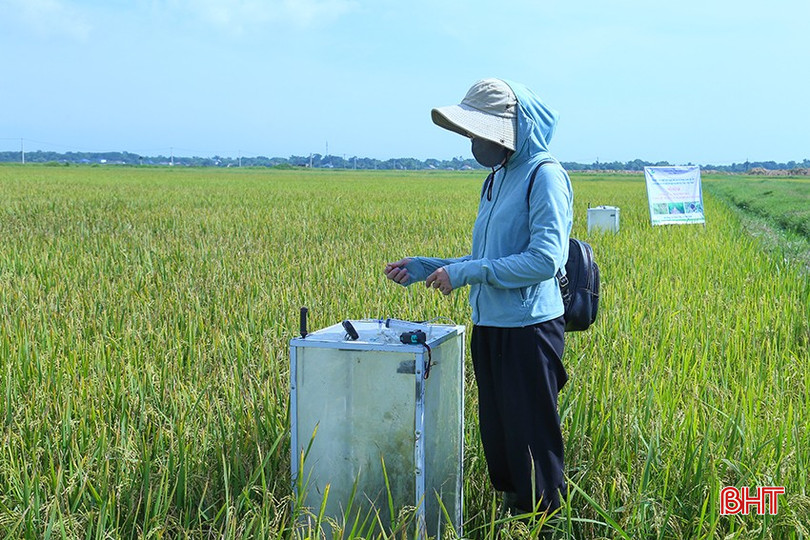
According to the procedure, farmers are guided to apply alternating wet and dry irrigation techniques to reduce methane (CH4) emissions – the main greenhouse gas in rice production, generated when fields are flooded for extended periods. This measure helps save irrigation water, reduce production costs, and maintain stable yields. Importantly, the reduced emissions can be converted into carbon credits and sold on the market, creating resources for reinvesting in production infrastructure and increasing farmers' income.
Project technical staff regularly inspect the fields and record data and evidence throughout the project implementation. Technical consultants are regularly consulted to address any emerging issues.
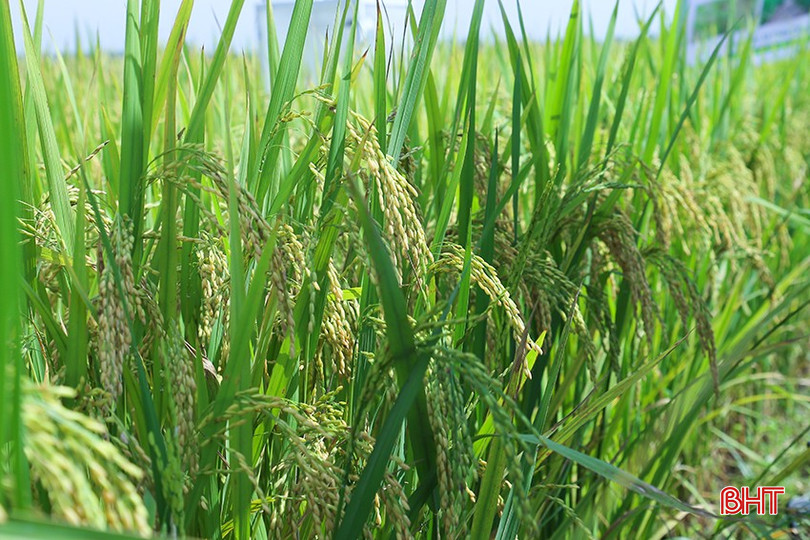
The evaluation results at the workshop showed that rice fields applying the alternating wet and dry irrigation model grew better, had more tillers, stronger stems, fewer pests and diseases, and better lodging resistance compared to the control fields. The average yield reached 72.5 quintals/ha in the spring crop and 52 quintals/ha in the summer-autumn crop.
Notably, this farming method can help reduce emissions by more than 70% compared to traditional continuous flooding farming methods for direct-seeded rice.
The benefits of this model lie not only in reducing emissions but also in lowering production costs, saving resources, and protecting the environment. From there, Ha Tinh can move towards building a brand for low-emission rice. This is considered a suitable solution for the strategy of sustainable agricultural development, climate change adaptation, and enhancing the value of agricultural products in the market.
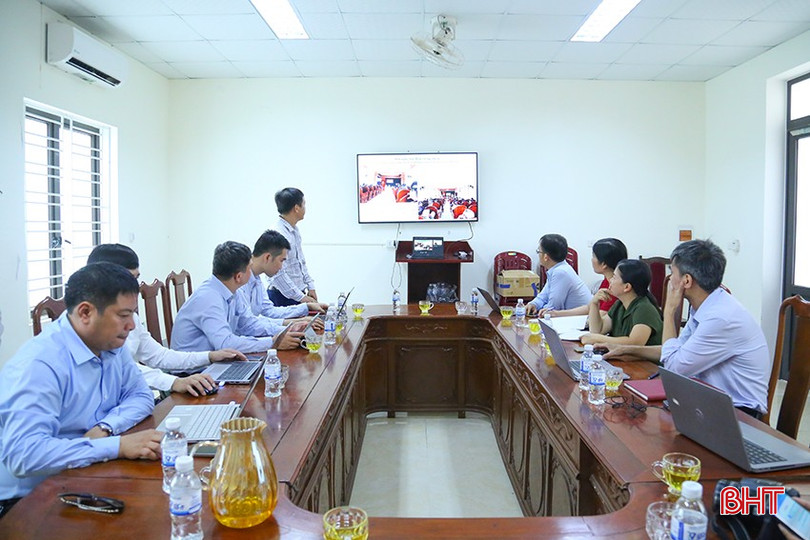
Building on the success of the two crop seasons in 2025, at the workshop, delegates also discussed obstacles and difficulties and proposed solutions suitable to the practical production of farmers and the production conditions of Ha Tinh province, in order to continue expanding the area of rice cultivation using water-saving irrigation techniques in the spring crop of 2026 and subsequent years. This will contribute to realizing the goal of sustainable and environmentally friendly agricultural development in the province.
Source: https://baohatinh.vn/mo-hinh-san-xuat-lua-giam-phat-thai-cho-hieu-qua-tich-cuc-post294156.html







































































Comment (0)