

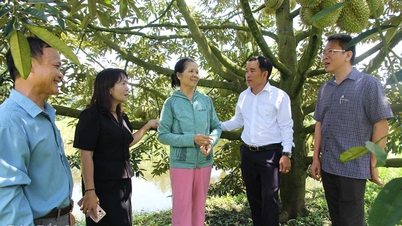
In Thanh Hoa , the delegation visited and surveyed the model of growing Taiwanese pear guava on low-yield rice land in Ngoc Trao commune. This locality is famous for successfully converting hundreds of hectares of land previously used for rice, pineapple, and sugarcane cultivation to fruit trees. From 2025, Ngoc Trao commune has encouraged people to boldly change their crop structure, especially in areas with reliable water sources and easy cultivation. To date, nearly 500 households in the commune participate, with over 150 hectares of guava trees yielding approximately 6,000 tons annually.
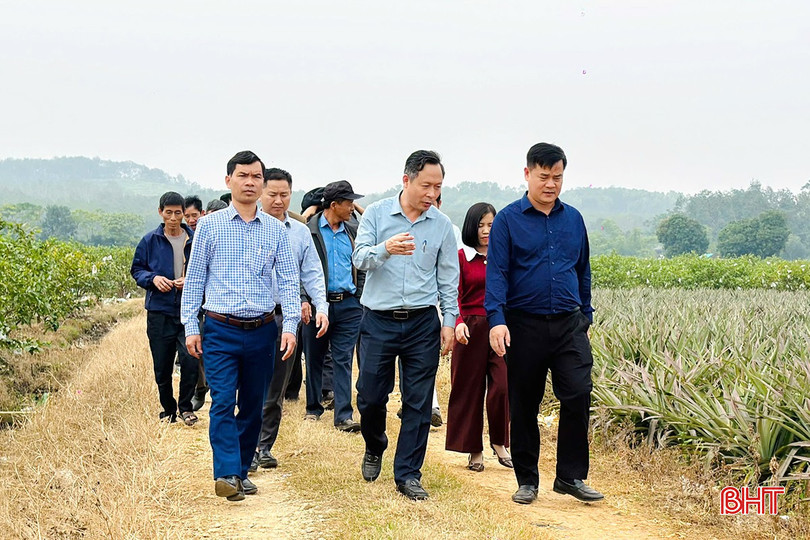
According to the leaders of Ngoc Trao commune, the distinguishing feature of the guava cultivation model is its low investment cost but superior economic efficiency. Mr. Bui Van Thuan, Vice Chairman of the Commune People's Committee, stated: “The economic efficiency from guava cultivation is four times higher than rice cultivation. From the second year onwards, each plot yields 25-30 million VND/year. The price of guava fluctuates from 7,000 to 25,000 VND/kg depending on the time, while input costs are only about 2,500-3,500 VND/kg. This efficiency motivates people to expand the model and build sustainable production-consumption linkages.”
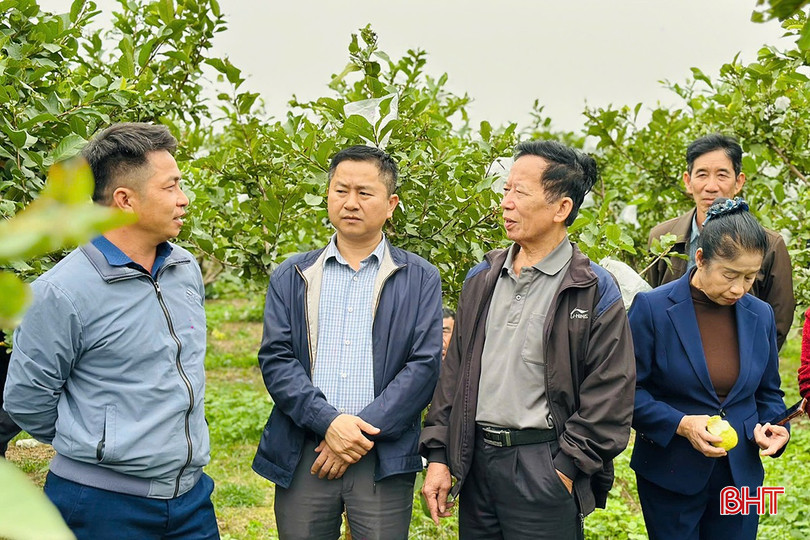
Witnessing the guava orchards laden with fruit, many residents of Thach Ha expressed their excitement and hope for a sustainable way out of poverty. Ms. Le Thi Lieu (village 13) said: “My family mainly works in seasonal farming, so our income is unstable. Observing this model, I see that guava cultivation is a suitable direction. The techniques aren't too complicated, and the market is stable. If we receive support with seeds and techniques, my family would like to apply it immediately to improve our lives.”
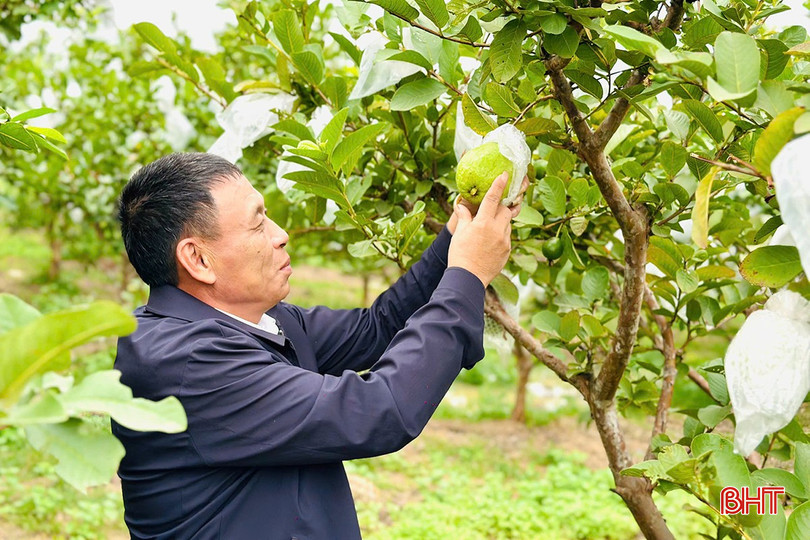
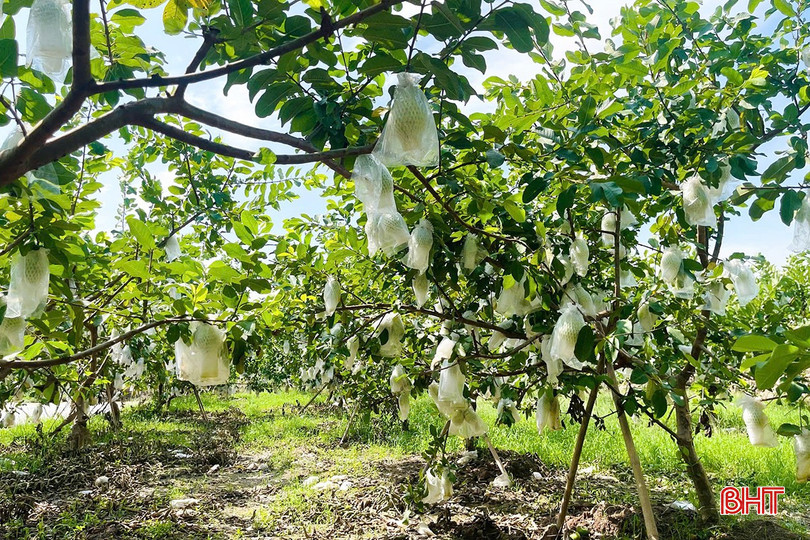
Not only the villagers, but also the village officials consider this model to be very promising. Mr. Ho The Thang - Head of Village 14 and Chairman of the Farmers' Association - commented: "Rice fields in the village usually yield low productivity, so people are not very interested in it. The guava cultivation model in Thanh Hoa shows a systematic approach with stable consumption linkages. If applied to the less productive areas of Thach Ha, I believe it will open up a new direction for development for the people."
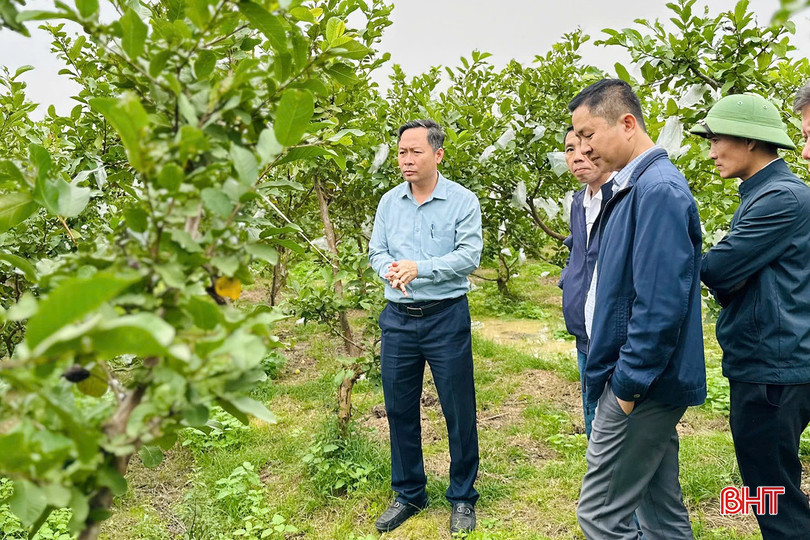
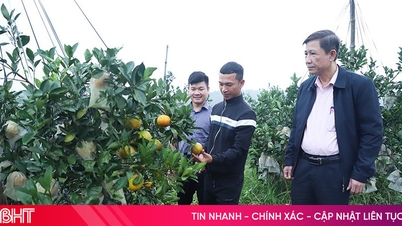
Besides visiting Thanh Hoa, the delegation also visited guava orchards cultivated on rice paddies in Ninh Binh province. During the visit, the delegation learned about many new techniques, especially water-saving irrigation technology, pest and disease control using biological products, fruit bagging techniques to protect against fruit flies, and clean production processes according to VietGAP standards. This knowledge was shared directly from experienced farmers, helping the people of Thach Ha understand practical applications instead of just theoretical knowledge.
Mr. Le Van Thuan, Vice Chairman of the Thach Ha Commune People's Committee, shared: "Taking people to learn from effective models is a necessary approach in the current crop conversion phase. We have identified guava cultivation as one of the models that can be applied on a large scale, especially in areas with low-yield rice cultivation. After the visit, the Commune People's Committee directed relevant departments and agencies to draft a resolution on policies to support crop conversion for low-yield land areas in the commune to be submitted to the upcoming Commune People's Council meeting. In the future, the commune will continue to organize visits, provide technical support, seeds, and guidance on production processes so that people can confidently implement the model, ensuring economic efficiency and sustainable poverty reduction."
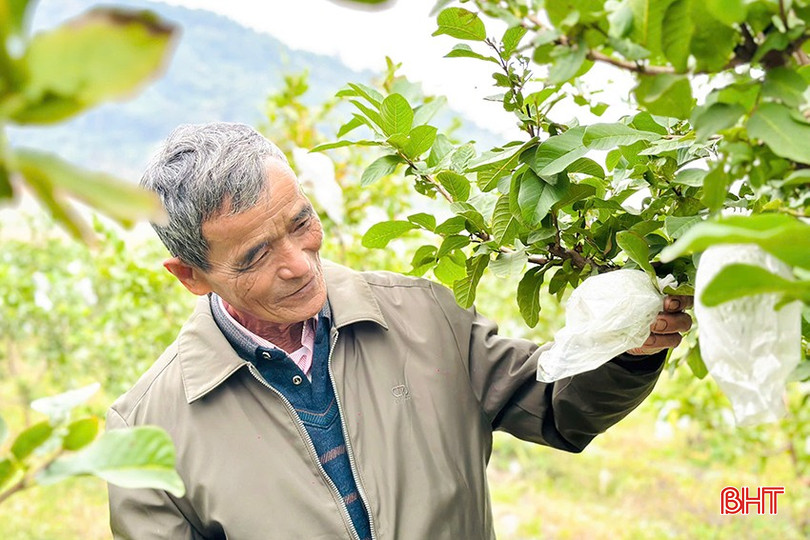
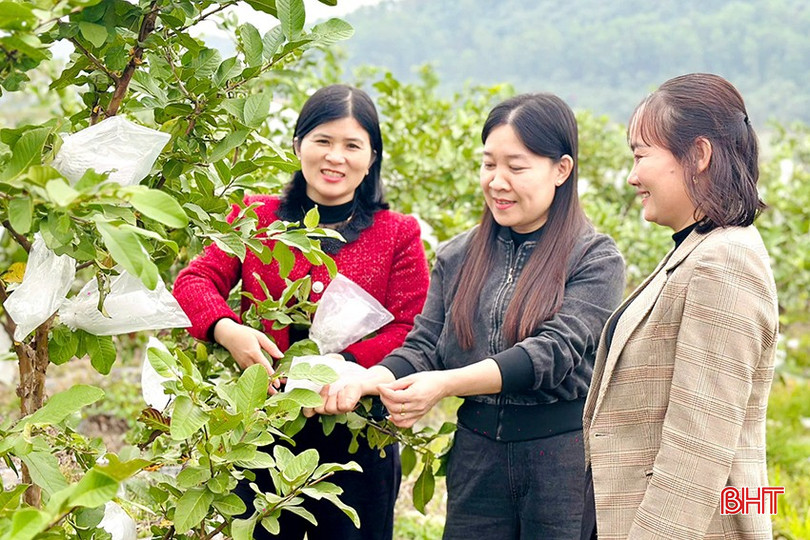
The visit to model guava cultivation in Ninh Binh and Thanh Hoa is considered an important step in creating consensus and raising awareness among the people about restructuring crop patterns. The knowledge and experience gained will help the people of Thach Ha to be more proactive in changing production methods, effectively utilizing land, and gradually increasing their income.
With the determination of the local government and the bold experimental spirit of the people, the model of growing guava on unproductive rice fields is opening up hope for a significant change in the lives of the people of Thach Ha. In the near future, the fields that were once abandoned or yielded low productivity may be "awakened," becoming prosperous guava orchards, contributing to stable livelihoods and sustainable development for the people here.
Source: https://baohatinh.vn/mo-huong-thoat-ngheo-tu-trong-oi-tren-dien-tich-dat-kem-hieu-qua-o-thach-ha-post301039.html



























































Comment (0)