

Health news update October 22nd: Hanoi sees 24 new dengue fever outbreaks in one week.
Last week, Hanoi recorded an additional 403 cases of dengue fever. The city also identified 24 new dengue outbreaks across 14 districts.
With the current complex and unpredictable weather conditions, combined with heavy rainfall, favorable conditions are created for the breeding and development of mosquitoes that transmit dengue fever.
 |
| Dengue fever is caused by the Dengue virus, which has four strains: DEN-1, DEN-2, DEN-3, and DEN-4. All four strains are capable of causing the disease. |
According to the Hanoi Center for Disease Control (CDC), in the past week (October 11-17), Hanoi recorded 403 cases of dengue fever, an increase of 57 cases compared to the previous week.
Patients are distributed across 30 districts, counties, and towns. Some districts and counties recorded a high number of patients, such as: Dong Da (37 cases); Ba Dinh (31 cases), Ha Dong (31 cases); Thanh Oai (26 cases); Dan Phuong (23 cases)... During the week, the city recorded an additional 24 dengue fever outbreaks in 14 districts and counties.
From the beginning of 2024 to the present, Hanoi has recorded 4,563 cases of dengue fever, with no deaths, a decrease of 80.4% compared to the same period in 2023.
The Hanoi CDC's monitoring results at several outbreak sites last week still showed high insect indices exceeding the risk threshold. Therefore, the number of dengue fever cases is predicted to continue to increase in the coming period. The dengue fever situation in Hanoi remains complex.
As we are entering the peak month of the dengue fever season, Deputy Director of the Department of Preventive Medicine ( Ministry of Health ) Nguyen Luong Tam believes that the Hanoi health sector needs to strengthen coordination with relevant units to implement comprehensive disease prevention and control measures, with a strong focus on eliminating mosquito larvae and pupae.
In addition, the city needs to mobilize the participation of all sectors, levels, and socio-political organizations in the prevention and control of dengue fever.
This week, in areas where insect index monitoring results exceed risk thresholds, the Hanoi Department of Health has requested the organization of environmental sanitation campaigns, mosquito larva eradication campaigns, and chemical spraying campaigns to kill adult mosquitoes.
In addition, relevant units need to inspect and monitor disease prevention and control efforts in areas with many cases, complex outbreaks, and high-risk areas, in order to assess the situation and implement appropriate and timely measures.
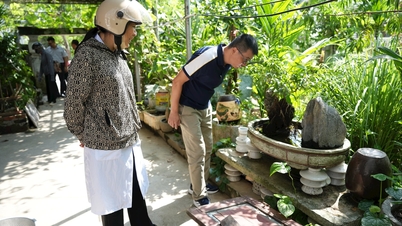
Many people believe that mosquitoes that transmit dengue fever only live in stagnant public ponds, sewers, etc. However, Aedes mosquitoes thrive in stagnant water sources such as fish tanks, flower vases, rock gardens, and rainwater collected in broken pieces of pottery in gardens, neighborhoods, or on rooftops and construction sites. Therefore, it is necessary to eliminate these stagnant water containers that provide breeding grounds for Aedes mosquitoes.
It is necessary to clean the house, turn over all mosquito breeding grounds to kill mosquito larvae, before spraying insecticide to kill adult mosquitoes.
For more effective mosquito control, spraying should be done in the morning, as dengue mosquitoes are active during the day, most actively in the early morning hours and before sunset. It's important to note that insecticides remain effective for up to 6 months after application.
Many people believe that once someone has had dengue fever, they won't get it again. This is not entirely true. Dengue fever is caused by the Dengue virus, which has four strains: DEN-1, DEN-2, DEN-3, and DEN-4. All four strains are capable of causing the disease.
Therefore, if a person has previously had dengue fever, their body may produce antibodies during the illness. However, the immunity formed is specific to each individual strain. The patient may not be reinfected with the old strain of the virus but can still be infected with a new strain, thus potentially contracting dengue fever again.
Regarding treatment, many people believe that when suffering from dengue fever, only electrolyte replacement should be given, and coconut water should be avoided because it does not help with rehydration and makes it difficult to identify complications.
This is completely wrong. In dengue fever, high fever for many consecutive days will cause the patient to become dehydrated and lose fluids. The simplest way to replenish fluids is to give the patient Oresol.
However, many patients find it difficult to drink Oresol. This can be replaced with coconut water, orange juice, grapefruit juice, or lemon juice to replenish lost fluids. Furthermore, these fruits contain many minerals and vitamin C, which help boost immunity and strengthen blood vessel walls.
Be vigilant about scrub typhus.
Recently, the Infectious Disease Intensive Care Unit of Military Central Hospital 108 successfully admitted and treated two patients with scrub typhus complicated by multiple organ failure.
The patients were admitted with prolonged fever and multi-organ damage: respiratory failure, circulatory failure, liver and kidney damage, and bone marrow suppression. Both cases had received intensive treatment at lower-level facilities, but the microbial cause of the disease could not be identified, and therefore treatment was ineffective.
The patients were transferred to the Infectious Disease Intensive Care Unit in a state of multiple organ failure (respiratory failure, circulatory failure, liver failure). Doctors examined them and found typical scrub typhus ulcers. They were treated with specific antibiotics (Doxycycline) and supportive care for organ failure. After treatment, the patients responded well, their fever subsided, their organs gradually recovered, and they were discharged after two weeks of treatment.
Signs that may suggest a patient has scrub typhus include: living in or traveling to densely forested, mountainous areas, which are places where mite larvae can hide.
Prolonged fever, typically lasting 10 to 14 days, without a clear site of infection.
There is swelling of peripheral lymph nodes, especially in moist areas such as the armpits and groin. Near the swollen lymph nodes, there is a typical ulcer caused by a mite bite (a round or oval ulcer, smooth, concave surface, with a black crust, painless, and non-itchy). However, in many cases, no ulcer is detected.
According to health experts, some measures to prevent scrub typhus include: Limiting unnecessary activities in forests and mountains.
If you are forced to live or work in such high-risk conditions, you need to take measures to protect yourself from mite larvae bites: wear clothing that covers your entire body, treat clothing and bedding with insecticide, spray insecticide in the air, or apply insect repellent to your skin.
Scrub typhus is a disease caused by the bacterium Rickettsia tsutsugamushi, transmitted to humans through the bite of mite larvae. The disease is characterized by fever, swollen and painful lymph nodes (usually in the lymph nodes surrounding the mite bite), and a skin rash.
Common complications include myocarditis, septic shock, and multiple organ damage leading to death. However, the disease is treatable and recovery is possible if diagnosed and treated promptly.
How dangerous are foreign bodies in the digestive tract?
On October 19, 2024, the Gastrointestinal Endoscopy Department of Military Central Hospital 108 received a 38-year-old male patient transferred from Bac Quang District Hospital, Ha Giang province.
For the past two weeks, the patient has experienced abdominal pain and indigestion. A gastroscopy at a previous clinic revealed a foreign body, a mass of undigested food, but it has not yet been surgically removed.
The patient arrived at the department with severe abdominal pain and profuse vomiting. Endoscopy revealed a foreign body – a thick, yellowish, black mass of undigested food – obstructing gastric emptying. Immediately, the team proceeded to cut the food mass into smaller pieces using specialized instruments, effectively "shredding" the foreign body.
Fortunately, the foreign body was detected early, so it did not cause complications such as ulcers or bleeding in the stomach. After the intervention, the patient's condition stabilized, and they were instructed to monitor their condition at home.
The medical history revealed that the patient had recently consumed large quantities of honeyed rambutan grown in their home garden along with honey over a long period, especially on an empty stomach.
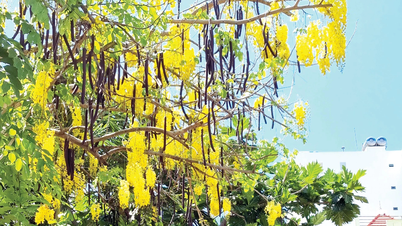
The persimmon tree is one of the fruits high in fiber. Consuming large amounts of fiber-rich and tannin-rich foods such as persimmons, guavas, figs, and bamboo shoots can be a risk factor for the formation of food residue during digestion.
In particular, if eaten on an empty stomach, these substances are more likely to precipitate, causing the plant fibers to clump together, forming a solid mass that gradually grows over time, leading to symptoms such as bloating, indigestion, abdominal pain, nausea, vomiting, gastrointestinal bleeding due to pressure ulcers, and intestinal obstruction.
Therefore, people should limit their consumption of foods high in fiber and tannins, especially avoiding them on an empty stomach, eating slowly and chewing thoroughly, and drinking plenty of water.
If you experience abdominal pain and nausea after accidentally swallowing a large piece of food or eating sticky or astringent substances, you should go to a reputable medical facility for early detection of the food foreign body and to avoid unwanted complications.














































































Comment (0)