

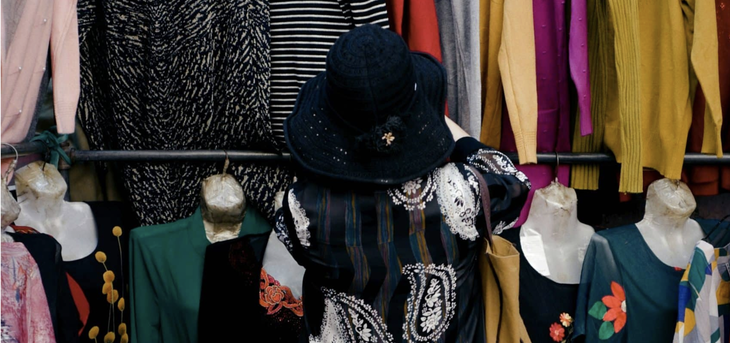
Wearing secondhand clothes has become a cultural trend, especially among Gen Z.
At least, that's what people believe. But is that actually true?
In an article titled "Buying secondhand isn't the solution to the climate crisis - what we need to change is our behavior," published on The Skeptic Online in June 2025, author Ananya Anand points out some of the negative aspects of the current trend of buying secondhand among young people.
From combating waste to committing waste
Thrifting originated in low-income communities where people exchanged or reused clothing due to basic needs. In recent years, it has become a cultural movement, particularly among Gen Z.
For a generation growing up amidst climate anxiety, rising living costs, and an overwhelming amount of bad news online, thrifting offers a rare sense of relief. It allows people to shop without feeling too guilty, thinking they aren't contributing to environmental damage.
With the positive aspects that thrifting offers, this lifestyle quickly gained popularity; however, the negative sides seem to have been overlooked.
Not all clothes donated or sold in secondhand stores are worn again. In fact, a large amount of secondhand clothing ends up being discarded, especially in secondhand stores where items are carefully selected before being sold.
Many secondhand shops buy clothes in large, unsorted bales, charging by the kilogram, and then select only a small number to resell. Items that don't meet aesthetic standards are shipped back abroad, donated to charity centers, or simply discarded. The vast majority of these items rarely end up in anyone's wardrobe.
Sanjana, 22, a psychology student at Nanyang Technological University (NTU) in Singapore, believes it's hard to believe that buying second-hand items actually helps reduce waste, especially when stores constantly restock every week and chase fashion trends.
Furthermore, behind the discarded items lies the story of transportation. Many secondhand stores in Singapore and Southeast Asia import goods from the US, Japan, or Europe. The logistics—transportation, storage, sorting—create an environmental burden that is rarely mentioned.
Clothing has to go through many warehouses and processing levels before it appears on a "selected" shelf. If it doesn't sell, the process starts again.
All of this is happening in the name of a lifestyle that has minimal impact on the environment.
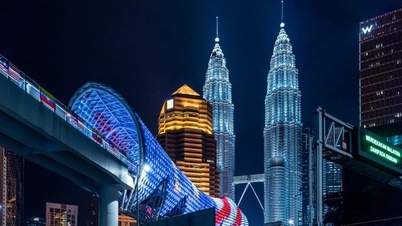
Take the journey of a second-hand shirt as an example. It's donated in the US, shipped to a warehouse in Malaysia, sorted by style and condition, then resold by a reseller in Singapore, and finally ends up at a select clothing store in Tiong Bahru.
If it doesn't sell, the item is resold and transported onward. Each step consumes fuel, packaging, labor, and time. While the carbon footprint might be lower than producing a new item, it certainly won't be zero.
Globally, waste from second-hand clothing must also end up somewhere. In Ghana, around 40% of used clothing is dumped in landfills or burned outdoors.
Overconsumption
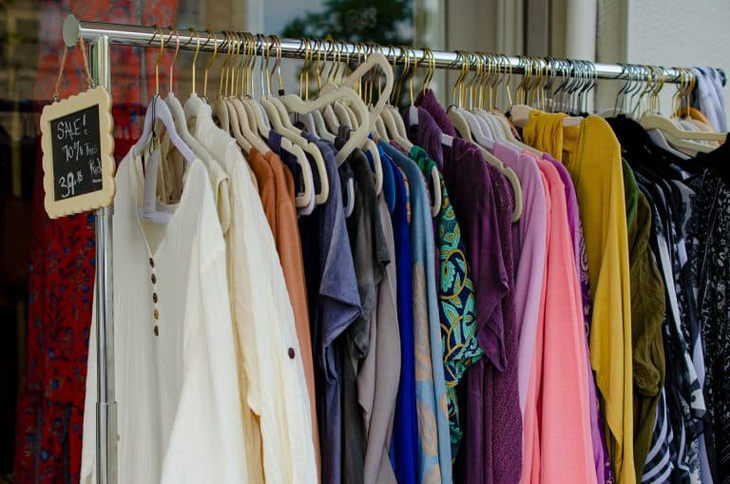
The economic role of second-hand goods is also quietly shifting.
Waste isn't the only problem.
While buying second-hand goods promises to change the way we consume, today it increasingly fuels excessive consumption habits, which thrift should be fighting against.
The explosion of secondhand clothing try-on videos on social media is a clear sign. Videos showcasing piles of clothes, styling them in various ways, have become commonplace on TikTok and Instagram. And the message is clear: buying a lot is fine, as long as it's secondhand.
Sanjana admits she used to be drawn to this way of thinking. "There were times when I knew I didn't need it, but it was hard to resist a room full of cute clothes. It felt harmless (because it was secondhand, not new), but it was really no different from fast fashion, just with a different label," she said.
Essentially, the insatiable urge to shop is still there; perhaps the feeling of guilt has disappeared.
Along with changes in consumer habits, the economic role of second-hand goods has also quietly shifted. For a long time, second-hand stores were associated with affordable prices and were easily accessible to everyone. But now the situation has changed.
In Singapore, many secondhand shops position themselves as "boutique" or "premium," selecting trendy items, selling a blazer for 40 SGD (over 800,000 VND), or a basic T-shirt for 25 SGD (over 500,000 VND). These prices are also common at weekend markets, pop-up events, and online stores.
Some stores even filter their inventory based on whether items look good on Instagram. Items that are too old, too simple, or out of style are rarely put on the shelves.
While affordable options still exist, the curated secondhand market is increasingly geared towards middle-class consumers seeking ethical solutions that align with their personal image. Buying secondhand items is therefore becoming more of a show-off.
Change your behavior, shop consciously.
Nevertheless, the appeal of second-hand fashion remains strong for many consumers. Compared to traditional retail, the vintage economy offers several practical and unique emotional benefits. For many, it still represents a thoughtful way of shopping.
For those who buy secondhand clothes responsibly, the environmental benefits are real, especially when items are purchased when needed, carefully considered, and worn for longer periods instead of just because of trends.
Community-based models, donation-based stores, and "no-employment" retail spaces continue to offer affordable clothing options. The system hasn't completely broken down; it's just unevenly distributed.
On the one hand, buying secondhand clothes extends the lifespan of clothing, reduces the need for new production, and is more affordable. On the other hand, it repeats the very problems it tries to combat: overconsumption, waste… Sustainable behavior doesn't come from labels or platforms, but from the choices each person makes within that system.
Back to the topic
ANANYA ANAND - NHÃ XUÂN (translator)
Source: https://tuoitre.vn/mua-do-si-co-that-su-giup-bao-ve-moi-truong-20251214161010848.htm









































































Comment (0)