

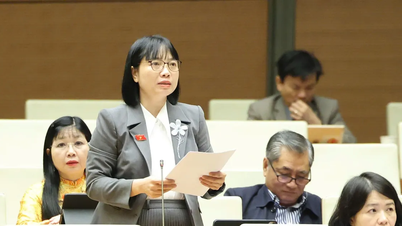
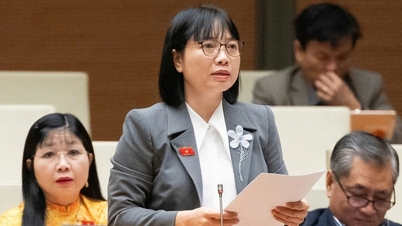
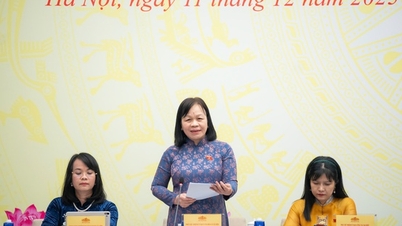
During the discussion session at the 5th Session of the 15th National Assembly last weekend, the Report on the results of monitoring the resolution and response to voters' petitions was discussed in the assembly hall for the first time, receiving attention from National Assembly deputies.
The quality of responses to voters' petitions is a matter of concern for many National Assembly deputies. In reality, the situation of vague responses to voters' concerns is not uncommon. Undeniably, in recent times, the Government and ministries have paid more attention to responding to and resolving voters' petitions; the rate of responses, information provision, and explanations has steadily increased. However, are these responses satisfactory and do they address the core issues of concern to voters?
In reality, given the current shortcomings, especially the overlapping and inadequacies in existing regulations, some opinions and issues raised by voters will not be resolved quickly and thoroughly. However, this does not mean that when handling and resolving petitions and complaints, one is allowed to respond superficially, vaguely, without addressing the specific issues raised by voters, or to evade responsibility altogether.
When the issues of concern to voters are not resolved convincingly, voters will naturally continue to raise their concerns whenever the opportunity arises. Therefore, at almost every meeting between National Assembly deputies and voters, there are voters who raise their concerns and express their frustrations about old petitions, often with even greater levels of frustration…
The phenomenon of "voters asking one thing, receiving another" is not new and is not unique to the National Assembly. In Ho Chi Minh City, as the elected body representing the city's people, the People's Council has made many efforts to innovate and diversify in order to definitively resolve pressing issues for voters. The "People Ask - Government Answers" program is one of the concrete solutions of the People's Council, creating an effective channel of interaction between the people and the city government. However, during voter outreach sessions, many suggestions from city voters are still reflected. From the feedback of voters, officials and the government apparatus will better understand their roles and responsibilities in performing their duties, clearly identify the practical aspects of policy and law implementation, and make adjustments or propose adjustments accordingly, better fulfilling their role as servants of the people. Therefore, from both the perspective of voters and the demands of the government apparatus to effectively fulfill its constructive role, it is necessary to continue improving the quality of responses to voters' requests. This includes strengthening oversight activities, clarifying the roles of relevant agencies and units, especially their leaders, as well as the responsibilities of ministries and related agencies in resolving voters' requests.
The National Assembly's discussion of the Report on the results of monitoring the resolution and response to voters' petitions helps voters to some extent understand how their petitions are being addressed, creating conditions for voters to participate in monitoring. This activity will contribute to gradually improving the responsibility of relevant agencies in resolving voters' petitions, ensuring that the resolution results are substantive, focused, and of the true nature of the issue, and improving the quality of responses to voters' petitions.
The first time the report was brought up for discussion also indicates innovation in the National Assembly's operations, moving towards continuously improving the quality and effectiveness of its activities. To further affirm and more clearly demonstrate the responsibility of the highest representative body of the people, always representing the will and aspirations of the people, the National Assembly also needs to include the results of monitoring the resolution and response to voters' petitions in regular discussions at its sessions, in order to further enhance the responsibility of competent authorities in serving the people.
Source link
![[Photo] Closing Ceremony of the 10th Session of the 15th National Assembly](/_next/image?url=https%3A%2F%2Fvphoto.vietnam.vn%2Fthumb%2F1200x675%2Fvietnam%2Fresource%2FIMAGE%2F2025%2F12%2F11%2F1765448959967_image-1437-jpg.webp&w=3840&q=75)



![[Photo] Prime Minister Pham Minh Chinh holds a phone call with the CEO of Russia's Rosatom Corporation.](/_next/image?url=https%3A%2F%2Fvphoto.vietnam.vn%2Fthumb%2F1200x675%2Fvietnam%2Fresource%2FIMAGE%2F2025%2F12%2F11%2F1765464552365_dsc-5295-jpg.webp&w=3840&q=75)




































![[OFFICIAL] MISA GROUP ANNOUNCES ITS PIONEERING BRAND POSITIONING IN BUILDING AGENTIC AI FOR BUSINESSES, HOUSEHOLDS, AND THE GOVERNMENT](https://vphoto.vietnam.vn/thumb/402x226/vietnam/resource/IMAGE/2025/12/11/1765444754256_agentic-ai_postfb-scaled.png)








































Comment (0)