

Start your day with health news ! You can also check out these articles: What foods should your body consume to recover after high-intensity workouts?; Things to consider when choosing footwear to reduce pain ; Unexpected causes of stroke while showering, not just cold water!...
The best time and way to eat bananas for good health.
Bananas are a source of vitamins and minerals, supporting overall health and the digestive system. However, the timing and ripeness of bananas are also extremely important.
Bananas contain many nutrients that are good for the gut, such as:
Rich in fiber : Both soluble and insoluble fiber in bananas help promote bowel movements, soften stool, and make defecation easier. A small, ripe banana contains about 2g of fiber, while a medium-ripe banana may contain about 4.5g of fiber.
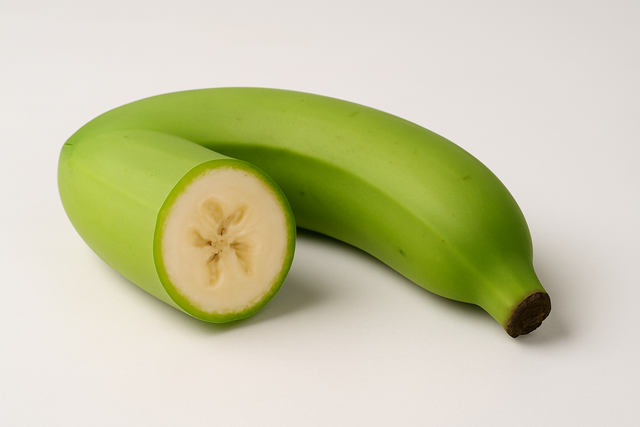
Green bananas contain up to 21g of resistant starch, making them suitable for people who need to control their blood sugar.
Photo: AI
Contains prebiotics : Prebiotics support the digestive system, improve mineral absorption, and regulate blood sugar. Supplementing with about 5g of prebiotics daily may help improve gut health.
Source of resistant starch : Green bananas are a rich source of resistant starch, which cannot be broken down by the digestive system. Instead, resistant starch is fermented in the colon, nourishing beneficial bacteria. It also plays a role in preventing digestive diseases and cancers.
Specifically, bananas help stimulate mucus production from the stomach lining, creating a protective barrier against acids that cause reflux and nausea. Eating bananas when feeling nauseous is also a way to provide essential vitamins and minerals without causing stomach discomfort.
Choose bananas according to their ripeness to suit your health condition. Unripe bananas contain more resistant starch and less sugar, so they are generally more suitable for people who need to control their blood sugar levels.
Conversely, fully ripe bananas (with brown peels) are very soft and slightly crumbly. Ripe bananas are also sweeter and contain less starch than unripe ones. The rest of this article will be available on the health page on July 12th .
Things to keep in mind when choosing footwear to reduce pain.
More than just a familiar item, footwear plays a crucial role in protecting the musculoskeletal health of the body.
Choosing the wrong shoes can cause many problems such as foot pain, back pain, knee pain, and even hip pain. Therefore, choosing the right type of shoes not only helps you walk more easily, but also supports long-term health.
Dr. Saseendar Shanmugasundaram, an orthopedic specialist in India, says that wearing ill-fitting shoes can alter gait and create excessive pressure on the feet, ankles, knees, hips, and lower back. Over time, this pressure can lead to muscle and joint pain, especially if the shoes lack proper support or the soles are worn out.
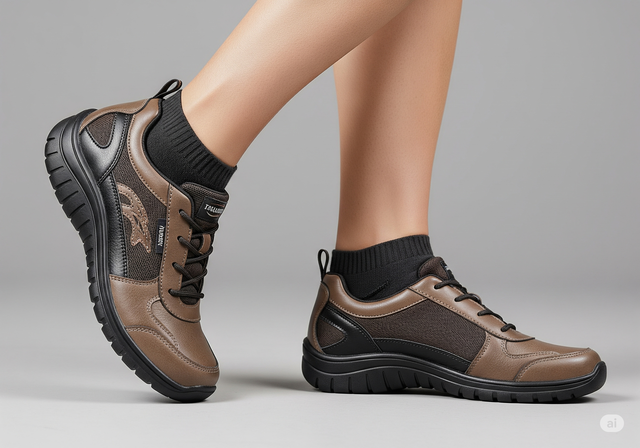
A good pair of shoes should have features such as clear arch support, soft cushioning, a sturdy heel, and an overall comfortable fit.
Photo: AI
A good pair of shoes should have features such as clear arch support, soft cushioning, a sturdy heel, and an overall comfortable fit.
Additionally, the heel should be low and the toe area flexible to allow the foot to move properly, thereby reducing pressure on the joints when walking.
Not only the elderly, but also young people, office workers, or those who frequently stand or walk should pay attention to the quality of the shoes they wear.
Lightweight shoes with soft midsole cushioning, a slightly curved sole, and a snug fit are a suitable choice for many everyday activities. Further details of this article will be available on the health page on July 12th .
Unexpected causes of stroke while showering, and it's not just cold water!
Both hot and cold showers have their own advantages and disadvantages. Depending on your lifestyle, medical history, and health goals, you can choose the option that best suits you.
Most health experts recommend taking warm baths between 37.7 and 40.7 degrees Celsius. However, Jennifer Steinhoff, a family and sports medicine physician and member of the American Medical Association, points out the following key considerations:

Taking a shower with excessively cold water can increase blood pressure and heart rate, raising the risk of stroke.
Photo: AI
When you're sick: Take a warm bath.
Of course, in this case, a warm bath no hotter than 40.7 degrees Celsius is ideal. Warm water helps to relax and rest, fighting off the fever.
Many people take cold showers to "lower" a fever, but this is actually ineffective. When exposed to cold, the body shivers to warm itself, which can increase body temperature and put strain on the immune system.
When experiencing muscle aches: Take a cold shower.
There are several reasons why athletes immerse themselves in cold or ice water after competition. The benefits may include:
- Reduces muscle pain and stiffness.
- Promotes faster recovery.
- Reduce muscle damage.
- Enhance performance after recovery.
A review of 20 studies showed that soaking in cold water helps reduce creatine kinase (an enzyme in muscle cells; high levels of this enzyme in the blood can signal muscle damage) and lactic acid—which is produced in muscle cells when the body needs energy faster than the amount of oxygen supplied. Start your day with health news to read more in this article!
Source: https://thanhnien.vn/ngay-moi-voi-tin-tuc-suc-khoe-cach-lua-chon-chuoi-phu-hop-the-trang-185250712001737914.htm

























![[Image] Close-up of the newly discovered "sacred road" at My Son Sanctuary](/_next/image?url=https%3A%2F%2Fvphoto.vietnam.vn%2Fthumb%2F1200x675%2Fvietnam%2Fresource%2FIMAGE%2F2025%2F12%2F13%2F1765587881240_ndo_br_ms5-jpg.webp&w=3840&q=75)


































































Comment (0)