

The total amount of money people were scammed out of online in 2023 was approximately 8,000 - 10,000 billion VND, a 1.5-fold increase compared to 2022. Statistics show that 91% of scams are related to the financial sector, and up to 73% of mobile device and social media users regularly receive fraudulent messages and calls. This information was presented at the workshop "Improving Security and Safety of Cashless Transactions" recently held in Ho Chi Minh City.
Warning about job scams in Australia's agricultural sector. |
Warning about online scams targeting workers seeking overseas employment. |
Speaking at the seminar, Major General Nguyen Van Giang - Deputy Director of the Cyber Security and High-Tech Crime Prevention Department, Ministry of Public Security (A05) - stated that high-tech crimes are becoming increasingly complex, with connections between domestic and foreign individuals.
In recent times, despite continuous warnings from authorities and the implementation of many drastic measures, many people still fall victim to these scams. The main reason is that online fraud criminal groups operate in an organized manner, across borders, and exploit legal loopholes.
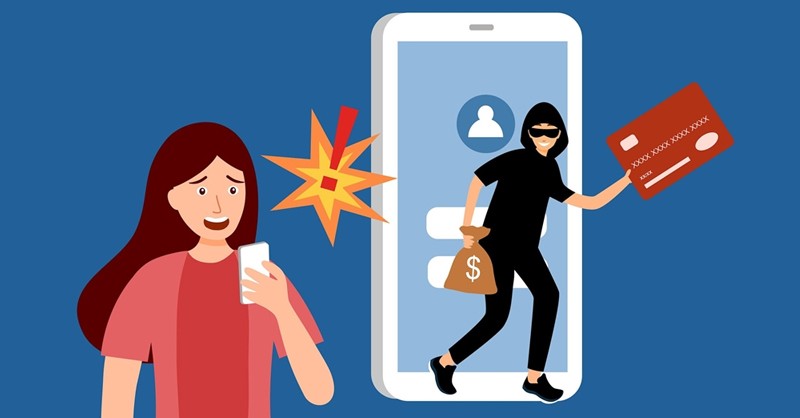 |
| (Illustrative image) |
Criminals operate professionally, devising scenarios and assigning specific roles, thoroughly exploiting science and technology to attack users. The criminals are based in neighboring countries such as Cambodia and Myanmar; the ringleaders are often foreigners.
Furthermore, the lack of awareness and vigilance among social media users regarding sophisticated methods and tactics in cyberspace is also a reason for the increase in online scams.
According to statistics from the Ministry of Public Security and the Ministry of Information and Communications, there are currently three main types of fraud (brand impersonation, account hijacking, and other combined forms) with 24 fraudulent schemes.
To combat online fraud, Department A05 is collaborating with the National Cybersecurity Association to provide free software for detecting online scams, expected to launch in the third quarter of 2024.
Simultaneously, the Head of the Payment Department stated that, to enhance security, from July 1st, the State Bank of Vietnam requires credit institutions and payment intermediaries to use biometric authentication for money transfer transactions exceeding 10 million VND or total daily transaction values exceeding 20 million VND. The customer's facial authentication must match the face stored in the chip of the citizen identification card.
When customers make their first transaction on a mobile banking app or on a new device, they must authenticate using biometric identification. Banks are also actively cleaning up customer data and removing accounts that are not registered in the account holder's name to enhance security.
However, the Ministry of Public Security also stated that criminals are finding ways to circumvent this new regulation. In light of this situation, Department A05 has issued several recommendations to help people raise their awareness and protect themselves from fraudulent activities.
Carefully research and verify information before making any transactions. Do not borrow money online from apps of unknown origin. Do not transfer money, provide personal information, OTP codes, E-Banking account details, or download apps/links/emails at the request of strangers. Absolutely do not buy, sell, exchange, rent, or lend payment accounts, bank cards, or personal identification documents. Set up two-factor authentication and limit sharing personal information about yourself, your family, and your friends online. |
Besides public vigilance, preventing online fraud requires close coordination among relevant ministries, agencies, and businesses. Citizens need to understand the methods and tactics of fraudsters and equip themselves with the necessary skills to prevent and combat these activities.
Source: https://thoidai.com.vn/nguoi-dan-mat-10000-ty-dong-vi-lua-dao-tren-mang-trong-nam-2023-201168.html

























![[Photo] Na Ngoi Border Guard Station distributes 484 gifts to students and households before the cold season.](https://vphoto.vietnam.vn/thumb/402x226/vietnam/resource/IMAGE/2025/12/11/1765453782566_anh-don-bien-phong-na-ngoi-trao-484-suat-qua-cho-hoc-sinh-va-ho-dan-truoc-mua-gia-ret-20251211152111.jpeg)





















































Comment (0)