

Responding to delegates' questions on renewable energy development and pricing mechanisms for wind and solar power in Vietnam on the afternoon of June 1st, Minister of Industry and Trade Nguyen Hong Dien stated that wind and solar power have developed quite rapidly in the country recently, due to rapidly increasing electricity demand and attractive government incentive mechanisms and policies.
“Currently, there are 85 power plants nationwide that have signed power purchase agreements but do not meet the Fit price requirements, with a total capacity of 4,736 MW. Based on the Law on Prices, the Law on Electricity, and related decrees, the Government has directed relevant agencies to issue Circular 15 and Decision 21 stipulating the method of determining and the price framework applicable to transitional renewable energy projects,” the Minister said .
According to the Minister, by March 30th, two months after the price framework decision came into effect, only one investor had submitted an application.
Thanks to the efforts of the Ministry of Industry and Trade, as of May 31st, 59 out of 85 power plants with a capacity of 3,389 MW, accounting for 71.6% of the projects, had submitted their applications to EVN. Of these, 50 projects are currently being proposed a temporary price at 50% of the price range to continue completing the procedures. Currently, 26 power plants with a capacity of 1,346 MW, accounting for 28.4% of the projects, have yet to submit their applications to EVN.
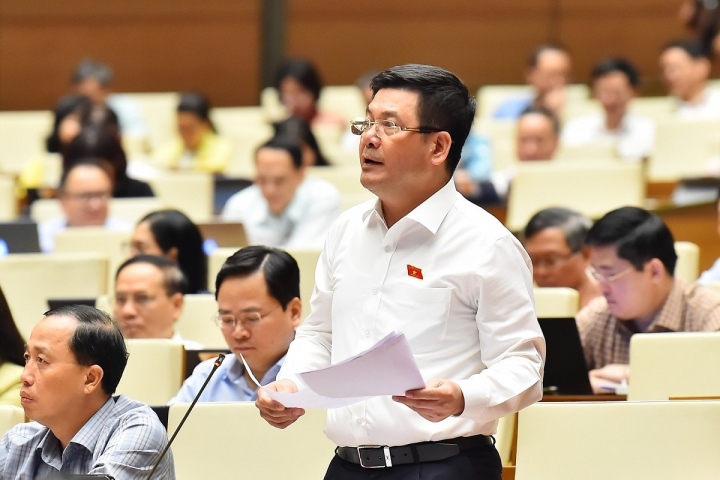
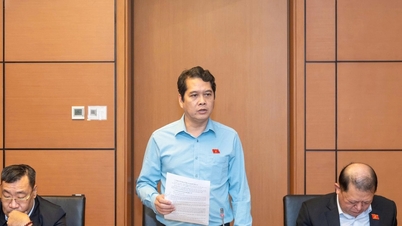
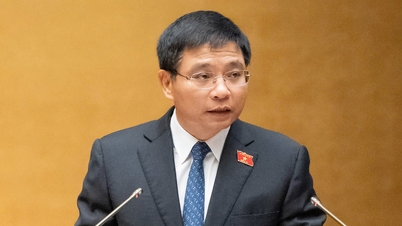
Minister of Industry and Trade Nguyen Hong Dien.
"The reason investors are slow to submit their applications is that they don't want to negotiate with EVN within the price framework issued by the Ministry of Industry and Trade, citing low prices, possibly incomplete legal procedures, or the plant's location making electricity transmission difficult," Mr. Dien said.
The Ministry has also issued numerous documents urging investors to complete the necessary procedures and directing EVN to promptly coordinate with investors to reach a unified electricity price agreement so that these projects can be put into operation as soon as possible.
In addition, the Ministry of Industry and Trade requests that the National Assembly and the Government promptly provide guidance and mechanisms to resolve the issue definitively, avoiding wasted resources and social unrest, and ensuring a balance of interests.
Regarding the handling of wind and solar power projects that do not qualify for the Fit price, the Minister of Industry and Trade stated that the wastefulness of investing in dozens of wind and solar power projects that are not exploited or put into operation cannot be denied.
"However, we cannot legitimize wrongdoing, or even violations of the law, in the name of combating waste. In the past, in the race to benefit from the Fit price, many investors have ignored regulations, and even violated the law. The Fit price policy has expired, as stated in the Prime Minister's decision, so the Fit price cannot be applied anymore; instead, we must follow the regulations of the Price Law, the Electricity Law, and related decrees," Mr. Dien said.
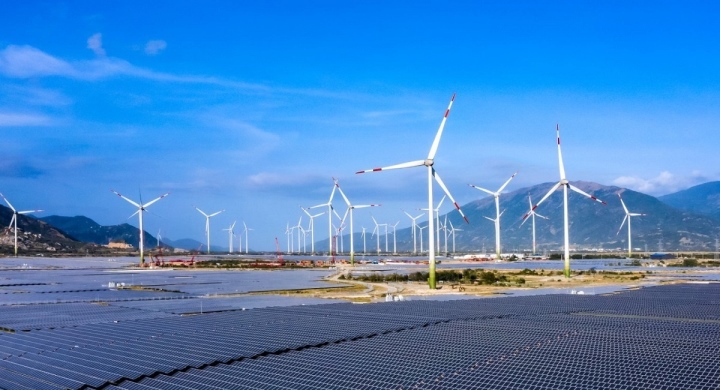
The Ministry of Industry and Trade proposes removing obstacles for renewable energy projects to avoid waste.
The Minister of Industry and Trade stated that Vietnam is considered a country with great potential for developing wind and solar power. However, there is a paradox: areas with abundant sunshine and wind potential often have low electricity demand; therefore, utilizing these power systems requires significant investment in transmission and energy storage.
On the other hand, to maintain a stable and safe power system and maximize the efficiency of renewable energy, there must be a stable base power source, meaning one capable of generating electricity continuously 24/7 to compensate when there is no sunshine or wind; that source is needed to step in.
In Vietnam, coal-fired power, oil-fired power, biomass gas power, and hydropower are considered basic power sources. Therefore, even though they are more expensive and emit more carbon, and in the short term we do not have alternative sources or solutions, traditional power sources are still maintained and mobilized to ensure the safety of the power system.
Coal and oil are primary raw materials whose prices are set by the world market. In recent years, due to supply disruptions, high prices have led to higher electricity costs, even without considering transmission fees.
How is renewable energy priced?
Wind and solar power are inexpensive to purchase; their cost depends solely on the price of the technology and equipment. However, global technology is developing rapidly, so the cost of technology is decreasing annually, averaging 6-8%, causing the cost of electricity and renewable energy (excluding transmission and storage costs) to decrease over time. In the long term, renewable energy will be the cheapest source of electricity, excluding transmission and storage costs.
"Regarding the mechanism for calculating renewable energy prices, the legal basis is the Electricity Law, the Price Law, and Government decrees. The Ministry of Industry and Trade has developed a price framework determined based on statistical data from 102 solar power plants and 109 wind power plants that have signed power purchase agreements," Mr. Dien said.
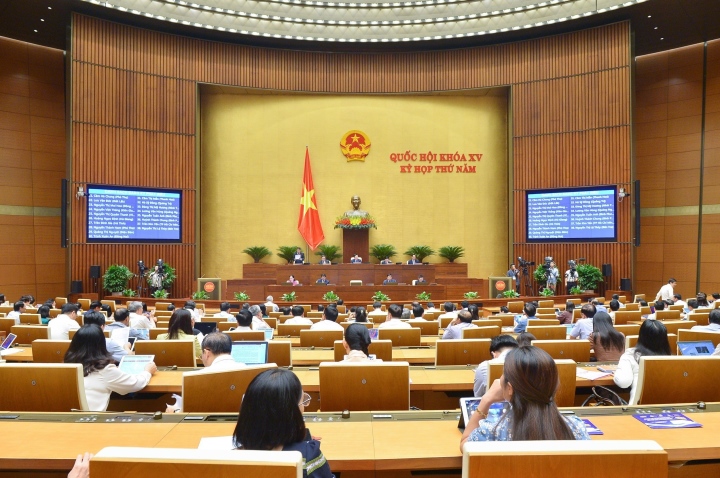
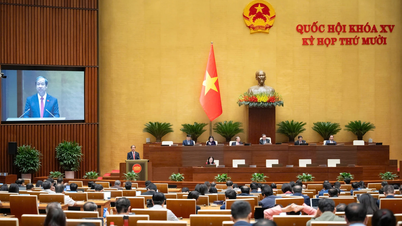
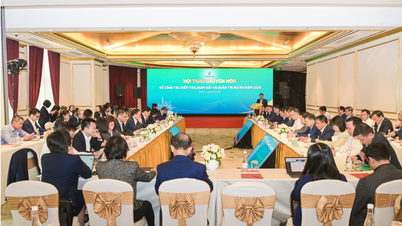
Delegates at the session on the afternoon of June 1st (Photo: Quochoi.vn).
Regarding the price comparison process, Mr. Dien stated that it involved comparisons with data from international energy agencies and followed the correct procedures for obtaining opinions from the Ministry of Finance, the State Capital Management Committee at enterprises, and the Advisory Council on the results of the price framework assessment…
"According to the reduction in investment costs, the investment rate for grid-connected solar power projects decreased by 11% per year during the 2018-2021 period, and the investment rate for onshore grid-connected wind power decreased by 6.3% per year. For Vietnam, the Fit 2 price for solar power projects issued by the Government in 2020 has decreased by 8% compared to the Fit 1 price in 2017. Therefore, the electricity generation price framework according to Decision 21 of 2023 by the Ministry of Industry and Trade has decreased by about 7.3% compared to 2020. Thus, the pricing mechanism for transitional renewable energy projects as per the current price framework is consistent with world prices and the socio-economic realities of the country," Mr. Dien commented.
PHAM DUY
Useful
Emotion
Creative
Unique
Source






























![[Video] The craft of making Dong Ho folk paintings has been inscribed by UNESCO on the List of Crafts in Need of Urgent Safeguarding.](https://vphoto.vietnam.vn/thumb/402x226/vietnam/resource/IMAGE/2025/12/10/1765350246533_tranh-dong-ho-734-jpg.webp)

































































Comment (0)