

According to the World Bank's forecast, Vietnam's economy is expected to grow by 6.1% in 2024 and potentially increase to 6.5% in 2025-2026. Experts believe this forecast is appropriate and could even be more optimistic, as Vietnam currently possesses many factors supporting growth.
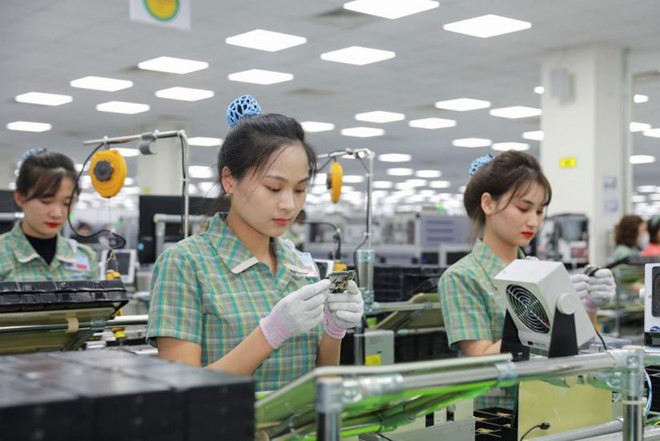
Vietnam's economy is gradually regaining momentum.
In its recently published Vietnam Economic Update, the World Bank has forecasted... GDP Vietnam's growth rate is 6.1%, significantly higher than the 5.5% figure the organization projected in April.
According to the World Bank, Vietnam's GDP continues to grow, likely reaching 6.5% for the next two years. Besides the World Bank, many other international financial institutions also forecast Vietnam's growth this year at 6%, including the IMF, ADB, UOB, and Standard Chartered. HSBC even forecasts a growth rate of 6.5%.
Commenting on the forecasts of the World Bank and international organizations, Associate Professor Dr. Nguyen Thuong Lang - senior lecturer at the National Economics University - believes that Vietnam's economy could absolutely grow by 6.5% in the coming period, or even approach 7%, because there are many good drivers and opportunities for development. After a year of stagnation due to the impact of the COVID-19 pandemic, Vietnam has gradually regained its momentum.
Vietnam currently possesses several positive drivers contributing to economic growth, primarily domestic consumption, public investment, exports and imports, and foreign direct investment. Furthermore, according to this expert, Vietnam currently has a range of growth drivers related to digital transformation, green transformation, a favorable business environment, and specific mechanisms.
Vietnam has established numerous institutions to embrace and transition towards digitalization, adhering to sustainable development standards and addressing social issues. This provides a new impetus for Vietnamese businesses to adjust their strategies and for the government to modify policies in order to seize significant international opportunities.
Vietnam's growth will continue to improve, driven by the recovery of exports, tourism, consumption, and investment. Despite the positive outlook, risks remain, both external and domestic.
According to Associate Professor Dr. Nguyen Thuong Lang, in addition to a series of opportunities and positive driving forces, Vietnam is also facing a number of challenges such as competition with regional rivals in various product categories. Exports are a key area. The ability to grasp and develop new and high-tech industries remains limited. “To seize opportunities and overcome challenges, Vietnam can implement several solutions and new drivers for its development, including: Digital transformation, green transformation, and improving the business environment. Creating specific mechanisms for localities to better exploit their local strengths. Banks need to participate more actively in promoting and supporting economic development, instead of just being places to collect interest. Reforming the banking system to better serve socio-economic development goals,” said Associate Professor Dr. Nguyen Thuong Lang.

Implement a flexible monetary policy.
According to the World Bank's assessment, despite numerous opportunities, Vietnam continues to face limitations in its ability to further cut interest rates, due to the large interest rate differential between the domestic and international markets, in addition to exchange rate pressure.
Commenting on this assessment, Dr. Chau Dinh Linh - an economic expert and lecturer at the Ho Chi Minh City University of Banking - said that Vietnam is currently aiming to maintain stable interest rates as they have since the beginning of 2024 to support and strengthen the recovery of economic entities. The State Bank of Vietnam is striving to maintain and further reduce interest rates not through the policy interest rate but through measures such as: encouraging banks to reduce costs; utilizing the open market; coordinating in the interbank market; and implementing supportive credit packages…
Furthermore, high exchange rate pressure due to interest rate differentials between Vietnam and the world has led to an outflow of foreign currency. Despite this pressure, the exchange rate situation has recently shown signs of stability thanks to the coordinated monetary policy of the State Bank of Vietnam and the forecast of a US Federal Reserve (FED) interest rate cut. This will reduce exchange rate risk and increase Vietnam's room for maneuver in monetary policy.
“In the past, the State Bank of Vietnam has implemented flexible monetary policies, managing smoothly towards stabilizing the value of the currency and ensuring the safety and stability of the banking system through various tools such as flexible credit limits, smooth operation of the OMO market, central exchange rate, policy interest rate, etc. However, risks still exist that need to be well controlled, such as credit risk, exchange rate risk, liquidity risk, etc. In the future, to prevent credit risk, Vietnam needs to ensure that the non-performing loan ratio is at a controlled level, below 3% for the entire system," proposed Dr. Chau Dinh Linh.
Source







































































Comment (0)