

The Ministry of Education and Training has just issued a draft circular amending and supplementing some articles of the regulations on university admissions, expected to be applied for 2025. Among the most discussed contents concerns the subject combinations for university admissions.
EDUCATION OR MATH IS A COMPULSORY SUBJECT
In the draft circular amending and supplementing several articles of the Regulations on University and College-level Admissions for Early Childhood Education, issued with Circular 08/2022 by the Minister of Education and Training, the issue of subject combinations for admission consideration is one of the proposed amendments for public consultation. Accordingly, for admission methods based on academic results and exam results for each subject (including overall scores of subjects in high school, scores of subjects in the high school graduation exam, foreign language certificates, and other assessment results), the draft stipulates that the subject combination used for admission consideration must include at least three subjects.
These three subjects must be relevant to the characteristics and requirements of the training program, and must include either mathematics or literature with a weighting of at least one-third of the total score. A training program, major, or group of majors may use several subject combinations for admission; in this case, the common subjects of all combinations must have a weighting of at least 50% of the total score. If high school academic results are used for admission, the results for the entire 12th grade year must be used.
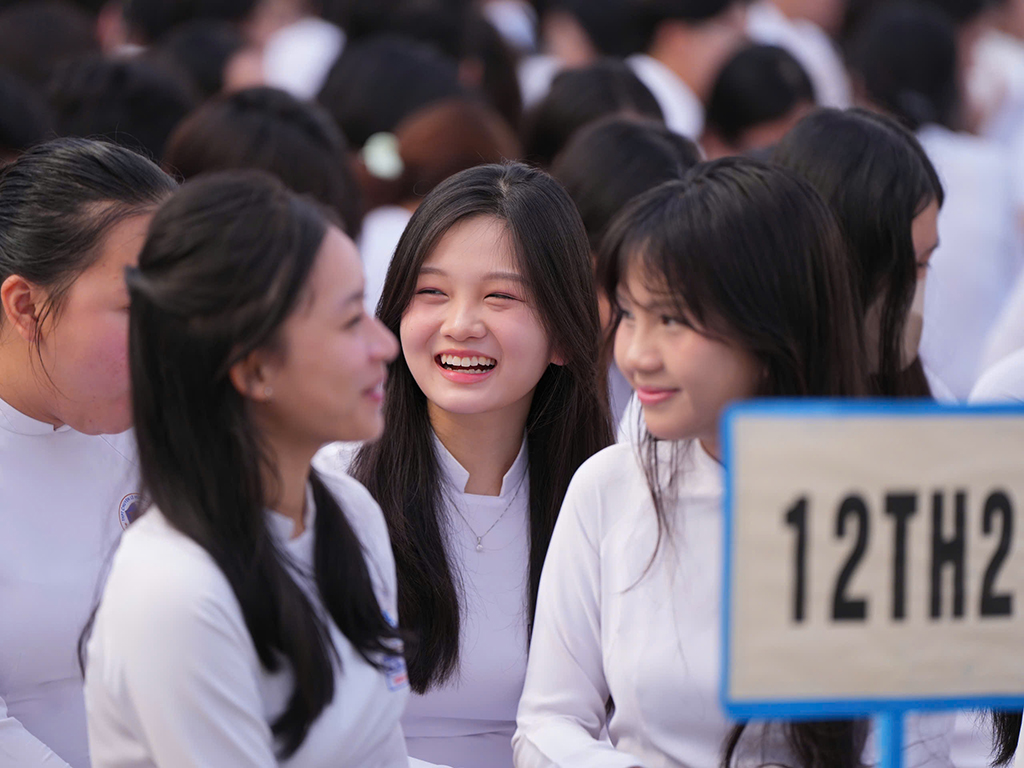
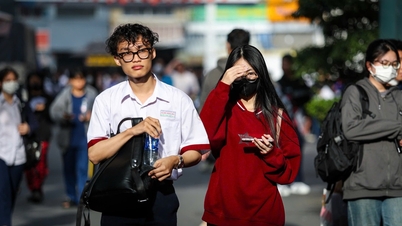
This year's 12th-grade students will participate in the 2025 high school graduation exam and university entrance exam with many changes.
Thus, the regulations on subject combinations for admission in this draft are basically not much different from the previous regulations. Universities will develop subject combinations for admission consisting of at least 3 subjects, of which either literature or mathematics is compulsory, and the remaining subjects must be suitable to the characteristics and requirements of the training program.
Commenting on this policy, Master's degree holder Cu Xuan Tien, Head of the Admissions and Student Affairs Department at the University of Economics and Law (Vietnam National University Ho Chi Minh City), said that the draft regulation stipulating that universities do not limit the combination of subjects for admission but are bound by the proportion of subjects in the total admission score is appropriate and aligns with the aspirations of many universities.
INCREASE THE NUMBER OF ADMISSION COMBINATIONS FOR EACH MAJOR
Following this direction, many universities have planned to develop admission combinations for 2025 consisting of 3 subjects, each combination including at least Literature or Mathematics. For example, the University of Economics and Law plans to apply 5 admission combinations for all majors. Specifically, these include: Mathematics - English - Literature, Mathematics - English - Physics, Mathematics - English - Informatics, Mathematics - English - Economic and Legal Education, and Mathematics - Physics - Chemistry.
According to Master's degree holder Cu Xuan Tien, the school's approach to developing these subject combinations meets the necessary conditions of the draft amendments to the Ministry of Education and Training's admissions regulations currently under review. Each combination consists of three subjects, with mathematics appearing in all combinations. In addition to the traditional combinations, the school is developing new combinations that include subjects from the 2018 General Education curriculum (informatics, economics, and law). The regulation limiting each major to a maximum of four subject combinations for admission has been removed; the school plans to apply five subject combinations for all majors.
Similarly, Dr. Nguyen Trung Nhan, Head of the Training Department at Ho Chi Minh City University of Industry, said that the university also plans to have more admission combinations for 2025. These combinations are expected to include new subjects from the 2018 General Education program. "However, each combination will still consist of 3 subjects, following the principle of having 1-2 core subjects necessary for a field of study," Dr. Nhan affirmed.
Associate Professor Bui Quang Hung, Deputy Director of the University of Economics Ho Chi Minh City, also stated that the university's admission subject combinations remain stable and have not changed significantly. Compared to 2024, the university has removed combinations that are no longer suitable for the upcoming high school graduation exam, such as natural sciences and social sciences. The main subjects in the university's admission combinations include: mathematics, literature, physics, chemistry, and foreign languages. For the admission method based on academic performance from grades 10 to 12, the admission combinations are also built upon the compulsory subjects and core subjects as above.
Ho Chi Minh City University of Education also plans to adjust its admission combinations to align with the subjects in the 2025 high school graduation exam, while ensuring the principle of three subjects per combination. Accordingly, it will maintain the admission combinations from 2024 in methods using high school graduation exam scores, consistent with the subjects tested from 2025. At the same time, the university will adjust combinations that are no longer suitable, such as removing combinations containing natural sciences and social sciences, and adding new combinations including economics and law education, informatics, and technology.
Even with the method of evaluating scores from the specialized aptitude test, Ho Chi Minh City University of Education uses a 30-point scale consisting of the score of one main subject multiplied by a factor of 2 plus the score of the remaining subject in the admission combination for each major. For the National Defense and Security Education major, admission is expected to be based on an aptitude test, using the scores of three subjects: one cultural subject from the specialized aptitude test or the high school graduation exam, and two aptitude test subjects.
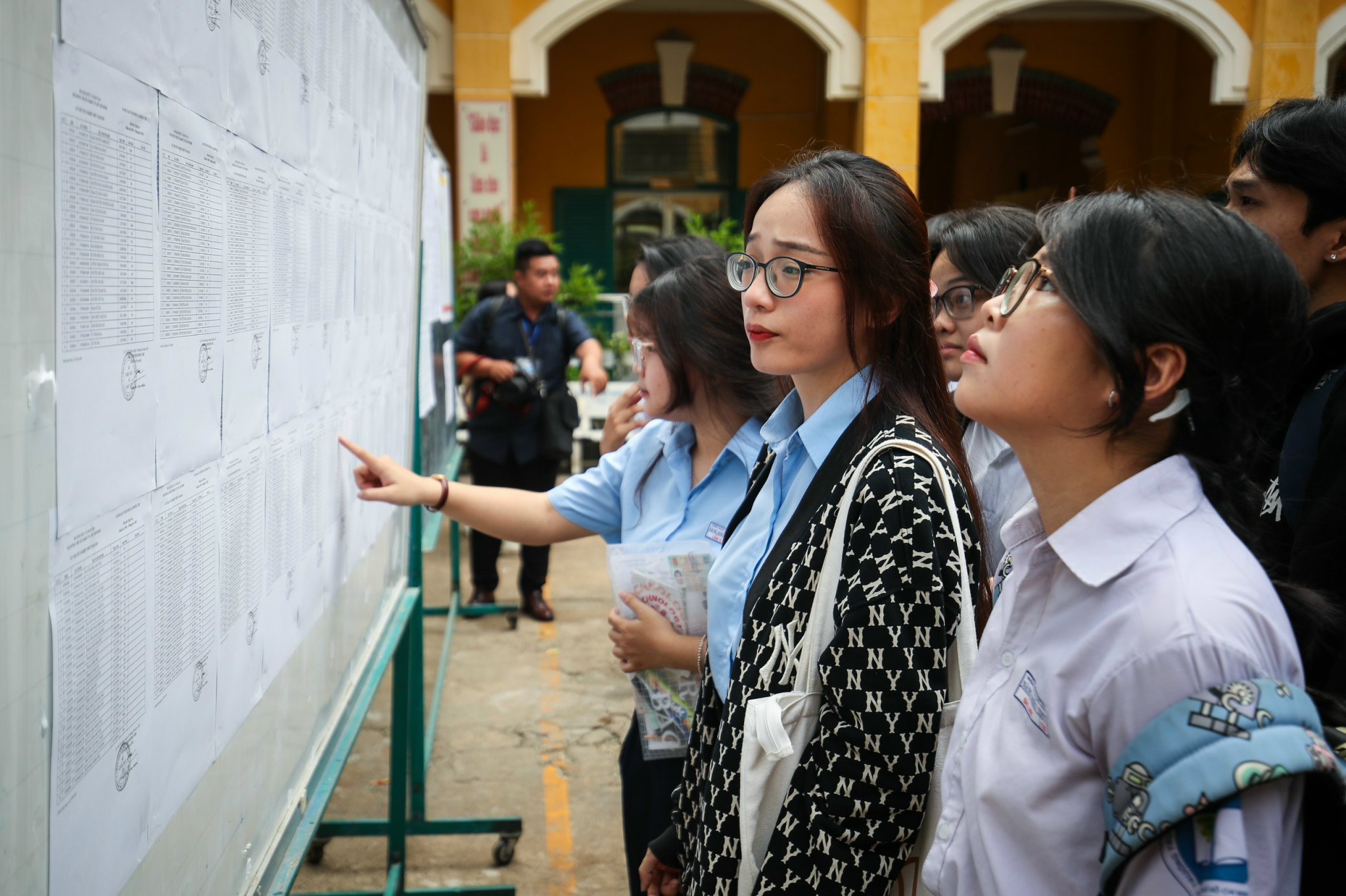
Candidates participating in the 2024 high school graduation exam.
In 2025, Ho Chi Minh City University of Industry and Trade also plans to have 4 admission combinations, each consisting of 3 subjects for each training program. These combinations will be applied to the admission method based on high school graduation exam scores and high school academic performance in 2025. Mathematics will be considered the main subject in the admission combinations for the following majors: Information Technology, Accounting, Finance and Banking, and Engineering. Literature will be the main subject in the admission combinations for majors related to management and social sciences such as: Tourism and Travel Service Management, and Economic Law. English will be the main subject in the admission combinations for the English Language and Chinese Language majors.
Meanwhile, according to Associate Professor Tran Thien Phuc, Vice Rector of the University of Technology (Vietnam National University Ho Chi Minh City), the university is proposing to the Vietnam National University Ho Chi Minh City to request the Ministry of Education and Training to allow admission combinations consisting of two subjects. This combination would include one core subject (mathematics or literature) and one elective subject (physics, chemistry, biology, etc.). However, Professor Phuc stated that the university will make an official decision in accordance with the official admission regulations.
Are there any disadvantages to different subject combinations when applying to universities?
In the 2025 high school graduation exam, candidates will take two compulsory subjects: mathematics and literature; and two elective subjects from the following: chemistry, physics, biology, geography, history, economics and law education, informatics, technology, and foreign languages.
According to information from the Department of Quality Management (Ministry of Education and Training) at the recent conference summarizing the high school graduation exam period from 2020 to 2024, approximately 900,000 to 1 million candidates nationwide took the high school graduation exam each year. Candidates took three compulsory subjects: mathematics, literature, and a foreign language, and one of two combined subject exams (natural sciences or social sciences). However, aggregated data from recent years shows that the number of candidates choosing the natural sciences exam is consistently lower than the social sciences exam (except in Ho Chi Minh City, where the trend is the opposite). Notably, statistics show that the average scores for social science subjects have increased slightly each year. Conversely, scores for natural science subjects have remained stable and lower. This is one of the reasons why candidates tend to choose the social sciences exam to gain an advantage when applying for university admission.
According to the Quality Management Department's assessment, this is also a somewhat disadvantageous factor among different subject combinations when considering university admissions, as many universities are considering multiple subject combinations for the same major but setting the same cutoff score.
Source: https://thanhnien.vn/xet-tuyen-dh-2025-nhung-dieu-chinh-ve-to-hop-mon-185241127173718219.htm


![[Photo] Closing Ceremony of the 10th Session of the 15th National Assembly](/_next/image?url=https%3A%2F%2Fvphoto.vietnam.vn%2Fthumb%2F1200x675%2Fvietnam%2Fresource%2FIMAGE%2F2025%2F12%2F11%2F1765448959967_image-1437-jpg.webp&w=3840&q=75)


![[Photo] Prime Minister Pham Minh Chinh holds a phone call with the CEO of Russia's Rosatom Corporation.](/_next/image?url=https%3A%2F%2Fvphoto.vietnam.vn%2Fthumb%2F1200x675%2Fvietnam%2Fresource%2FIMAGE%2F2025%2F12%2F11%2F1765464552365_dsc-5295-jpg.webp&w=3840&q=75)





































![[OFFICIAL] MISA GROUP ANNOUNCES ITS PIONEERING BRAND POSITIONING IN BUILDING AGENTIC AI FOR BUSINESSES, HOUSEHOLDS, AND THE GOVERNMENT](https://vphoto.vietnam.vn/thumb/402x226/vietnam/resource/IMAGE/2025/12/11/1765444754256_agentic-ai_postfb-scaled.png)












































Comment (0)