

Tuoi Tre Online presents the full text of General Secretary To Lam's article at the meeting with delegates attending the 7th International Conference on Vietnamese Studies in Hanoi on October 26.
Dear scientists and scholars from Vietnam and abroad,
Ladies and gentlemen, delegates attending this meeting.
First of all, on behalf of the Party, the State, and the People of Vietnam, I extend to all of you my respectful greetings, sincere thanks, and profound friendship.
The large presence of Vietnamese and international scientists and scholars at the 7th International Conference on Vietnamese Studies, themed "Vietnam: Sustainable Development in the New Era," demonstrates something very important: Vietnam is not only an object of research, but has become an intellectual partner for Vietnamese studies scholars. We have held six conferences on the country and people of Vietnam, and I think we will continue to do so in the future because Vietnam has always been one of the endless sources of scientific inspiration for you.
Studying Vietnam is a journey of discovering Vietnamese identity and wisdom.
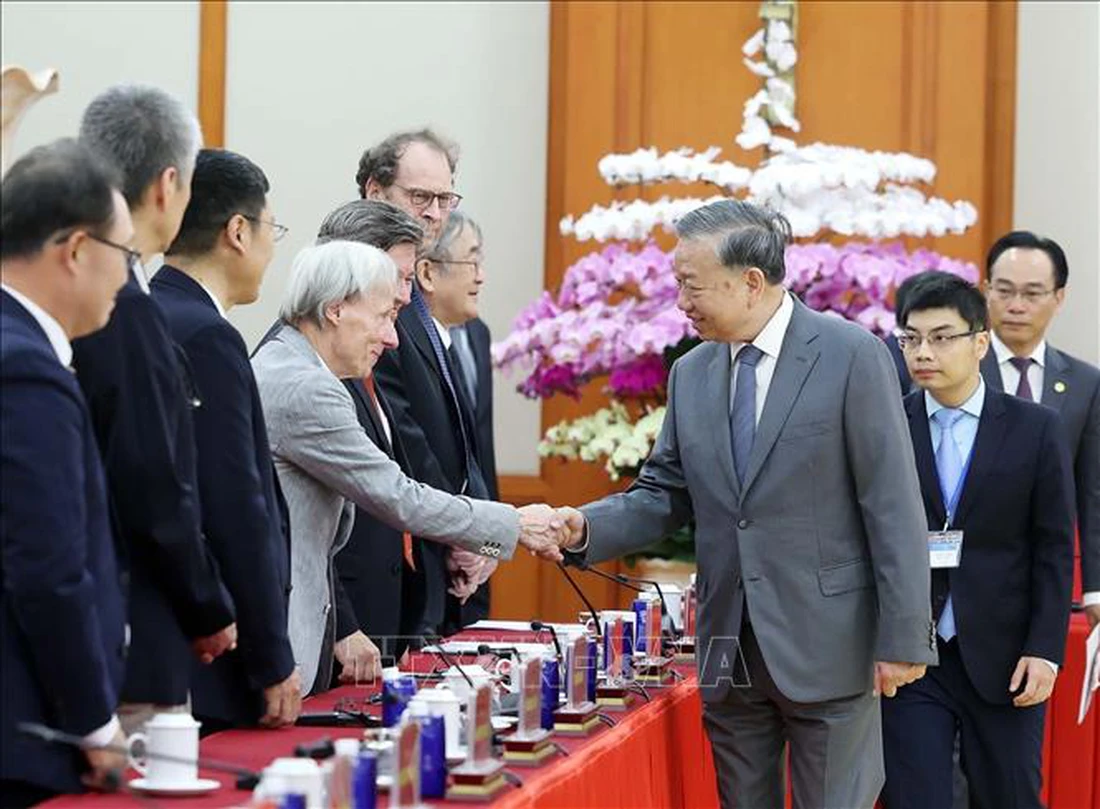
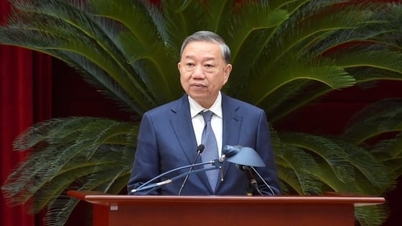
General Secretary To Lam receives the delegation attending the 7th International Conference on Vietnamese Studies - Photo: VNA
Vietnam is not a large country in terms of area and population compared to many of the world's superpowers, but it is a country with a continuous history of national formation, construction, protection, and development spanning thousands of years.
That history has forged a very special identity. It is the unwavering resilience in the face of all invasions, storms, and tempests; the intelligence to adapt, to learn, and to combine traditional strength with new knowledge; the will that "nothing is more precious than independence and freedom"; and the aspiration to build a just, compassionate, and humane society.
Throughout the dynasties of nation-building and defense, the Vietnamese people have formed a long-standing civilization, rooted in the people's will, based on morality and righteousness, and with independence and self-reliance as its lifeblood. To speak of Vietnam is to speak of culture – a culture that is not only a spiritual and artistic heritage, but also an intrinsic capacity for enduring existence. Vietnamese culture is the crystallization of national identity and its interaction with humanity; it is the spiritual foundation of society, a soft power, and the "development identity" of the nation.
Vietnamese culture is a culture that is always in motion, always innovating, always open to absorbing the best from the outside, while simultaneously preserving its core values. It is this vitality that has helped our nation overcome war, be reborn from destruction, and enter a new era of development with increasing confidence.
A pivotal historical milestone for our nation was the founding of the Communist Party of Vietnam in 1930. Since then, the past 95 years have fundamentally changed the destiny of our nation. Under the leadership of the Party, the Vietnamese people achieved independence, national reunification, ended prolonged foreign domination and war, and, most importantly, opened the path of socialist-oriented development – a path that places people at the center of development.
We highly value peace. I want to emphasize this strongly. Peace, independence, sovereignty, and territorial integrity are immutable principles. But Vietnam has always persistently resolved all issues through peaceful means, based on international law, mutual respect, equality, and mutual benefit. We deeply understand that peace does not come naturally, but must be achieved through struggle. Peace is only sustainable if it is coupled with equitable, inclusive, and sustainable development.
Forty years ago, in 1986, we began the Doi Moi (Renovation) process. Doi Moi was not just about economic adjustments. Doi Moi was a strategic decision, a development choice based on innovative thinking, institutional reform, and leadership methods, coupled with openness, integration, and proactive, extensive participation in the political, economic, and cultural life of the region and the world. Doi Moi created a leap forward in development, transforming Vietnam from a poor country heavily devastated by war into a dynamic economy, deeply integrated and actively participating in regional and global value chains.
Today, Vietnam has strategic and comprehensive partnerships with many countries; is an active and responsible member of the international community; participates in many new-generation free trade agreements; and contributes its voice to global issues such as food security, climate change, green transformation, digital transformation, and narrowing development inequality.
We participate in international integration with the motto of working together with the international community to build a world order based on law, fairness, inclusiveness, and respect for the legitimate interests of all nations, large or small.
International Conference on Vietnamese Studies - a gathering place for global intellectual excellence and dialogue.
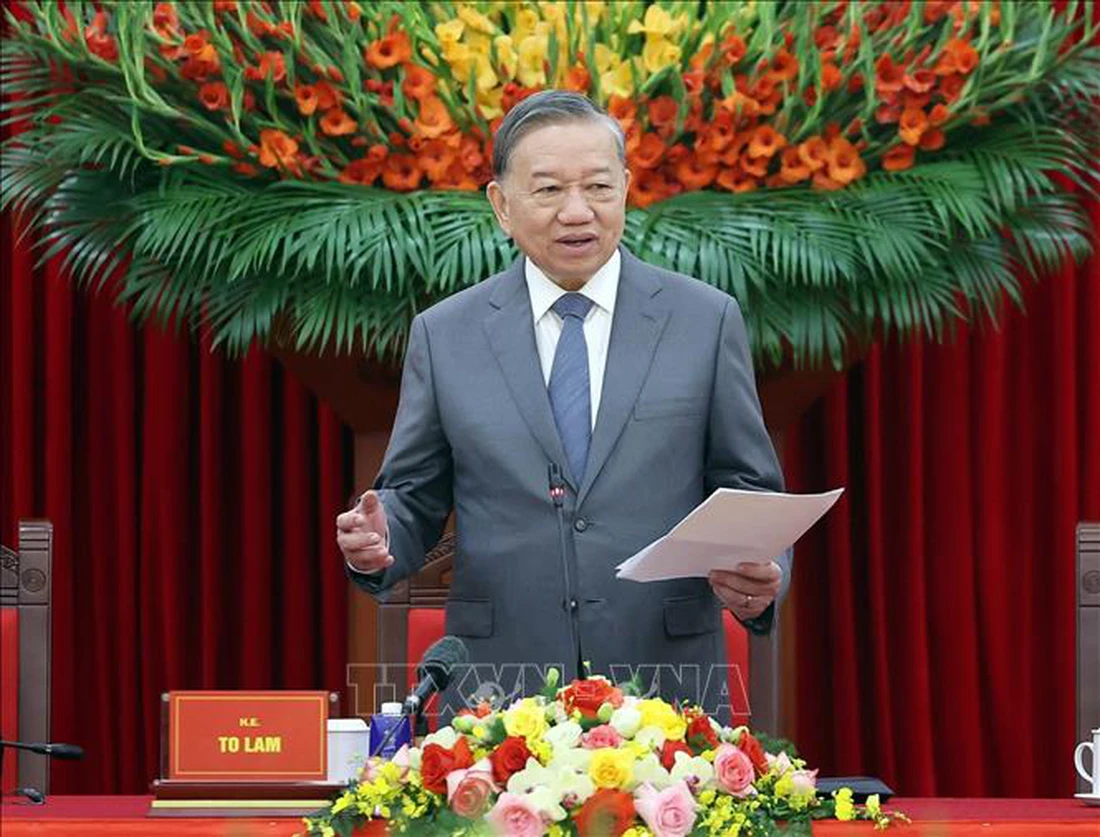
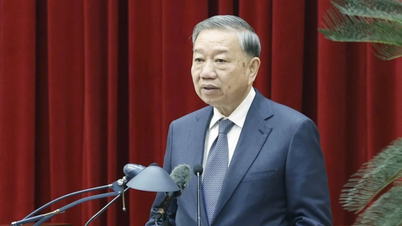
General Secretary To Lam speaks at a meeting with delegates attending the 7th International Conference on Vietnamese Studies - Photo: VNA
The theme of this conference, "Vietnam: Sustainable Development in the New Era," raises crucial questions for us at this moment: How can we develop the country rapidly while maintaining political and social stability? How can we achieve economic growth without sacrificing social justice? How can we modernize the country without harming the ecological environment and the cultural and ethical values of the Vietnamese people? How can we "integrate without being assimilated" into the global political landscape, the international economy, and human civilization, so that Socialist Vietnam can stand shoulder to shoulder with the world's leading powers?
Rapid and sustainable development, without sacrificing fairness, the environment, and Vietnamese values.
For us, rapid and sustainable development is a unified entity. Growth is only meaningful if every citizen benefits from it in a fair, safe, and humane way; if people's real quality of life is improved; if no one is left behind; and if the future of future generations is not sacrificed to meet the immediate interests of today's generation. Therefore, we advocate development based on three closely interconnected pillars.
Firstly, we must develop national institutions, policies, and governance towards strategic autonomy, modernity, transparency, integrity, effectiveness, and efficiency. We must build a socialist rule of law state of the people, by the people, and for the people—a state that both fosters development and ensures social justice, while resolutely combating corruption, negative practices, and vested interests. This is our main political focus.
The Vietnamese people are the nation's most valuable resource.
Secondly, the comprehensive development of Vietnamese people is crucial. Education, healthcare, science and technology, innovation, and culture are considered fundamental elements and direct resources for development.
I assert that Vietnam's most valuable resource is not its minerals, nor its geostrategic location, but rather its 106 million people today—hardworking, creative, patriotic, community-minded, eager to learn, and capable of overcoming adversity. Without unleashing and maximizing the intellectual, moral, personal, and socially responsible strength of each Vietnamese person, we will find it difficult to achieve our goals.
Green growth is a strategic and irreversible choice.
Thirdly, we must develop a green economy, a circular economy, a knowledge-based economy, and a digital economy, linked to science and technology, innovation, and digital transformation. The path to sustainable development in the 21st century cannot rely solely on the exploitation of physical resources, cheap labor, or traditional advantages, but must depend on knowledge, technology, innovation, and smart governance. Vietnam is acutely aware of its responsibility in the face of climate change, rising sea levels, biodiversity degradation, and resource depletion. We recognize that green growth and sustainable development are an irreversible strategic choice.
Development through knowledge, humanism, and dialogue with the world.
I would also like to emphasize that sustainable development, for us, is not just an economic and environmental issue. It is also a cultural, social, human, and ethical issue. A sustainably developed society is one that values truth, justice, fairness, and compassion; a society where the elderly are respected, children are protected, women are given equal opportunities, and the vulnerable are sheltered; a society where the people's trust in the Party, the State, the regime, and the future remains unwavering. Development without these values is not sustainable; it is not our goal.
I highly appreciate that this conference not only discusses Vietnamese history, culture, and art, which has always been a traditional strength of our Vietnamese research community, but also delves into structural topics with strategic significance for the future of our country: institutional policies, science and technology, innovation, health, education, economics, ideology, and social policies.
In other words, you are not only researching "who Vietnam was in the past," but also contributing to answering the question "who Vietnam will be in the future." This is a contribution that is both academically and strategically valuable.
I would like to express my sincere gratitude to the scientists, scholars, and experts in Vietnamese studies who have dedicated their hearts and minds, and worked diligently, honestly, and objectively for many years to researching Vietnam. Your works not only help the world understand us better, but also help us to reflect on ourselves more frankly.
In the process of formulating national development guidelines, policies, and strategies, the Vietnamese Party and State always listen to independent, serious, and well-intentioned scientific critiques. Valuable research with rich practical content and a long-term vision is a valuable source of reference for us in building our national development strategy.
The aspiration for development and the belief in the strength of the Vietnamese people.
I hope that, following this conference, your findings and policy recommendations, particularly in areas such as institutional reform, high-quality human resource development, narrowing the regional development gap, climate change adaptation, just energy transition, cultural heritage protection during urbanization, and building a national innovation ecosystem, will continue to be shared and discussed in greater depth with relevant Vietnamese agencies.
We have a very clear, very specific, and very consistent aspiration: to build Vietnam into a developed, high-income, socialist-oriented country by the middle of the 21st century. That is our second Centenary Goal, coinciding with the 100th anniversary of the founding of the Democratic Republic of Vietnam, now the Socialist Republic of Vietnam, in 2045.
Our first centenary goal, approaching 2030, is to celebrate the 100th anniversary of the founding of the Communist Party of Vietnam and also to mark the milestone we strive to reach as a developing country with a modern industrial base and a high-middle income.
Those two centenary goals are not just milestones, not just political slogans. They are a commitment to the Vietnamese people today, and to future generations. They are also a commitment from Vietnam to its international friends: Vietnam wants to grow stronger through knowledge, creativity, equal cooperation, and mutual respect; Vietnam wants to contribute to the common progress of humanity, jointly creating achievements through creative labor and jointly enjoying those achievements.
A new phase of development with new thinking and values that will never change.
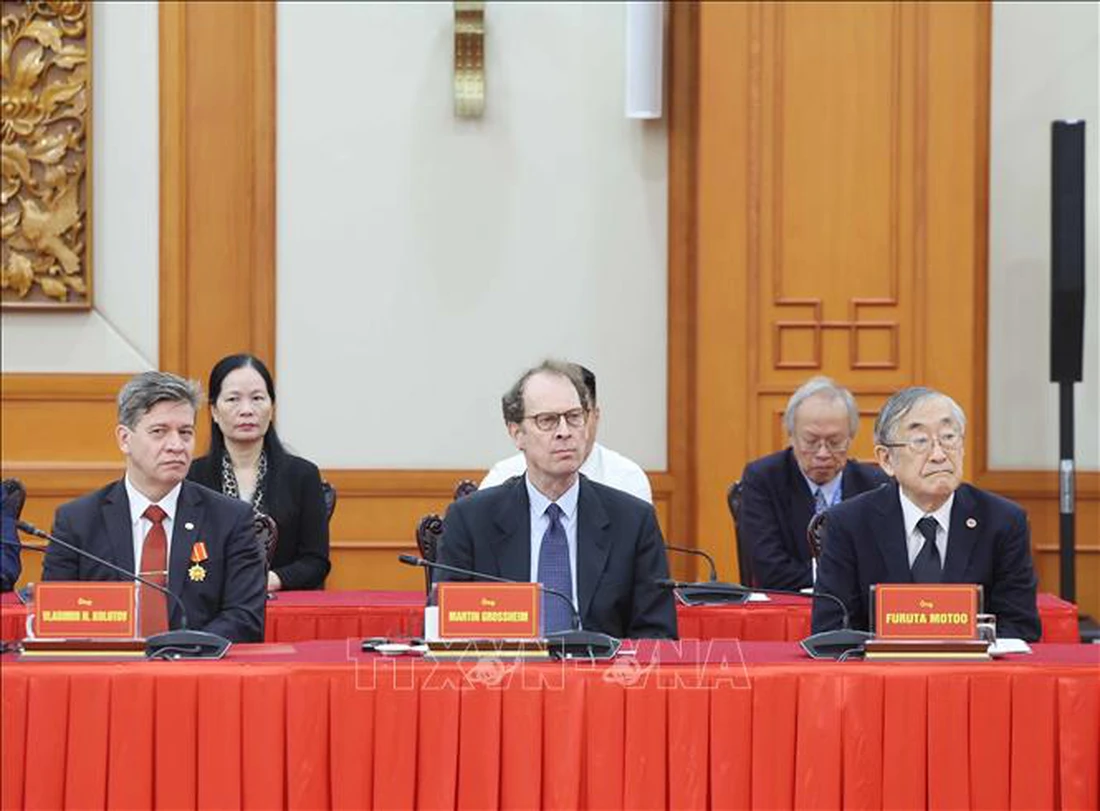
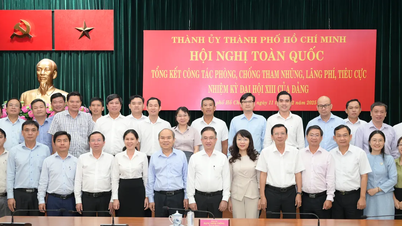
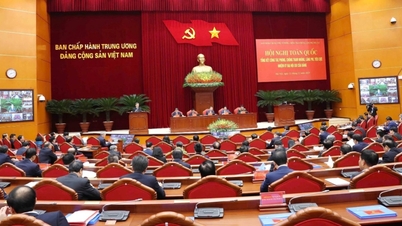
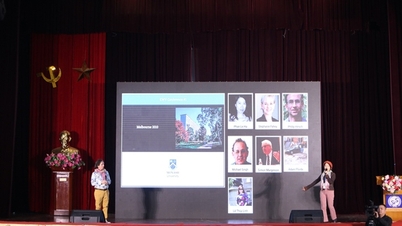
Delegates attending the 7th International Conference on Vietnamese Studies - Photo: VNA
We are entering a new phase of development with a new mindset, but with values that will never change.
Firstly, national independence, national sovereignty, and territorial integrity are sacred and inviolable. No development is meaningful if it comes at the cost of the independence that our ancestors sacrificed their lives and blood to regain.
Secondly, the happiness of the people must be measured by housing, education, healthcare, a healthy living environment, opportunities to create a better life for each family, and the belief that our children and grandchildren will live better lives than we do today. A ruling party can only be worthy of the people if all its decisions are aimed at improving the real lives of the people.
Thirdly, Vietnam's strength lies primarily in the strength of national unity. History has proven that when the entire nation is united, no force can subdue Vietnam. National unity has been our method of survival throughout history.
Aspiration for development through knowledge, cooperation, and human values, connecting Vietnamese intellect with friends from around the world.
In this new stage of development, national unity must be further expanded to include intellectuals both domestically and internationally, the business community, artists, youth, women, ethnic minorities, religious groups, overseas Vietnamese, and international friends who are connected to Vietnam with goodwill and mutual respect. I want to emphasize: international friends who understand and love Vietnam, who study Vietnam honestly, objectively, and constructively, are an integral part of Vietnam's soft power.
I hope the community of Vietnamese studies scholars will continue to support us, not only with sentiment but also with scientific knowledge, with evidence-based policy analysis, and with specific, practical, and implementable recommendations. I hope that research on Vietnam will increasingly address pressing issues: population aging; the development of primary healthcare and comprehensive social security; ensuring energy security under emission reduction commitments; protecting digital sovereignty and cultural identity in the digital space; and how artificial intelligence and automation can serve human development rather than eliminate humanity.
I also earnestly urge international researchers, graduate students, and scientists to come to Vietnam more often, stay in Vietnam longer, work with Vietnamese colleagues on an equal footing, and listen to voices from the grassroots, from localities, and from communities, rather than just viewing Vietnam through aggregated data. I believe that Vietnam is a land rich in scientific material for those interested in development, transformation, modernization, and sustainability.
Vietnam enters a new era with great aspirations, but also with a humble, open-minded, and receptive attitude. We have no illusions that the road ahead will be easy. Today's global challenges—geostrategic competition, climate change, the crisis of confidence, wealth inequality, technological inequality—cannot be solved by any country alone. Therefore, we always value dialogue, cooperation, respect for international law, and uphold effective and fair multilateralism.
Vietnam wants to be a good friend, a reliable partner, and a responsible member of the international community. Vietnam wants to work with the world to protect peace, promote sustainable development, advance social justice, and spread the progressive humanistic values of humanity. This is not just a foreign policy guideline; it is a civilized and ethical choice.
Once again, thank you to all the scientists, Vietnam studies scholars, experts, comrades, and friends who have dedicated their hearts to Vietnam, who have accompanied Vietnam throughout the years, and who are present in Hanoi today.
We appreciate, are grateful for, and have high expectations of you.
We wish you good health, happiness, and much inspiration for your new research on Vietnam—an independent, self-reliant, innovative, rapidly developing, and sustainable Vietnam in the new era.
Thank you very much.
Source: https://tuoitre.vn/phat-bieu-cua-tong-bi-thu-to-lam-tai-cuoc-gap-cac-dai-bieu-du-hoi-thao-quoc-te-viet-nam-hoc-lan-7-20251026135748858.htm

















![[Photo] Prime Minister Pham Minh Chinh holds a phone call with the CEO of Russia's Rosatom Corporation.](/_next/image?url=https%3A%2F%2Fvphoto.vietnam.vn%2Fthumb%2F1200x675%2Fvietnam%2Fresource%2FIMAGE%2F2025%2F12%2F11%2F1765464552365_dsc-5295-jpg.webp&w=3840&q=75)









































Comment (0)