

The Pô Kô River originates in the Ngọc Linh mountain area (Quảng Ngãi province), winds through old-growth forests, flows along the vast coffee and rubber plantations of Gia Lai and Quảng Ngãi provinces, and then flows into Cambodian territory, joining the Mekong River. Specifically, from the point where it merges with the Đak Bla River towards Ia Krái commune, besides the name Pô Kô, the river is also known as Sê San.
Flow of memories
Winding like a green silk ribbon between heaven and earth, the Pô Kô River, as it flows through the three communes of Ia Krái, Ia O (Gia Lai province), and Ia Tơi ( Quang Ngai province), carries with it silt, fish, shrimp, and the memories of countless generations of people who settled along its banks.
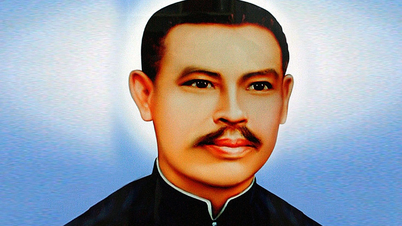
For the people of Ia Krai commune, mentioning the contributions of previous generations in the resistance war against the US is also a source of pride. To this day, many still remember the story of Hero A Sanh (real name Puih San) and the local people rowing dugout canoes carrying food, medicine, and soldiers across the Po Ko River to the battlefield to fight the invading enemy.
Looking towards the Pô Kô river, Mr. Rơ Lan Pênh (residing in Nú village, Ia Krái commune) emotionally recounted a period of fierce warfare and the profound sacred meaning it holds in the hearts of the people here.
“During the years when the whole country was fighting the Americans, the villagers enthusiastically participated in the revolution. Some sheltered cadres, others rowed boats carrying food, ammunition, and soldiers across the Po Ko River. The most outstanding example was Hero of the People's Armed Forces A Sanh. In 1963, I volunteered to join the guerrillas fighting the Americans, participating in the special transport force, especially carrying food and soldiers day and night across the Po Ko River. At one point, I had to row for 10 consecutive days and nights, transporting an entire division across the river. Currently, the A Sanh ferry landing at the end of the village has been recognized as a provincial-level historical site. We are very proud of this,” recalled Elder Penh.
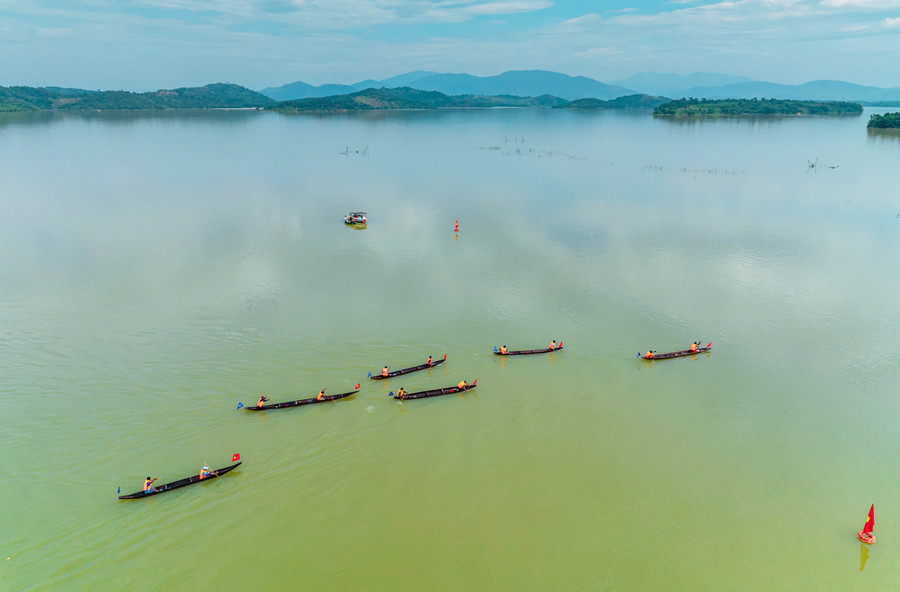
According to veteran Rơ Lan Kai-nguyên, former Party Secretary of Ia Krái commune, around 1970, he used motorboats instead of dugout canoes to transport food and soldiers. In some sections of the river, which were 200 meters wide, motorboats were more maneuverable and faster, helping to avoid enemy ambushes.
“We usually hung an oil lamp at the bow of the boat, and there was one like that at the ferry crossing on the other side. We relied on that faint light to accurately determine our destination. Once, we were transporting about 3 tons of food and weapons across the river, but the engine malfunctioned. The boat just drifted freely. Everyone was very worried about revealing our secret. Fortunately, it was a river route in Cambodia, where the terrain was relatively flat, without as many rapids as the section flowing through Gia Lai. After drifting for a while, I tried to fix it, and the engine started again. We were so relieved, and we steered the boat upstream to find our way back to the ferry crossing in the pitch-black night,” Mr. Rơ Lan Kai recalled.
For the elder Rơ Châm Hmơnh, the decision to move the village of Nú to settle by the Pô Kô river marked a turning point in the villagers' history of fighting against foreign invaders.
Elder Hmơnh confided: “Previously, the village was on the other side of the Pô Kô River, now within the administrative boundaries of Quảng Ngãi province. When enemy bombs and bullets continuously rained down, destroying the fields and crops, the villagers decided to move to this side. The village was established on a strip of land where the Ia Plú stream flows into the Pô Kô River. From this strategic location, coupled with abundant patriotism, the villagers actively participated in guerrilla warfare, transporting food and supplies, and helping soldiers cross the river to fight the American enemy.”
Po Ko today
The Pô Kô River remains peaceful and full of life. Its waters irrigate thousands of hectares of coffee, pepper, cashew, and rubber plantations along both sides of the river in Ia Krái and Ia O communes, and in Ia Tơi commune on the opposite bank. The lush green fields and orchards laden with fruit are testament to the bounty of this legendary river.
Elder Hmơnh recalled: "During the war years, outdated farming methods trapped the villagers of Nú in a cycle of poverty. When we moved from Quảng Ngãi to Gia Lai to establish the village, every house was tiny, with walls made of bamboo and roofs thatched with forest leaves. The upland rice crop was scarce in good years and often poor in bad years, so the villagers had to go into the forest to find food to stave off hunger."
Today, the villagers of Nu have started growing cashew nuts, rubber, and coffee. Income from these industrial crops has helped the villagers achieve a more stable life. Many households have high incomes from agricultural production. For example, the family of Mr. Puih Luih earns 250-300 million VND per year. All 115 households in the village have built houses, many of them large and beautiful, with construction costs ranging from 200-300 million VND.
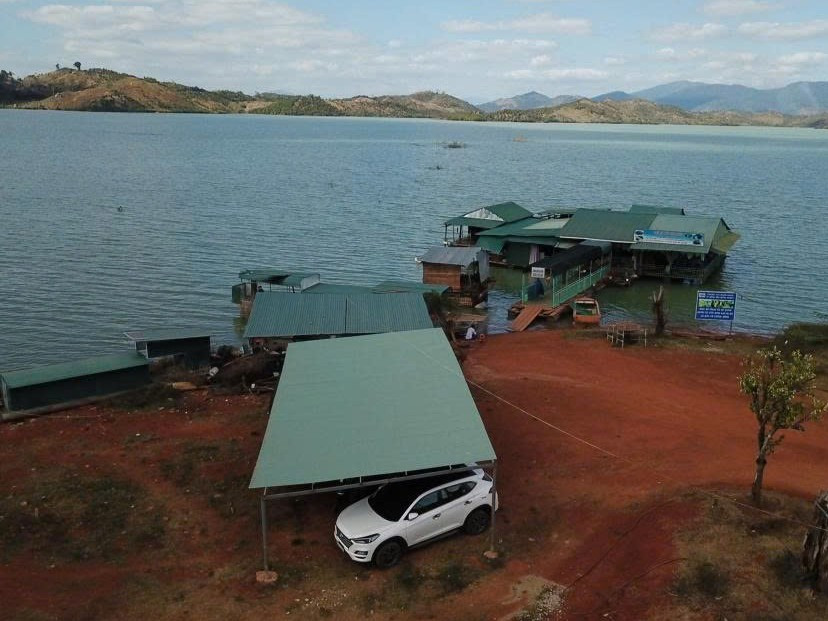
Downstream along the Po Ko River, on its banks, Dang village (Ia O commune) is transforming in the face of new opportunities. In this village with over 200 households and more than 1,200 inhabitants, mostly Jrai people, the transportation infrastructure and lighting system have been systematically invested in. Many new houses have been built on old foundations, and inside, the villagers have motorbikes, televisions, and other audiovisual equipment.
Rơ Mah Hliên shared: "Thanks to hard work, the villagers now have a more comfortable life than before. Besides growing cashew nuts and coffee, the villagers also work as laborers for rubber companies located in the area."
When the former Ia Grai district chose the alluvial plain next to the village as the venue for the A Sanh Cup boat race on the Po Ko River, the villagers gained additional income each year from selling unique local products to tourists.
"Many well-off households have opened floating restaurants next to the alluvial plain to do business in cuisine, take tourists sightseeing on the river, then visit the fishing village in Ia Toi commune, or raise fish in cages in the river," added Ms. Hlien.
Mr. Nguyen Thanh Phuong, Chairman of the People's Committee of Ia Krai commune, said: The Po Ko River not only provides water for agricultural production but also has abundant aquatic resources, helping people increase their income.
With its pristine beauty and historical and cultural value, the commune is aiming to develop community-based tourism along the river, linked to local history, ecology, and culture, creating new livelihoods for the people.
The commune has also surveyed tourist sites and called for investors to develop tourism in the area. This had already been underway before the merger of the old communes into the new Ia Krai commune.
"Going forward, we will work with neighboring communes along the Po Ko River to coordinate the development of a tourism plan," Mr. Phuong added.
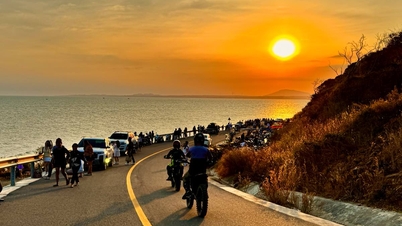
The scenery of Po Ko changes vividly with each moment of the day. In the early morning, a light mist covers the water's surface, and the A Sanh ferry landing appears like a mystical ink painting.
On the river at A Sanh ferry landing, besides a few dugout canoes paddling and casting nets, 12 iron ferries still cross the Po Ko River, carrying people back and forth to earn a living. Each ferry trip from A Sanh landing is not just a joyful journey connecting banks, but also a resurgence of the heroic memories of this legendary river.
Source: https://baogialai.com.vn/suc-song-moi-ben-dong-po-ko-post565377.html

![[Photo] General Secretary and President visit the China-ASEAN AI Application Cooperation Center](https://vphoto.vietnam.vn/thumb/1200x675/vietnam/resource/IMAGE/2026/04/17/1776404277677_vna-potal-tong-bi-thu-chu-tich-nuoc-tham-trung-tam-hop-tac-ung-dung-ai-trung-quoc-asean-8706616-2286-jpg.webp)













![[Photo] National Assembly Chairman Tran Thanh Man attends the policy seminar to promote Vietnam-Türkiye cooperation.](https://vphoto.vietnam.vn/thumb/1200x675/vietnam/resource/IMAGE/2026/04/16/1776351415367_vna-potal-chu-tich-quoc-hoi-tran-thanh-man-du-toa-dam-chinh-sach-thuc-day-hop-tac-viet-nam-tho-nhi-ky-8705791-jpg.webp)



































Comment (0)