

As a province with a large number of historical sites, the management and protection of artifacts and religious objects at these sites are given priority by local authorities. Many localities have implemented comprehensive preventative measures to ensure that there are no thefts of artifacts, religious objects, or unauthorized preservation, restoration, or repair work by individuals or organizations without proper authorization from competent authorities.
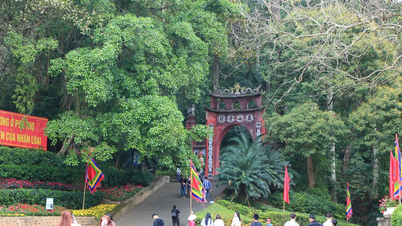
 Many artifacts at the Le Hoan Temple National Special Monument Site (Tho Xuan) are displayed through images to serve the public and tourists who come to visit and learn about them.
Tho Xuan is one of the localities with a large number of historical relics in the province, with more than 250 relics and sites already inventoried, including two special national relics: Lam Kinh and the Le Hoan Temple. In recent years, the district has strengthened its state management and direction of cultural heritage, especially in the preservation, restoration, and rehabilitation of relics, ensuring strict implementation of the Law on Cultural Heritage, Directive No. 19/CT-UBND dated August 23, 2021, and Document No. 4730/UBND-VX dated April 8, 2022, of the Chairman of the Provincial People's Committee. Along with that, the district has mobilized various resources to restore, renovate, and promote the values of relics in conjunction with tourism development and implemented comprehensive solutions in the management of ancient artifacts and religious objects at these relics.
The Lam Kinh Historical Site boasts a large number of artifacts and religious objects, including five national treasures: the Vinh Lang stele (recording the life and achievements of King Le Loi); the Khon Nguyen Chi Duc stele (stele of Empress Dowager Ngo Thi Ngoc Dao); the Chieu Lang stele (stele of King Le Thanh Tong); the Du Lang stele (stele of King Le Hien Tong); and the Kinh Lang stele (stele of King Le Tuc Tong). These artifacts are of exceptionally rare and valuable significance to the country's history, culture, and science , and are therefore protected and preserved under a "special" regime. The Management Board of the historical site also focuses on promoting awareness and responsibility among the community in jointly protecting national treasures in particular and historical sites in general.
According to Nguyen Xuan Toan, Head of the Lam Kinh Historical Relic Management Board: “In recent years, along with preserving and promoting the value of the relics in conjunction with tourism development, the management board has paid special attention to the management and protection of artifacts, antiques, and religious objects within the relic site. For the areas currently preserving and promoting national treasures within the relic site, we have installed surveillance cameras and built technical wooden fences, along with signs guiding visitors to avoid direct impacts that could affect the artifacts. The stele of King Le Tuc Tong, currently located in Kien Tho commune (Ngoc Lac district), is being protected by the management board in close cooperation with the local people and authorities. In addition, we conduct an annual inventory of all artifacts in the relic site and assign staff to be on duty at the worship and incense offering areas to manage and guide visitors.”
At the Le Hoan Temple National Special Monument (Xuan Lap commune), many valuable artifacts are still preserved, such as: imperial decrees, land inscriptions, incense altars, jars, plates, ancient bowls, 14 imperial decrees from various emperors from 1674 to 1887, and a stone plate believed to have been a gift from the Song dynasty emperor to King Le Dai Hành. Inside the temple, there are also two ancient stone steles: a small stele erected in 1601 by Phung Khac Khoan, recording the land and ancestral worship of the Early Le dynasty emperors; and a second stele, composed in 1626, titled "Le Dai Hành Emperor Temple Stele," recording the merits and achievements of King Le Dai Hành during his reign. However, apart from these two ancient stone steles, artifacts such as the incense altar, plates, ancient bowls, imperial decrees... and especially the stone plate believed to have been a gift from the Song emperor, have been carefully preserved by the local authorities in a separate room, secured by multiple layers of doors.
According to Tong Canh Tien, Vice Chairman of the People's Committee of Xuan Lap Commune: “From 2017 to the present, some artifacts at the Le Hoan Temple National Special Historical Site have been protected and stored in a separate area to prevent damage or harm from weather and human activity. However, the stored artifacts have been displayed through images at the Le Hoan Temple, serving the people and tourists in visiting and learning about the historical site. In addition, the commune has also assigned two caretakers to regularly look after and protect the site and guide people and tourists who come to offer incense and visit the site daily.”
It can be said that, over the years, the management, preservation, and promotion of the value of historical relics in the province have achieved significant results, with a considerable contribution from the local communities where these relics are located. To date, many relics have been invested in for restoration, renovation, and enhancement, linked to tourism development, contributing to improving the cultural and spiritual life of the people, while also widely promoting the image of Thanh Hoa province and its people.
However, recently in some localities, the management of historical sites has been lax, leading to chaotic and complicated situations that affect the preservation, restoration, and rehabilitation of these sites. Prominent issues include the introduction of inappropriate artifacts, religious objects, and furniture into historical sites, as well as the theft of relics and antiques, impacting the value and preservation of the original cultural and historical significance of these sites. In response to this situation, the Chairman of the Provincial People's Committee issued Directive No. 19/CT-UBND dated August 23, 2021, and Document No. 4730/UBND-VX dated April 8, 2022, requesting relevant departments, agencies, and local authorities to continue to widely disseminate and strictly implement the Law on Cultural Heritage, its implementing guidelines, relevant legal regulations on investment and construction, and directives and guidance from the Ministry of Culture, Sports and Tourism... At the same time, they are required to regularly coordinate and organize inspections, checks, and supervision of the preservation, restoration, and rehabilitation of historical sites, thereby contributing to improving the quality and effectiveness of management and promoting the value of historical sites in the province.
Text and photos: Hoai Anh
Source















































































Comment (0)