

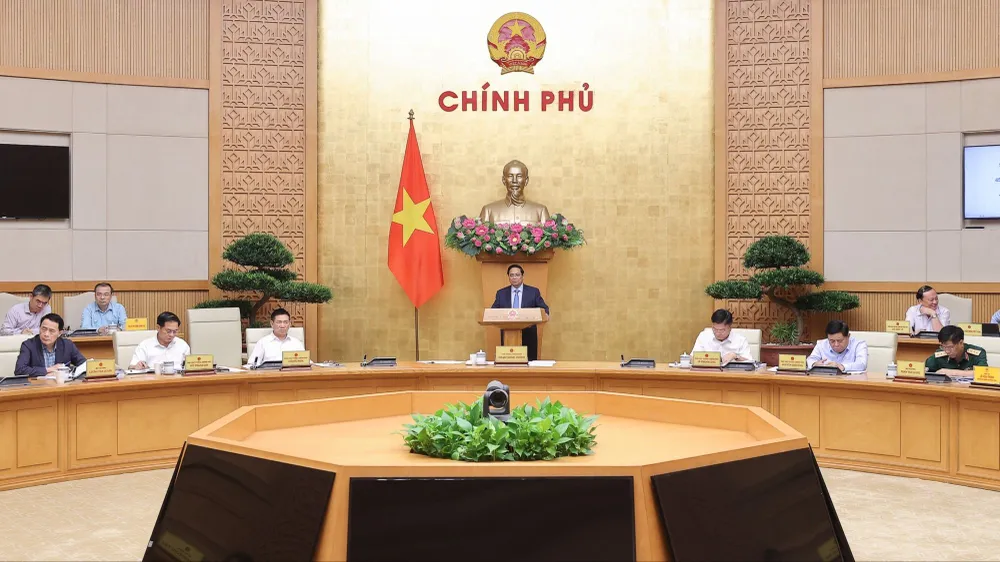
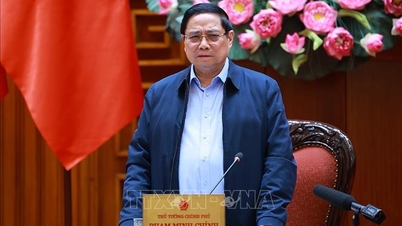
In his opening remarks, the Prime Minister stated that, after three months of implementation (since July 1st), the organization of the two-tiered local government model continues to show many positive changes. To date, the two-tiered local government apparatus has been basically streamlined in terms of organization and personnel, operating relatively smoothly, synchronously, and without interruption, ensuring better service to the people.
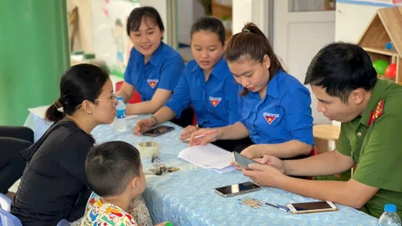
The operation of the two-tiered local government system has achieved several results, including: over 7 million online applications processed, with an on-time rate exceeding 91%; more than 3,100 commune-level public administrative centers put into operation; the arrangement of public offices and assets has been implemented seriously, saving budget, and many facilities have been repurposed to serve the community…
However, the Prime Minister pointed out that the implementation process still faces many obstacles and shortcomings, such as: the situation of having an excess of officials and civil servants in some areas and a shortage in others; in some places, the workload does not match the number of officials, especially in areas with strong socio -economic development; there is an overload of work, with many tasks but unsuitable policies and regulations; and in many places, the staff still have limitations in management capacity, legal capacity, professional capacity, digital transformation capacity, and innovation capacity…
The Prime Minister also pointed out that some guiding documents are still slow to be issued, especially in the fields of finance and accounting, land, and education ; many places face difficulties in infrastructure, resources, and transportation; the online public service system is still inadequate, and data lacks synchronization; the payment of benefits and policies for those who have left their jobs has not been fully resolved; and people in some areas have not yet adapted to the new procedures…
According to the Prime Minister, many areas still lack specific guidelines, causing confusion for localities in implementation. Therefore, the Prime Minister emphasized that the situation of "waiting for documents" cannot be allowed to hinder the process.
Regarding the payment of severance pay to those leaving their jobs, the Prime Minister demanded that it be completed definitively before October 15th. Along with that, a thorough and accurate assessment of the current situation and proposals for solutions to address the imbalance of surplus and shortage of officials and civil servants in different areas should be conducted.
The Prime Minister also requested the complete removal of obstacles related to physical infrastructure, information technology infrastructure, and online public service systems; and continued assessment of the feasibility of implementing the tasks of decentralization, delegation, and delineation of authority to local levels...
Regarding administrative reform, the Prime Minister noted that many interconnected procedures are not operating smoothly, such as non-geographical procedures in the fields of land, construction, civil registration, and insurance. Therefore, it is necessary to simplify processes to prevent citizens from having to travel multiple times, causing frustration; and to further promote the development-oriented role of the grassroots level.
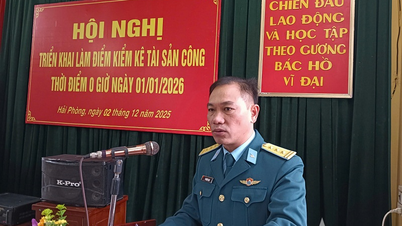
To date, there are still 16,009 land and property facilities that need to be reorganized, 299 communes without vehicles, 18 communes without treasury accounts, 32 communes without August salaries, many communes without chief accountants, and 39,746 people without payments according to the policies stipulated in Government Decree 178/2024/ND-CP and Decree 67/2025/ND-CP (on policy support for officials, civil servants, employees, and armed forces personnel during the reorganization and streamlining process...).
Source: https://www.sggp.org.vn/thu-tuong-pham-minh-chinh-dut-khoat-hoan-thanh-chi-tra-che-do-cho-nguoi-nghi-viec-truoc-ngay-15-10-post815806.html























































































Comment (0)