

Motivating people to improve productivity.
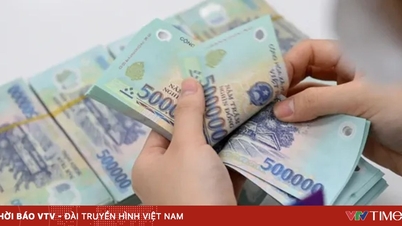
According to the Government's submission, the Government proposes to the National Assembly the full implementation of two aspects of salary reform in the enterprise sector in accordance with Resolution No. 27-NQ/TW, including: adjusting the regional minimum wage as stipulated in the Labor Code (a 6% increase effective from July 1, 2024); and regulating the salary mechanism for state-owned enterprises (effective from January 1, 2025).
In line with the principle of implementing salary reform in the public sector according to Resolution 27-NQ/TW, following a roadmap that is gradual, cautious, and certain, ensuring feasibility and contributing to improving the lives of salary recipients, the National Assembly has assigned the Government to implement the contents that are ready for implementation, including adjusting the basic salary from the current 1.8 million VND to 2.34 million VND/month (a 30% increase) from July 1, 2024 (without abolishing the current basic salary and salary coefficient).
For agencies and units currently applying special financial and income mechanisms at the central level, the National Assembly directs the Government to ensure the preservation of the difference between the salary and additional income of officials, civil servants, and public employees in June 2024 and the salary from July 1, 2024, after the amendment or abolition of the special financial and income mechanisms.
Until these mechanisms are amended or abolished, monthly salaries and additional income will be calculated based on the base salary of VND 2.34 million/month under a special mechanism from July 1, 2024, ensuring that it does not exceed the salary and additional income received in June 2024.
Simultaneously, the Government proposes adjusting pensions, social insurance benefits, preferential allowances for meritorious individuals, and social assistance benefits from July 1, 2024. Specifically, pensions and social insurance benefits will be increased by 15%; for those receiving pensions before 1995, after the adjustment, if their benefit level is less than 3.2 million VND/month, it will be increased by 0.3 million VND/month; if their benefit level is between 3.2 million VND/month and less than 3.5 million VND/month, it will be adjusted to 3.5 million VND/month.
Preferential allowances for meritorious individuals will increase from VND 2,055,000 to VND 2,789,000 per month (a 35.7% increase); maintaining the current ratio of preferential allowances for meritorious individuals to the standard allowance. Social assistance allowances will increase from VND 360,000 to VND 500,000 per month (a 38.9% increase).
According to the Government Report, the total funding needed to adjust the basic salary by 30%, implement a 10% bonus based on the basic salary fund, and adjust pensions and allowances cumulatively for the three years 2024-2026 is an additional 913 trillion VND. The National Assembly has tasked the Government with promptly reporting to the Central Committee on expanding the scope of using accumulated salary reform funds from the central and local budgets to cover pension adjustments, allowances, social security policies, and workforce reduction.
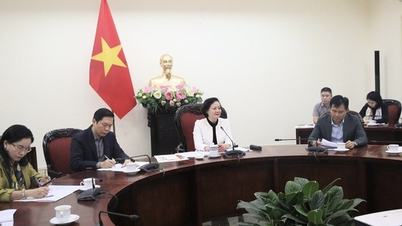
Minister of Home Affairs Pham Thi Thanh Tra affirmed that this is the highest increase in the basic salary ever, which will contribute to improving the lives of workers and creating motivation to increase productivity. Salary reform must achieve the goal of increasing salaries, so it is necessary to adhere closely to Resolution 27-NQ/TW in the calculations. Therefore, the plan decided by the Prime Minister and the Steering Committee for Salary Policy Reform is very wise.
In particular, a very new measure is to allocate 10% of the basic salary fund annually so that the head of the unit has full authority to decide on extraordinary bonuses for civil servants and public employees. This will help units have more reward mechanisms and improve the salary and income management mechanism to hire experts, scientists, and talented people to carry out the agency's tasks.
Along with this, specific and strict guidance is needed to ensure the resources for implementing salary reforms, including organizational restructuring and downsizing; and unified guidance for managing salaries and income for each category of public service units, whether autonomous or funded by the state budget.
“This salary reform plan is considered optimal, as it will essentially maintain the existing legal regulations on salaries for all groups, with current allowances remaining unchanged and further reviewed and supplemented. Thus, Resolution 27-NQ/TW will be implemented according to a solid, effective, feasible roadmap, meeting the expectations of all groups, ensuring no one is disadvantaged,” emphasized Ms. Pham Thi Thanh Tra.
If officials receive a salary that covers their living expenses, they will not want to engage in corruption.
In reality, prices had already risen before the wage increase. Therefore, along with the wage increase, solutions to stabilize prices are needed, especially for consumer goods; at the same time, attention must be paid to the issue of personal deductions. If wages increase by 30%, personal deductions should increase by at least 30%, or even up to 50%.
Representative Ta Van Ha (National Assembly delegation of Quang Nam province)
Regarding the issue of salary increases for civil servants and the method of these increases, National Assembly deputies also expressed concerns and differing opinions.
While expressing agreement on the need to implement salary reforms, allowances, and related policies in a cautious, step-by-step manner, Representative Pham Van Hoa (from the National Assembly delegation of Dong Thap province) also argued that the 30% increase in the total salary fund for civil servants and public employees, and the 51.93% increase for the armed forces, is not equitable for other salary recipients and is not in line with the proposed new salary scale.
Furthermore, the transition from the old salary scale to the new one for civil servants and public employees holding leadership positions who are currently receiving professional and technical salaries along with leadership allowances will be very difficult due to the many old salary grades. In addition, the resulting difference in pension benefits between those retiring before and after July 1, 2024, and the elimination of seniority allowances for some specialized civil servants and public employees, will lead to a significant reduction in the new salary, causing dissatisfaction among civil servants and public employees.
Meanwhile, according to Representative Duong Minh Anh (Hanoi City National Assembly delegation), the solution of adjusting the basic salary for civil servants, public employees, and armed forces personnel in the public sector from 1.8 million VND to 2.34 million VND and increasing the bonus fund by 10% of the basic salary fund has partially met the expectations of voters. However, because the salary reform policy has not yet been implemented, we continue to apply the current salary scale and allowance system. Therefore, some civil servants and public employees in the public sector, including those in the education sector, still have many concerns.
“Since 2013, after the Central Committee issued Resolution 29 on fundamental and comprehensive educational reform, many major policies on educational reform have placed considerable pressure on teachers. However, the salary policy only applies Resolution 29, which prioritizes teachers' salaries, placing them at the highest level in the administrative and public service salary scale. After 11 years, this regulation remains unimplemented on paper. I earnestly propose that the National Assembly and the Government study the salary reform policy and institutionalize the Party's guidelines through laws or sub-laws on salary policies and professional allowances for teachers,” said Representative Duong Minh Anh.
Concerned about salary payment methods, National Assembly delegate Nguyen Quang Huan (Binh Duong province) suggested that the Government consider implementing a salary formula where salaries are adjusted in proportion to GDP growth. This would help civil servants feel secure about their income, encourage long-term commitment to their jobs, and also combat corruption from the outset. Because when salaries are fair and sufficient to support their families, they will be hesitant to get involved in corruption, as they could lose a significant source of income.
A 30% wage increase is the highest in history, which also means that effective inflation control is crucial to protect workers' rights; failure to do so will drive up the cost of living, posing a challenge for the Government, the Ministry of Finance, and relevant ministries to address. The Government will assign the Central Economic Committee to reassess the difficulties in implementing Resolution 27-NQ/TW, after which the Central Committee will provide feedback for continued implementation.
Minister of Home Affairs Pham Thi Thanh Tra
Source: https://kinhtedothi.vn/cai-cach-tien-luong-tinh-ky-nhung-yeu-to-tac-dong.html





























































































Comment (0)