

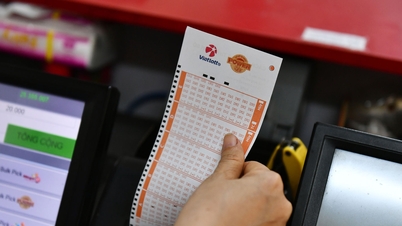
That's the sentiment of street lottery ticket vendors as the year ends and Tet (Lunar New Year) approaches. Besides their usual hopes, these vendors are also deeply concerned about the fact that their commission has been reduced for the past year.
"I 've been selling lottery tickets until I'm old, but the lottery company never takes care of my rights or benefits."
At 64 years old, Ms. Nguyen Thi Huong (from Binh Dinh province) has been selling lottery tickets on the streets for 34 years. The Lunar New Year of the Year of the Dragon 2024 marks the sixth consecutive Tet holiday that Ms. Huong has stayed in Ho Chi Minh City to sell lottery tickets. She says that since suffering from a herniated disc and varicose veins, she tries to sell lottery tickets throughout the Tet holiday to save money for follow-up medical checkups.
"I've been selling lottery tickets for 34 years, making a significant contribution to the lottery companies. I sell them year-round, even during holidays, yet the lottery companies don't bother to give me health insurance cards or bonuses. In short, I'll end up in my old age without receiving anything," Mrs. Huong sadly shared with us on January 30th.
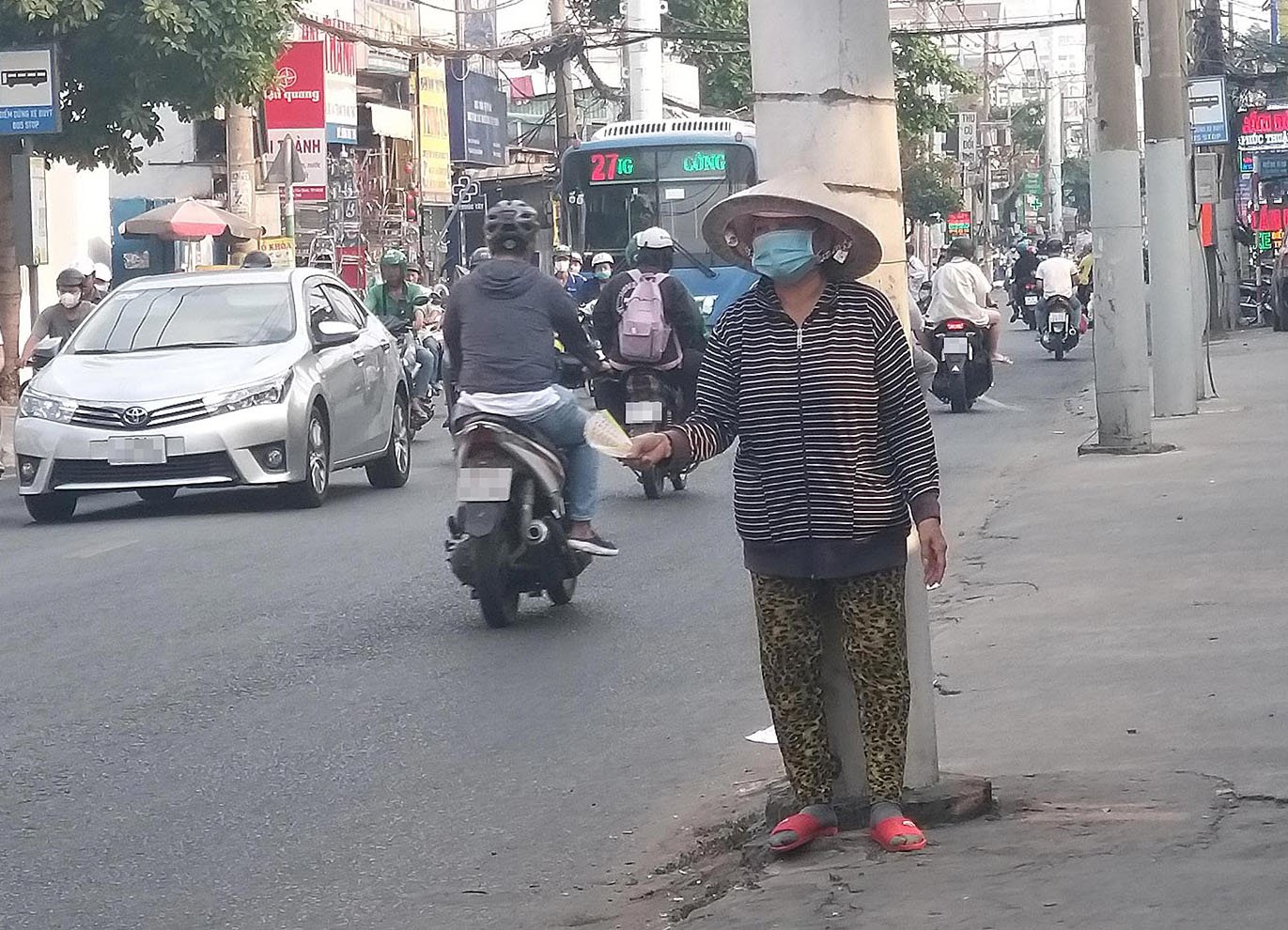
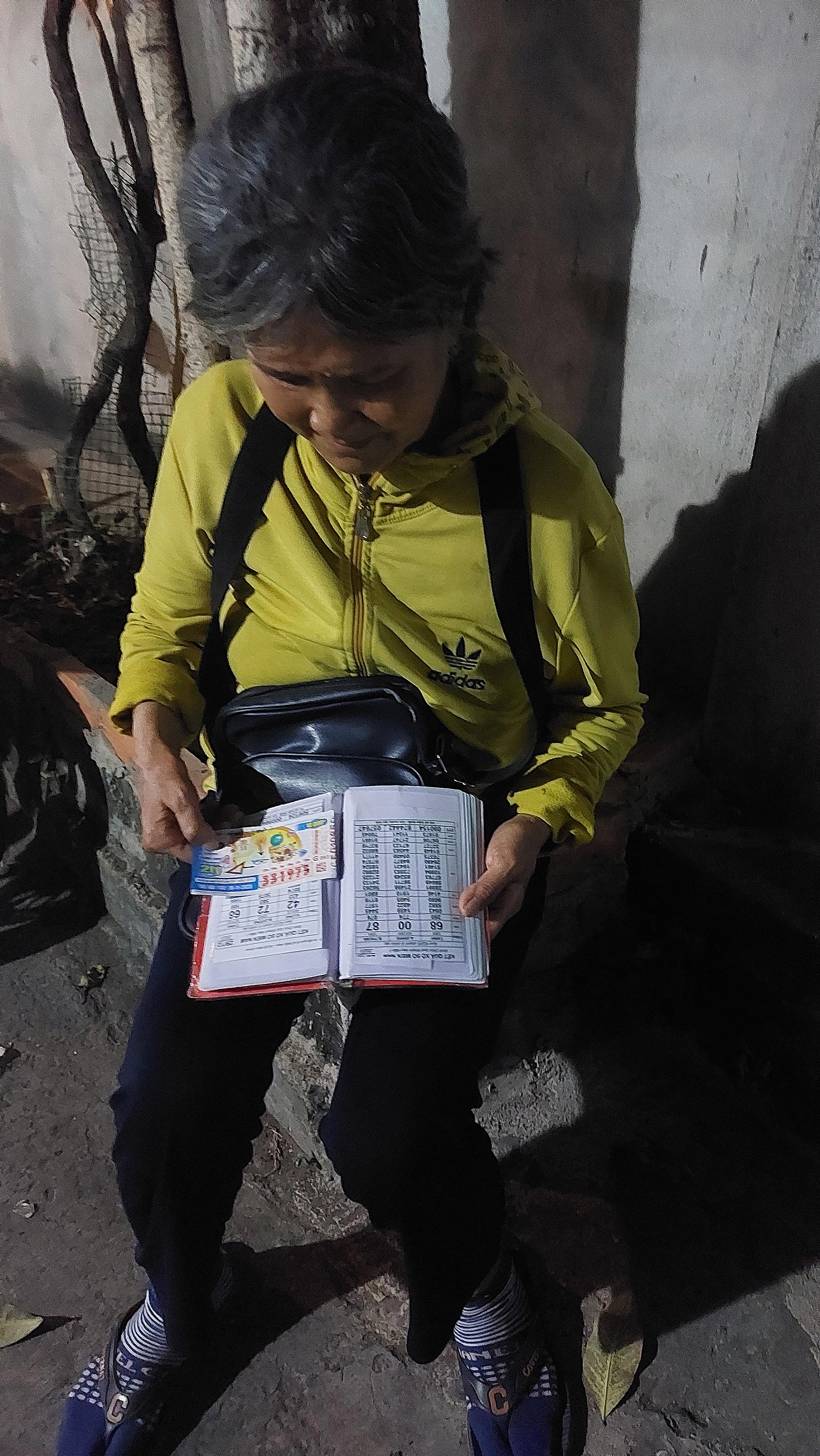
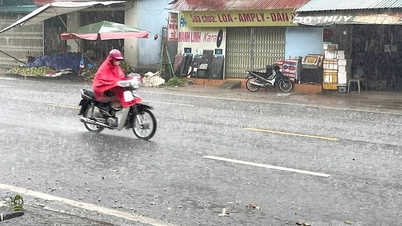
Selling lottery tickets day and night.
Ms. Huong stated that before 2004, the lottery company gave bonuses to street vendors at the middle and end of the year. However, from 2005 until now, the companies "haven't given a single penny."
According to Ms. Huong, previously, the commission for street vendors was increased once every 10 years. However, recently, the commission has not only failed to increase but has even decreased, while rent and daily expenses have risen sharply. Most recently, from February 2023 to the present, the profit of street lottery ticket vendors has been reduced from 1,200 VND per ticket to 1,150 VND per ticket (the common rate) by the agencies.
Earlier, on the afternoon of January 8th, at a lottery ticket agency on Tan Son Nhi Street (Tan Phu District, Ho Chi Minh City), we met Ms. Dinh Thi Dung (52 years old, from Quang Ngai province) returning from selling lottery tickets. Before I could even ask her anything, Ms. Dung poured out a stream of pent-up frustrations from years past: "Lottery tickets are sold on holidays and Tet (Lunar New Year), they don't give street vendors a break. Lottery ticket vendors bring so much profit to the lottery companies, but why don't they have health insurance, and why don't they receive bonuses during Tet?...".
Citing her own experience, Ms. Dung said: "I've been selling lottery tickets for over ten years, selling them until I'm old, but the lottery company hasn't taken care of my rights at all. I earn money on days I'm out selling, but on days I'm sick or tired, I go hungry. I'm always out on the road, and if I get hit by a car, I have to take care of myself; nobody else will."
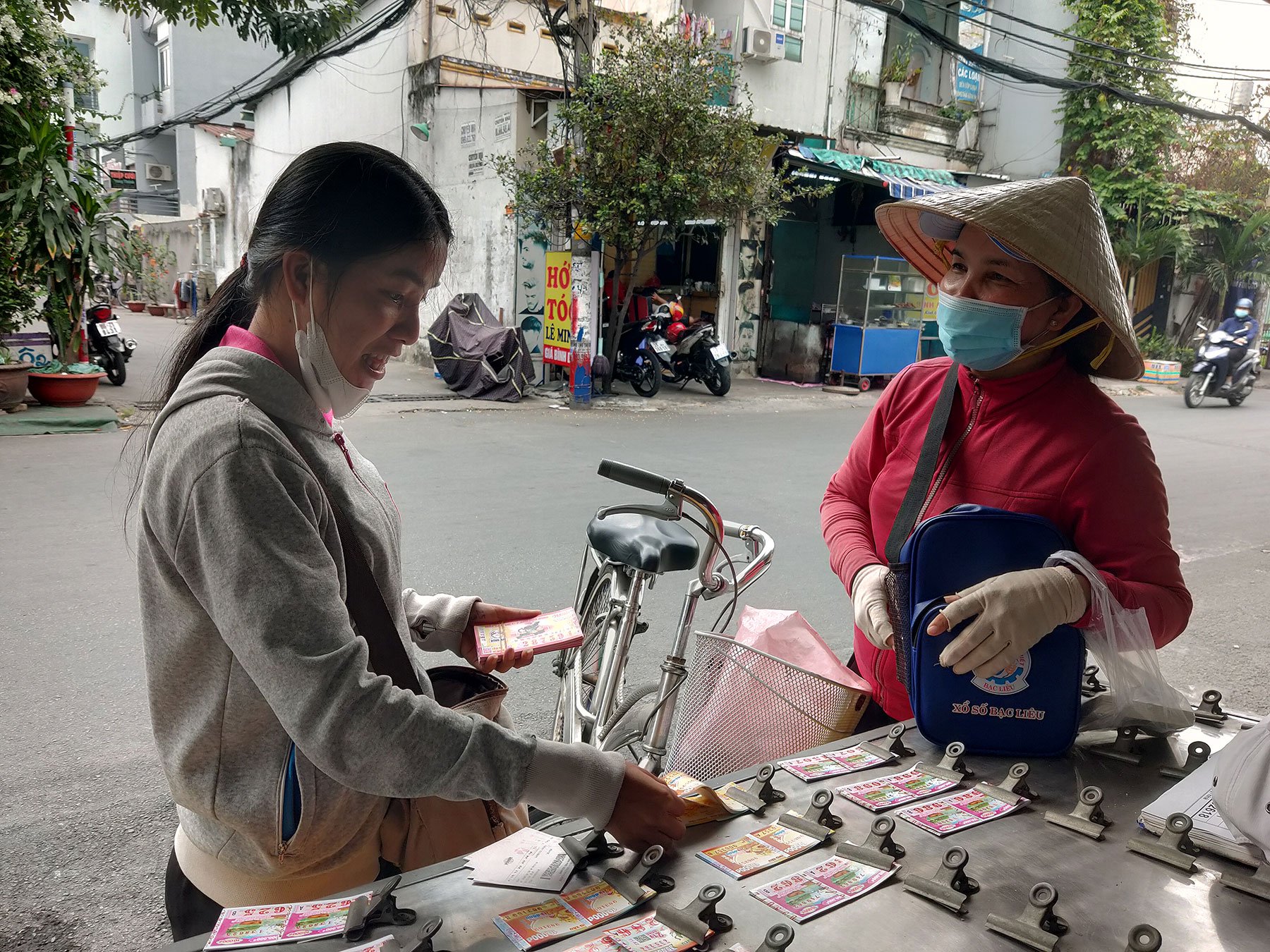
Having sold lottery tickets on the streets with her daughter for many years, Ms. Dinh Thi Dung has been yearning to obtain health insurance from the lottery company.
Exhausted, returning to her rented room (right next to the aforementioned lottery ticket agency) after a long day of wandering around selling lottery tickets, Ms. Le Thi Diep (53 years old, from Quang Ngai province) also chimed in: "We just hope the lottery company will give us health insurance. Do you know why? We're out on the streets every day, even at night, and we never know what risks might arise. It's not just us; all the lottery ticket vendors hope for the same. Anyone who sells tickets and is recognized by the agency should have health insurance, in case of accidents or illness. As for buying and selling, it's natural that we earn more if we sell more and less if we sell less."
That afternoon, despite the limited time due to having to continue selling lottery tickets, Mrs. Diep, like Mrs. Dung, still had many concerns: "Every year we apply for health insurance but we don't get it. We think it's so unfair! On holidays and Tet (Lunar New Year), people get time off, but lottery ticket sellers are wandering the streets. We have to keep going, even when we're in pain, we don't dare take a break because if we've already bought the lottery tickets for that day, no one will sell them to us."
'If you don't sell all the tickets, you'll cry because you can't get your money back.'
Every day, Ms. Dinh Thi Dung sells over 400 lottery tickets. I exclaimed, "You sell a lot!" Ms. Dung explained, "I have to keep going, you know. Every day, we wake up at 5:30, leave at 6, and continue selling until the lottery draw time. Then we come home, shower, eat a quick meal, and go out again until 9 or 10 p.m. My feet hurt and swell up terribly, but because we're poor, we have to keep going."
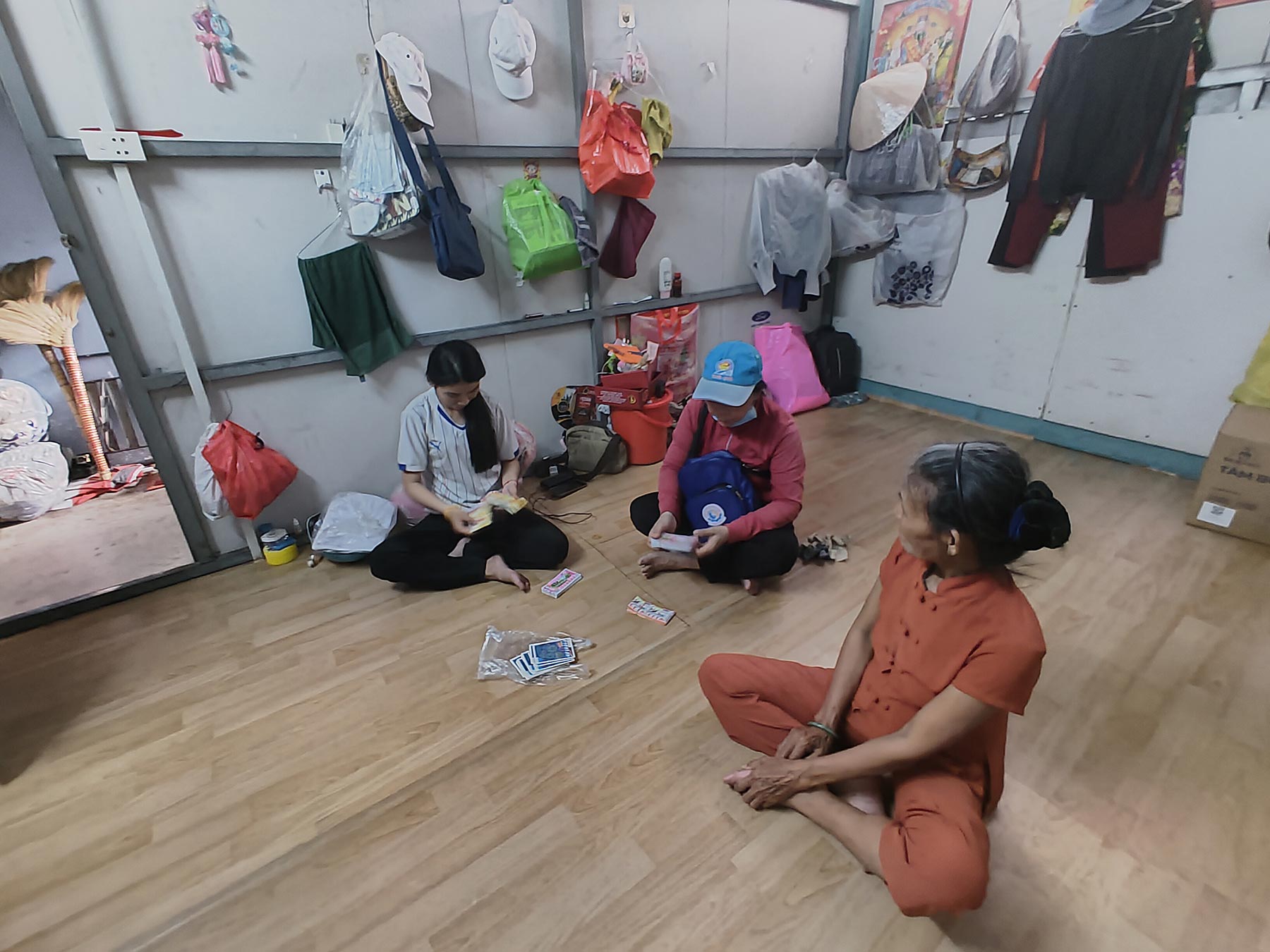
A room shared by lottery ticket vendors in Ho Chi Minh City.
Some of Ms. Dung's roommates added that sometimes they don't even have time to eat. After the lottery draw, they grab their lottery tickets and go sell them again, sometimes not returning until late at night.
"Listen, I'm telling you this, we're always thinking about lottery tickets. We're out on the streets so much, our heads are spinning. I and many other street vendors have had to get IV fluids because of exhaustion, and some have even fainted and had to be taken to the emergency room," Ms. Dung confided.
The pressure of making a living has left Ms. Dung feeling like she's "lost in thought" on more than one occasion. For example, there were days when a customer bought three tickets, and she couldn't remember if they had paid or not. But she didn't dare ask, for fear of offending the customer, who wouldn't buy from her again the next day.
In reality, almost everyone who sells lottery tickets on the street faces risks: selling on credit and then being cheated out of money, being tricked into exchanging fake winning tickets, losing tickets, etc. "This job is full of risks; it's not like you get to keep all the profit for every ticket you sell," Ms. Dung concluded.
Sharing their experience in selling tickets, some "lucky" vendors believe that you have to be diligent, go around a lot, and offer tickets to anyone you meet, but you also need a clever approach. Ms. Le Thi Diep revealed: "Business is difficult these days, so you have to put in the effort to persuade customers to buy. For example, you can say: 'I've been walking around for a while now but haven't sold much, please support me by buying a few tickets, otherwise I'll be stuck with unsold tickets.' People think it's pitiful to have to hold onto the tickets, so they buy them."
Hearing what Ms. Diep said, Ms. Dang Thi Hoa (63 years old, from Binh Dinh province) spoke up: "But that's the truth, I'm not lying. I had unsold stock, so I begged people to buy, I wasn't scamming anyone."
Each day, Mrs. Hoa only manages to sell 200 lottery tickets because of her leg pain. She confided, "Street vendors like me often feel disheartened, sometimes getting yelled at by customers for no reason. I start selling at 6 a.m., and if I sell all the tickets, I go home. If I don't sell them all, I cry because the tickets can't be returned."
The deaf and mute girl and the white bag
Ms. Dung's daughter (named Chung) is deaf and mute from birth and has been selling lottery tickets for the past six years. Unlike her mother, Chung only sells 180 tickets a day.
Every day, when selling lottery tickets, Chung usually carries a white bag that she bought herself. Seeing my puzzled expression, Chung went into her rented room and took out a blue bag given to her by the lottery company, showing me the hand-stitched seams on both straps. Chung shook her head, mumbled something for a moment, then hugged the white bag with a satisfied look.
A fellow lottery agent explained: "He means the lottery company gives out such low-quality baskets, so he's using his own basket to be on the safe side!"
It is known that lottery companies often give away bags, raincoats, and hats to lottery ticket vendors. However, many street vendors and some lottery ticket agency owners claim that these donated items are of poor quality and tear easily.
Source link





























































![[Video] Sunset at Lap An Lagoon – Where the sun sets over the fishing nets](https://vphoto.vietnam.vn/thumb/1200x675/vietnam/resource/IMAGE/2026/05/31/1780192137701_beach-landscape-sea-water-nature-grass-745871-pxhere-com.jpeg)

































Comment (0)