

China investigates Google; South Korea bans DeepSeek... these are some of the highlights in this week's Saturday technology news roundup.
China investigates Google.
On February 4th, China announced it would investigate Google for alleged violations of antitrust laws.

China's State Administration for Market Regulation announced it will investigate Google for alleged violations of the country's antitrust laws. The statement comes after China announced new tariffs on certain US imports.
Authorities have not provided further details about the investigation or what Google did to violate the law. Google products, such as its search engine, are blocked here, but the company still works with local partners in the country.
Google is facing increasing scrutiny in several countries around the world , including the United States. In August 2024, the search giant lost a lawsuit initiated by the US government in 2020. The US accused the company of monopolizing the general search market by creating significant barriers to entry.
Following the ruling, the US Department of Justice is pushing for Google to divest from its Chrome web browser. The department also argues that Google should not enter into exclusive agreements with third parties such as Apple and Samsung.
In addition, Google is also being investigated by the UK Competition and Markets Authority under new UK law.
South Korea bans DeepSeek.
The South Korean Ministry of Industry is the latest agency to announce a temporary ban on employees accessing the AI model of Chinese startup DeepSeek, due to security concerns.
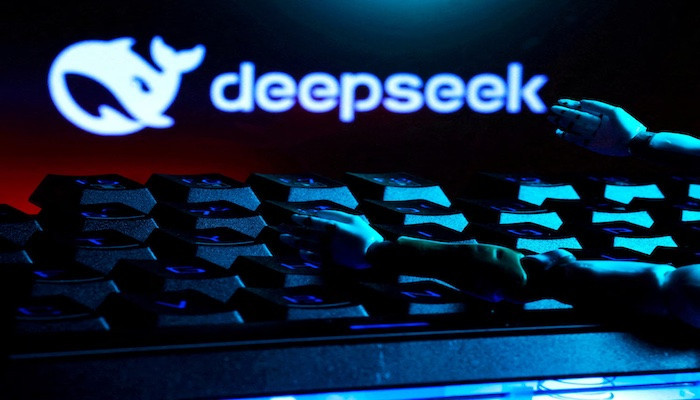
Previously, on February 5th, the South Korean government instructed ministries and agencies to exercise caution in the use of AI services, including DeepSeek and ChatGPT, in the workplace.
The state-owned enterprise Hydro & Nuclear Power also announced earlier this month that it would ban the use of AI services, including DeepSeek.
Similarly, the South Korean Ministry of Defense also blocks access to computers used for military purposes.
According to Yonhap News Agency, the Foreign Ministry has restricted DeepSeek to computers connected to external networks, but did not provide details of the security measures.
South Korea is the latest country to raise concerns about the Chinese-made AI model. Australia and Taiwan (China) had previously stated that DeepSeek poses security threats.
In January 2025, the Italian data protection authority blocked access to the chatbot after the Chinese startup failed to address concerns related to its privacy policy.
In Europe, the US, and India, governments are also considering the potential risks of using DeepSeek.
Unveiling the secret to creating ultra-cheap AI reasoning models.
Researchers at Stanford and Washington universities spent only $50 (approximately 1.2 million VND) to create an AI reasoning model.

Programming and mathematical tests show that S1 (the model's name) performs comparably to the most advanced AI reasoning models currently available, such as OpenAI's o1 and DeepSeek's R1.
Notably, S1 is an open-source model, readily available on the GitHub repository for everyone to access.
The development team shared that they started with a pre-existing basic model, then refined it through "distillation"—a process of extracting "reasoning" capabilities from another AI model by training on its responses.
Specifically, S1 was distilled from Google's Gemini 2.0 Flash Thinking Experimental model. The distillation process was similar to how scientists at the University of Berkeley created the model, at a cost of approximately $450 (about 11.3 million VND).
The paper on S1 shows that reasoning models can be distilled with a relatively small dataset through a process called supervised fine-tuning (SFT), in which an AI model is explicitly instructed to mimic certain behaviors in the dataset.
SFTs are generally cheaper than the large-scale reinforcement learning method that DeepSeek used to train the R1 model.
S1 is based on a small AI model readily available from Alibaba's Qwen AI Lab, which can be downloaded for free. To train S1, researchers created a dataset of 1,000 carefully selected questions, along with the answers and the "thinking process" behind each answer, from Google's Gemini 2.0 Flash Thinking Experimental.
This training process took less than 30 minutes using 16 Nvidia H100 GPUs, yet still yielded strong results across several AI benchmarks. Niklas Muennighoff, a researcher from Stanford, stated that the cost of renting the necessary computing power was only around $20.
The researchers used a trick to get S1 to double-check its work and prolong its "thinking time"; for example, they instructed the model to wait by adding the word "wait" to the reasoning process, which helped the model come up with a more accurate answer.
(Synthetic)
Source: https://vietnamnet.vn/trung-quoc-dieu-tra-google-han-quoc-cam-deepseek-2369459.html




![[Video] Hue and Quang Ninh mark strong tourism growth](https://vphoto.vietnam.vn/thumb/402x226/vietnam/resource/IMAGE/2025/12/12/1765555481742_dung00-22-16-02still007-jpg.webp)












![[Photo] Prime Minister Pham Minh Chinh holds a phone call with the CEO of Russia's Rosatom Corporation.](/_next/image?url=https%3A%2F%2Fvphoto.vietnam.vn%2Fthumb%2F1200x675%2Fvietnam%2Fresource%2FIMAGE%2F2025%2F12%2F11%2F1765464552365_dsc-5295-jpg.webp&w=3840&q=75)



















































Comment (0)