

Recently, the Faculty of Science, Vietnam National University, Hanoi, organized a workshop on the topic of selecting reputable international journals for publishing scientific research results. At the workshop, representatives from the Faculty's Science and Technology Department shared some cautionary information from the international scientific community regarding the reputation and quality of certain international publishers. They issued warnings to scientists within their unit and proposed solutions to prevent publication in "predatory" or "gray" journals (predatory journals are often referred to as "black journals," while "gray journals" lie on the boundary between black and white ).
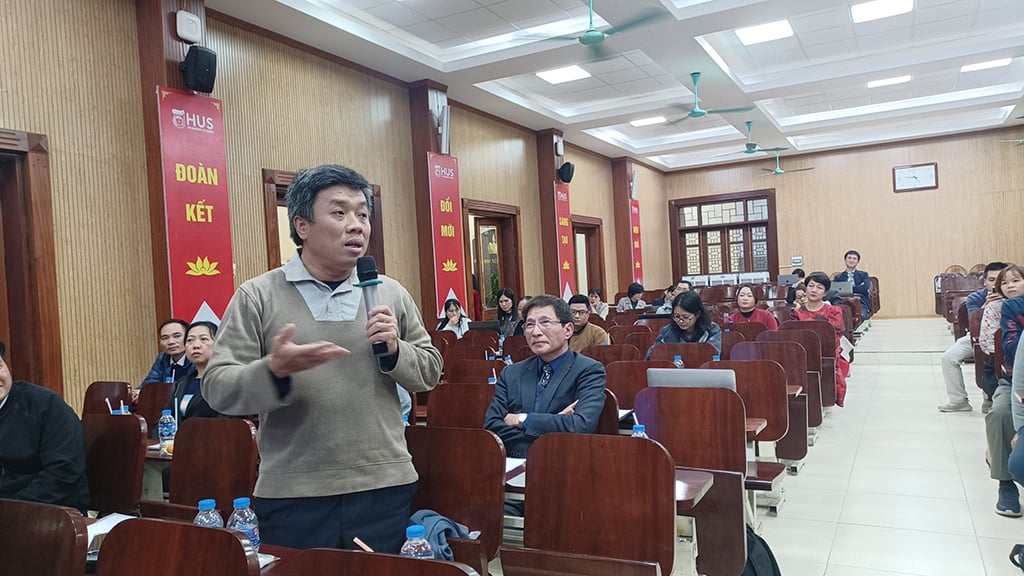
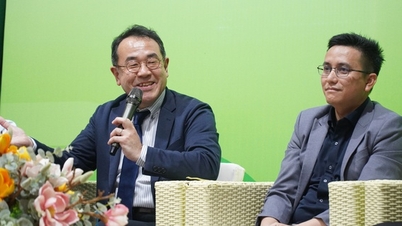
Professor Nguyen The Toan, Head of the Physics Department (Faculty of Science, Vietnam National University , Hanoi ), spoke at a workshop on selecting prestigious international journals.
FROM WARNINGS FROM THE INTERNATIONAL COMMUNITY
According to Associate Professor Hoang Thi Minh Thao, Head of the Science and Technology Department, in recent years, the number of international publications from the University of Science has steadily increased, currently exceeding 500 articles per year. The quality of publications is generally quite good, with most articles having high academic prestige. To date, the university has not received any reports of violations of academic integrity such as buying and selling scientific articles, falsifying data, or publishing many articles in predatory journals...
However, there is a phenomenon where some articles are published in three publishers: MDPI, Hindawi, and Frontiers. Statistics show that the number of articles from the university published in these three journals is not large, the percentage is not high (approximately 6%, since 2018). Most are published in Q1 and Q2 journals of MDPI; Q2, some Q1 and Q3 journals of Hindawi; and mostly Q1 journals of Frontiers (Q is an indicator of the journal's prestige; a lower Q indicates better prestige - PV). Funding sources are diverse: state-funded projects, foreign funding, funding from the NAFOSTED Foundation… Notably, the percentage of articles published in these publishers by the Hanoi University of Science is on the rise.
Meanwhile, the prestige and scientific quality of the journals published by the three aforementioned publishers are currently a "hot" issue, attracting the attention of the global scientific community. The incident that brought these three publishers into the spotlight of this "scandal" is the research published in 2021 by Professor M.Az. Oviedo-Garcı́a in an Oxford University journal, discussing several issues with MDPI journals. In it, Professor Oviedo-Garcı́a highlighted several problems with MDPI journals, such as a high and significantly higher rate of self-citations compared to top-ranked journals. Citation pattern analysis suggests they may be "predatory" journals; the total number of articles increases too rapidly and varies greatly between journals; and the peer review time is short…
This year, another research paper concerning the quality of journals published by Hindawi and Frontiers, by authors Mark A. Hanson, Pablo Gómez Barreiro, Paolo Crosetto, and Dan Brockington, was published. The paper discusses publication pressure and the emergence of several indicators affecting the quality of publications in journals from MDPI, Hindawi, and Frontiers. "This information has drawn the attention of the scientific community to these three publishers," Associate Professor Thao shared.
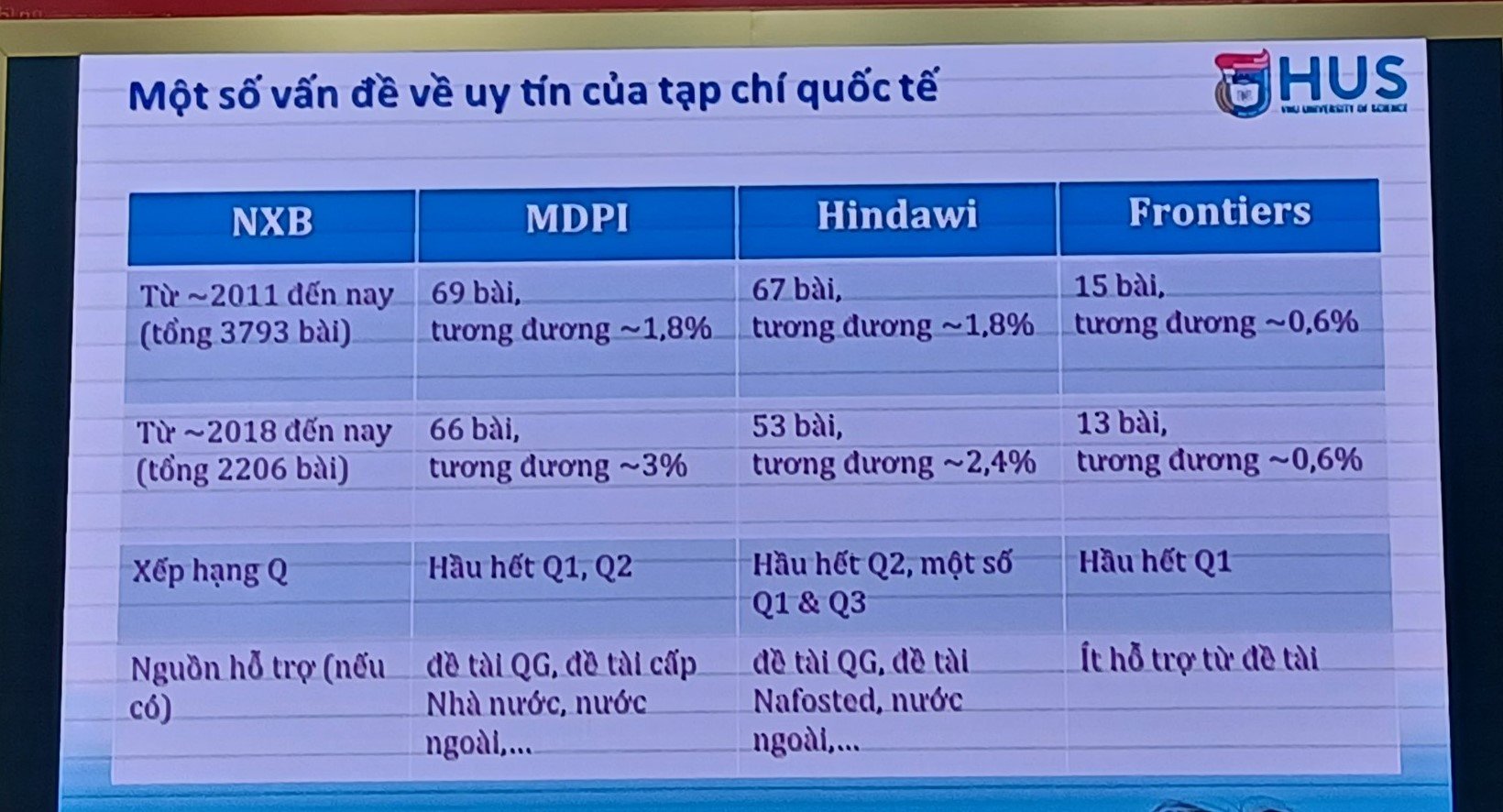
The number of articles from the Faculty of Science (Vietnam National University, Hanoi) published in 3 publishers: MDPI, Hindawi, and Frontiers.
REACTIONS OF COUNTRIES
Associate Professor Thao also stated that, in light of this situation, some countries have already reacted. In July, the Malaysian Ministry of Higher Education issued a notice requiring public universities not to use budget funds to pay for article publication fees in all journals belonging to the three publishers MDPI, Hindawi, and Frontiers.
In China, the National Academy of Sciences has placed many journals from MDPI, Hindawi, and Frontiers on its warning list (including Q1 and Q2 ISI journals). Also in China, Zhejiang University of Commerce and Industry blacklisted all journals from these three publishers (early 2023), withholding publication fees and excluding them from scientist evaluations.
The Harbingers Project group, comprising scientists from nine countries, compiled data on the reactions of these nations to "grey" journals. Accordingly, the countries that expressed specific concerns (at the national level) regarding "grey" journals include: Malaysia, China, Spain, France, and Poland.
In Vietnam, the VINIF Foundation (of Vingroup Corporation) announced that it would only accept papers not published in journals belonging to MDPI and Hindawi (from August 2020). The University of Law Ho Chi Minh City (November 2022) announced criteria for identifying unreliable international journals and would not award prizes for papers published in these journals. The University of Economics and Law (Vietnam National University Ho Chi Minh City) also advised its scientists to be cautious when publishing in journals from MDPI, Hindawi, and Frontiers.
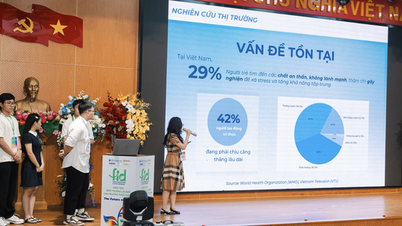
49% suggest not supporting the article published by the controversial publisher.
The Science and Technology Department of the Hanoi University of Science conducted a survey on the selection of reputable journals for publishing scientific works. The survey revealed numerous unanswered questions among scientists, especially young scientists, regarding international publication. For example, how to identify suitable journals for international publication; how to avoid predatory journals, fraudulent journals, and low-reputation journals; and how publishing in such journals affects a scientist's reputation...
Or, when asked whether the school should support articles published by controversial publishers, the answers were quite divided. Only 49% said no support; 27.5% said support would be given, but at a lower level than other articles; and 23.5% believed support should be given as usual. Therefore, the Science and Technology Department chose a compromise solution to propose to the school administration: prioritizing support for articles published in reputable journals; and not prioritizing support for articles published in journals with signs of low quality.
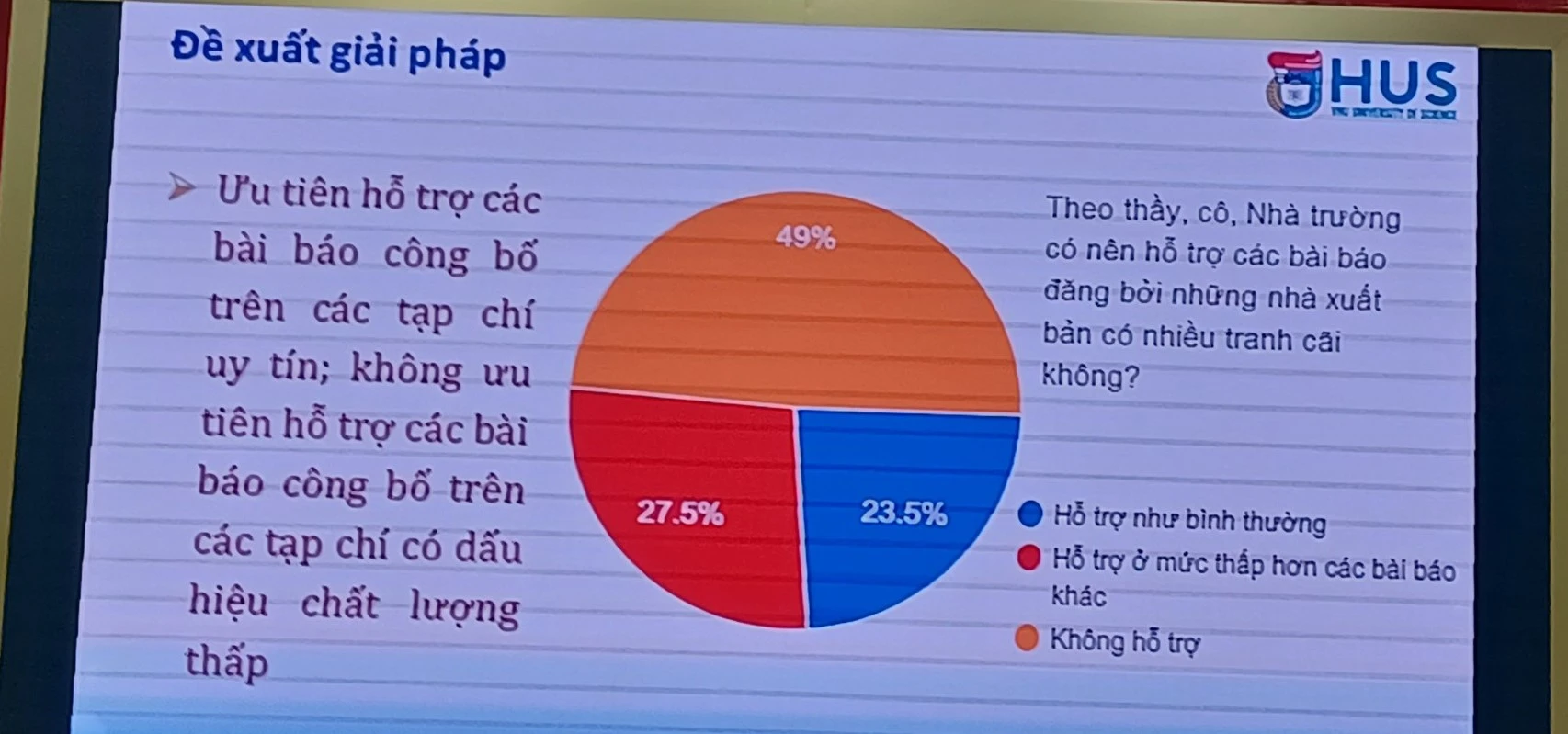
Only 49% said they would not support articles published by controversial publishers; 27.5% said they would support them, but to a lesser extent than other articles; and 23.5% said they would support them as usual.
However, regarding the question of whether publications from controversial publishers should be considered for awards, honors, or the selection of strong research groups, the answers were more consistent. The majority (72.5%) answered no, while 27.5% said yes. Therefore, the chosen proposal is to place greater emphasis on the quality of published works when considering awards, honors, or the selection of strong research groups.
Associate Professor Thao also stated that the Department of Science and Technology has proposed that the university promptly develop and issue a code of conduct on academic integrity, issue guidelines for identifying "predatory" journals, regularly update information on journals with quality issues, and share the latest research findings on the reputation of these journals.
According to Associate Professor Tran Quoc Binh, Vice Rector of the Hanoi University of Science, the university always strives to create the best conditions for scientists to publish scientific papers in general and internationally in particular, but the university also requires its scientists and staff to uphold academic integrity, because only in this way can they maintain the reputation of the scientists themselves as well as the university.
The first element is ensuring scientific integrity.
Professor Nguyen The Toan (Department of Physics, Hanoi University of Science) argues that metrics like Q-index or H-Index are only relative measures. Regardless of publication location, Q-index, or journal, the first thing scientists need to consider is ensuring scientific integrity. Once they embark on scientific work, they need to know which journals are suitable for their field of expertise; they need to have the ability to distinguish between reputable and substandard journals.
Once you've embarked on a scientific career, you should be committed to doing science properly. Don't choose the easy way out just because you're a beginner. "If you publish shoddy or low-quality papers today, it will be a stain on your scientific career later on. Think about the future, do good work, and maintain scientific integrity," Professor Toan shared.
Source link


![[Photo] Prime Minister Pham Minh Chinh attends the Conference summarizing and implementing tasks of the judicial sector.](/_next/image?url=https%3A%2F%2Fvphoto.vietnam.vn%2Fthumb%2F1200x675%2Fvietnam%2Fresource%2FIMAGE%2F2025%2F12%2F13%2F1765616082148_dsc-5565-jpg.webp&w=3840&q=75)








































































Comment (0)