

According to sources from Hoan My Cuu Long General Hospital on June 3rd, doctors at the hospital successfully treated and saved a patient's leg from necrosis caused by self-medicating with old prescriptions for diabetes.
Previously, Mr. NVC (70 years old, residing in Vinh Long province) was admitted to the hospital with an abscess in his right foot. The abscess was incised, and he experienced swelling and pain in his right foot. The swelling spread throughout his entire right foot and lower leg, with some areas of pus formation and intermittent fever.
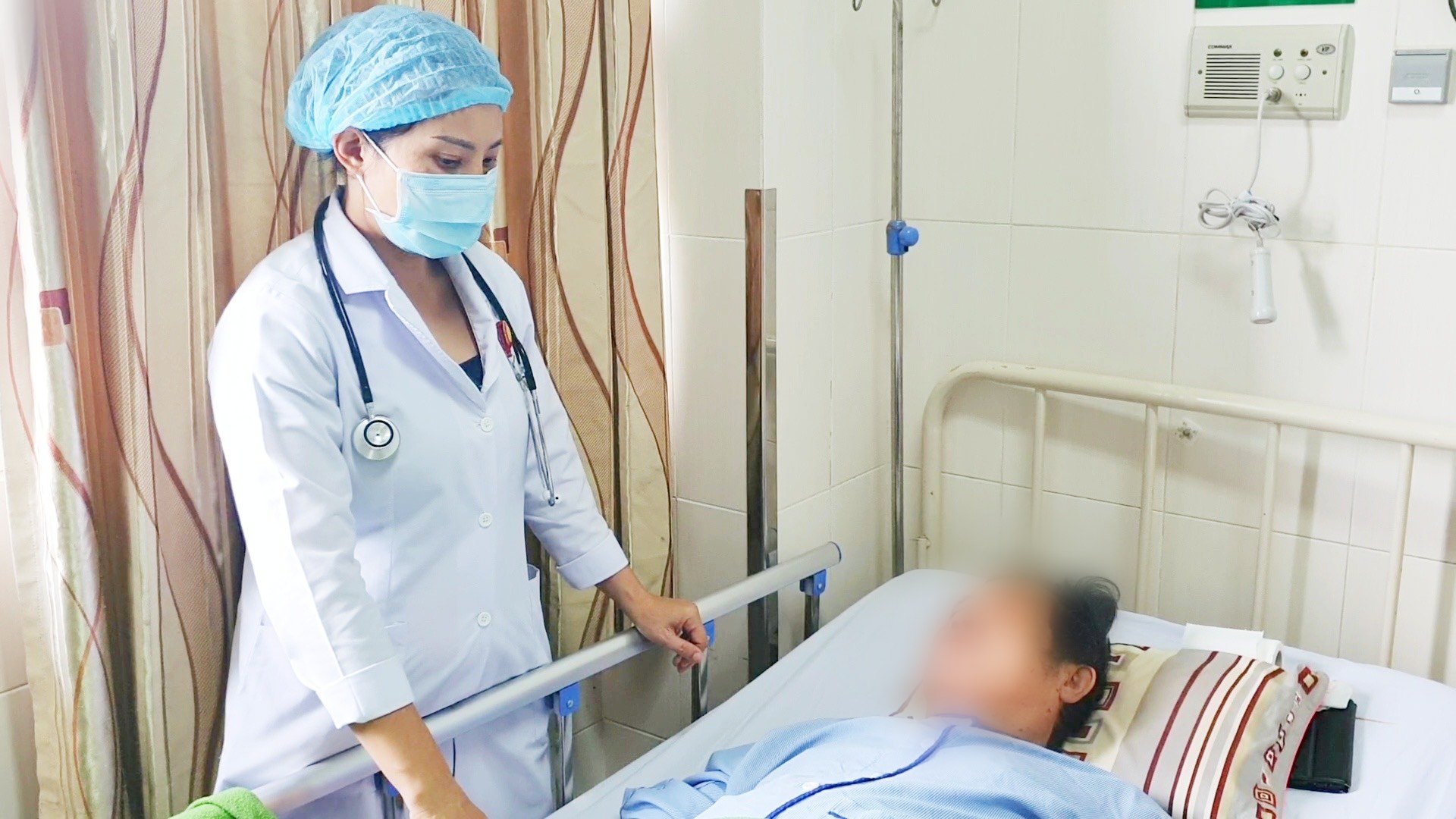
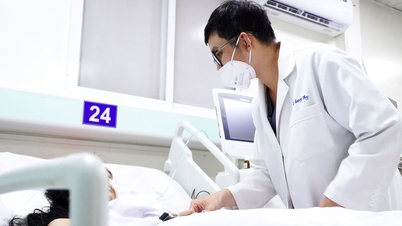
The patient's condition improved significantly after intensive treatment.
The patient did not seek medical attention but instead bought and used medication on their own. After taking the medication, their condition did not improve; instead, they experienced increased fatigue, fever, swelling, pain, and pus discharge from their leg. Only then did the patient seek hospital treatment.
The family reported that the patient had a history of diabetes (treated for 10 years), liver cancer (treated with transarterial chemoembolization (TACE) four times), cirrhosis, hepatitis C, hypertension, and gout for many years.
Upon examination and paraclinical tests, the doctor diagnosed the patient with sepsis from cellulitis of the right lower leg on a background of liver cancer with TACE, cirrhosis, hepatitis C, hypoalbuminemia, electrolyte imbalance, Cushing's syndrome, hypertension, ischemic heart disease, and gastroesophageal reflux.
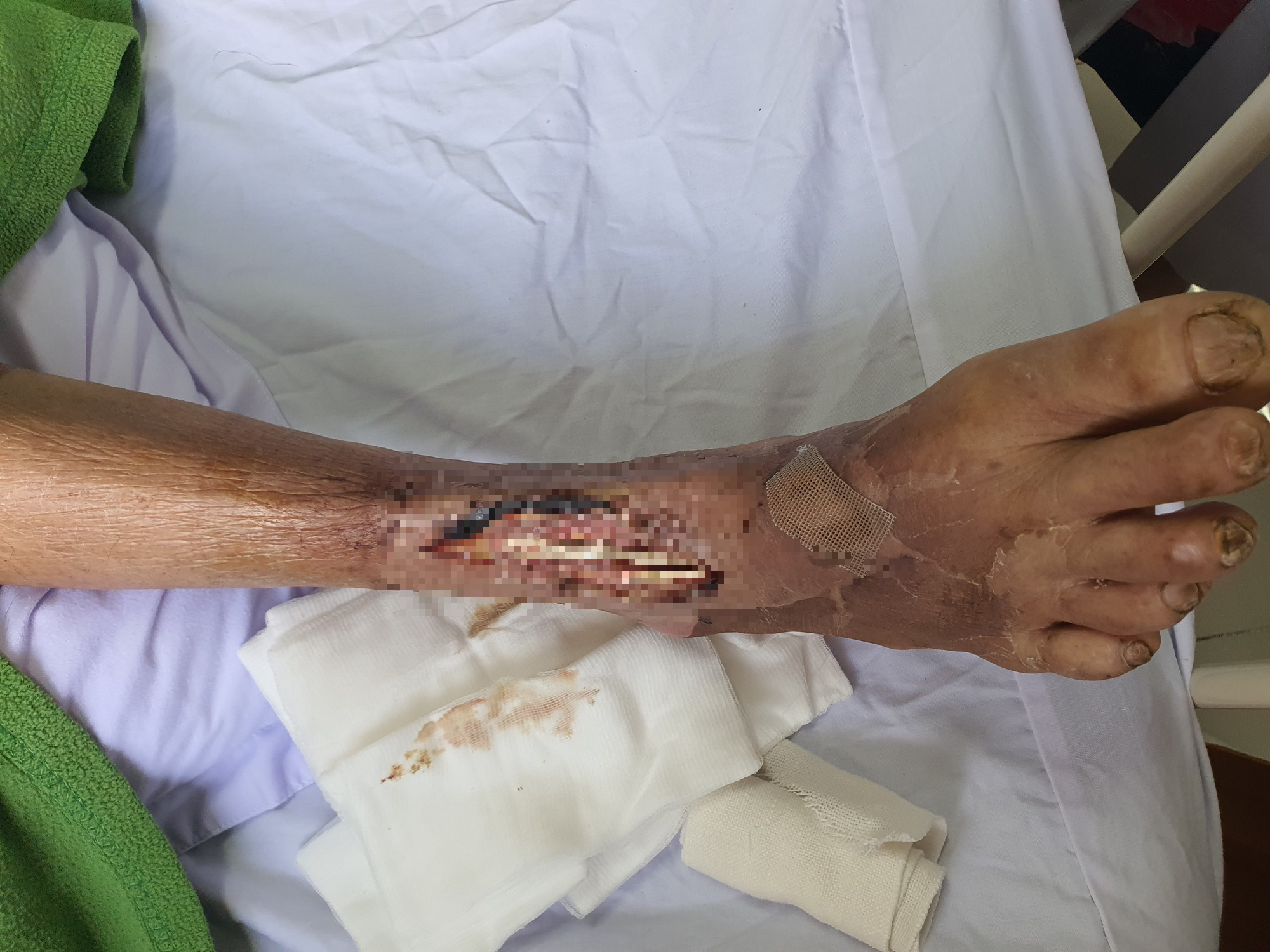
After 12 days of treatment, the ulcer on the leg was free of pus and showed minimal granulation tissue formation.
The patient received intravenous antibiotics, anti-inflammatory drugs, corticosteroid replacement, electrolyte balance correction, blood sugar and hemodynamic stabilization, debridement of necrotic tissue, local wound care for infected leg ulcers, and symptomatic treatment.
After 12 days, the patient's condition improved significantly, the leg ulcer cleared of pus, and there was minimal granulation tissue. The patient was prescribed medication for discharge, along with instructions for home wound care and a follow-up appointment as scheduled by the doctor.
Dr. Thach Thi Phola, Head of the Endocrinology Department at Hoan My Cuu Long General Hospital, said that patient V.'s infection was very severe, with the risk of amputation. Without timely treatment, it could be life-threatening.
Dr. Phola advises that patients should have regular check-ups so that doctors can monitor their clinical indicators and adjust their medication accordingly.
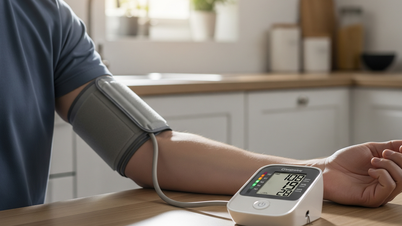
In addition, people with diabetes should regularly monitor their blood sugar at home, maintain a healthy diet, and have regular check-ups to avoid potentially dangerous complications.
Source link



























![[Video] The craft of making Dong Ho folk paintings has been inscribed by UNESCO on the List of Crafts in Need of Urgent Safeguarding.](https://vphoto.vietnam.vn/thumb/402x226/vietnam/resource/IMAGE/2025/12/10/1765350246533_tranh-dong-ho-734-jpg.webp)

























































Comment (0)