

Failing to close the loopholes in contract vehicle services risks disrupting fixed routes.
Dr. Dinh Quang Toan from the University of Transport Technology emphasized that the current contract vehicle business model plays a dominant role, accounting for up to 70%.
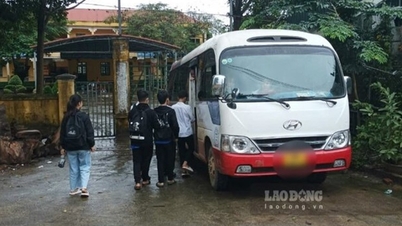
Of particular note is the situation of contract vehicles disguised as fixed-route vehicles, operating as if they were. This is considered a major loophole that needs to be addressed. Otherwise, the disruption of routes, the abandonment of fixed-route vehicles at designated stops, etc., will only increase.
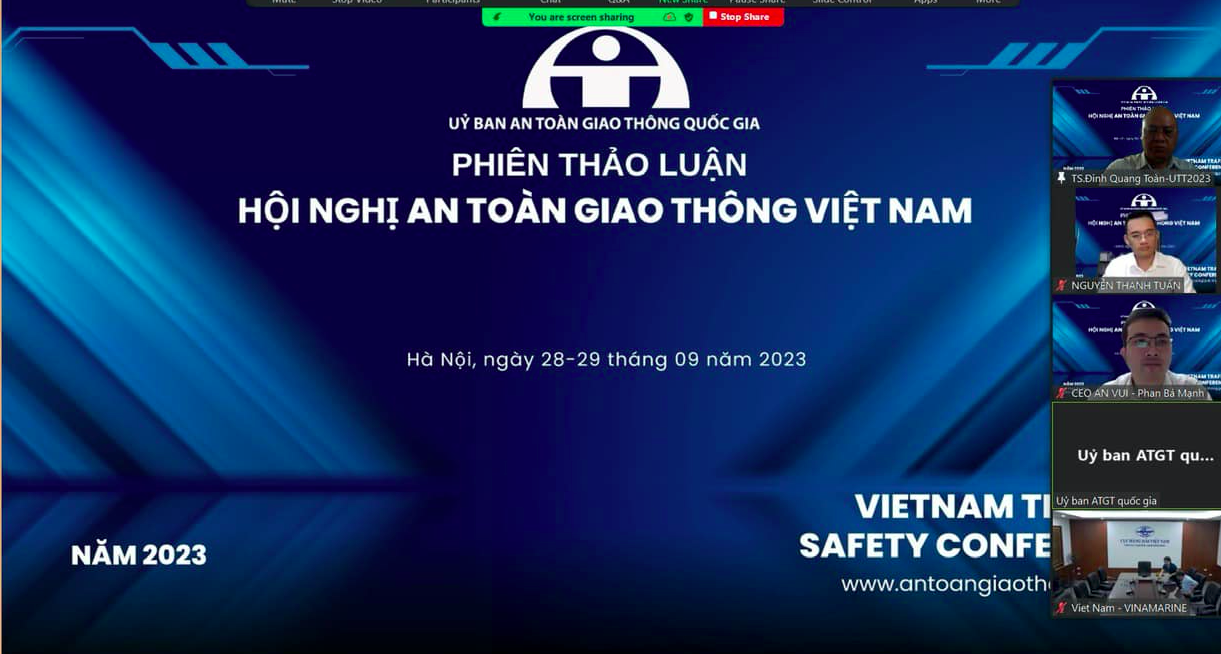
He argued that the current legal framework for contract-based transportation is more open compared to other models: Contract-based transportation companies can proactively determine transportation fares; proactively plan transportation routes according to customer requirements;... While with fixed routes, the procedures for changing prices are complicated...
Furthermore, the legal advantages of ride-hailing services are encouraging private vehicles, which are not permitted to operate as commercial transport, to participate in such activities as carpooling and ride-sharing, leading to traffic safety issues and significant tax revenue losses for the state.
"The business of transporting passengers and goods by road still harbors many risks of unfair competition and traffic safety hazards, which need to be thoroughly addressed by state management agencies through solutions and tools applying digital technology ," Mr. Toan affirmed.
How can this be resolved?
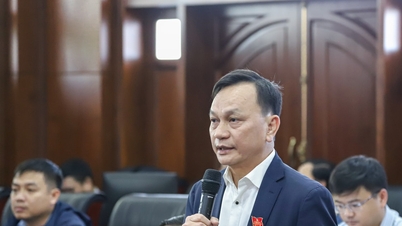
Mr. Phan Bá Mạnh, Director of An Vui Technology Joint Stock Company, frankly pointed out two risks when the development of ride-hailing services lacks control.
"The data shows that the current ride-hailing business model is dominant (accounting for up to 70%). Meanwhile, fixed-route transportation, a sector where our country has spent a lot of time developing routes and lines, now only has 6% market share," Mr. Mạnh cited.
CEO An Vui also emphasized that this competition will continue unless a legal solution is found that allows businesses to compete fairly and harmoniously.
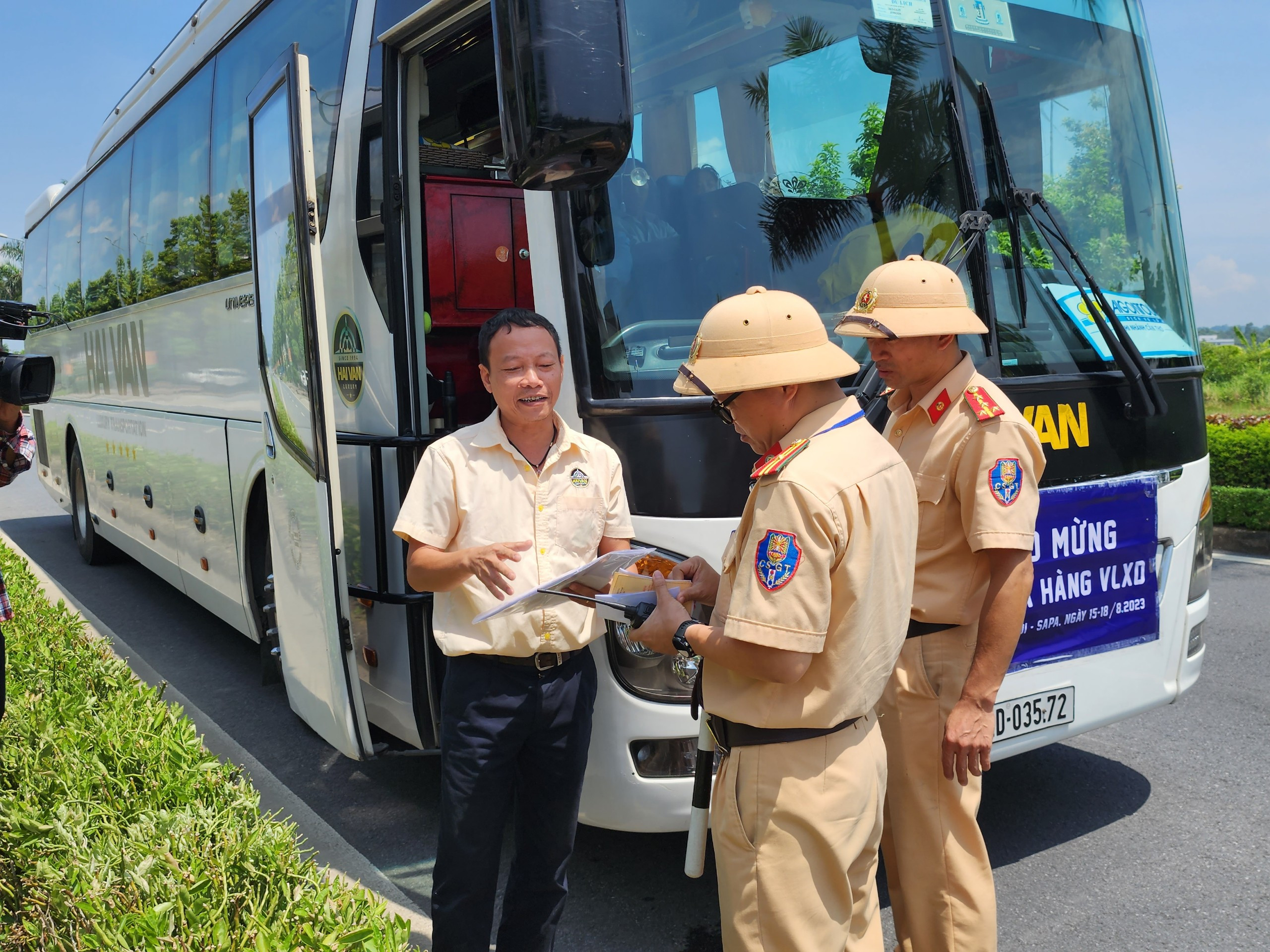
Mr. Mạnh also expressed concern that "if we are not careful, we will fall into a situation where we cannot manage it and end up banning the ride-hailing model." Therefore, he proposed the solution of "electronic transport orders."
"Accordingly, for vehicles and transport units operating on fixed routes, before departing, they will have to send an electronic transport order to the central data center. The Ministry of Transport or the Vietnam Road Administration may be the unit processing this central data."
From there, the bus stations will use that central data to sign and confirm orders. This helps to limit illegal buses operating outside designated bus terminals. For example, a bus operating on a fixed route in province A might operate illegally in province B, not entering the official terminal but instead finding parking outside the designated area.
"This solution will help the management agency keep track of when vehicles depart, when they sign off at their departure station, and when they sign off at their arrival station, ensuring that vehicles operate on fixed routes without skipping stops," Mr. Mạnh informed.
Similarly, the same procedures must be followed for contract vehicles. From there, relevant authorities such as bus stations, traffic police, specialized transport inspectors, the General Department of Taxation, and insurance companies will coordinate to access data from a common data source to monitor and supervise operations.
In addition, it ensures connectivity and data sharing to optimize the management of road transport operations with relevant authorities.
"This will be a very significant figure, helping to make the picture of the transportation industry, especially passenger transport, very transparent. Businesses will not have the opportunity to evade taxes or engage in opportunistic business practices," Mr. Mạnh informed.
Source


![[Photo] Prime Minister Pham Minh Chinh holds a phone call with the CEO of Russia's Rosatom Corporation.](/_next/image?url=https%3A%2F%2Fvphoto.vietnam.vn%2Fthumb%2F1200x675%2Fvietnam%2Fresource%2FIMAGE%2F2025%2F12%2F11%2F1765464552365_dsc-5295-jpg.webp&w=3840&q=75)


![[Photo] Closing Ceremony of the 10th Session of the 15th National Assembly](/_next/image?url=https%3A%2F%2Fvphoto.vietnam.vn%2Fthumb%2F1200x675%2Fvietnam%2Fresource%2FIMAGE%2F2025%2F12%2F11%2F1765448959967_image-1437-jpg.webp&w=3840&q=75)







































![[OFFICIAL] MISA GROUP ANNOUNCES ITS PIONEERING BRAND POSITIONING IN BUILDING AGENTIC AI FOR BUSINESSES, HOUSEHOLDS, AND THE GOVERNMENT](https://vphoto.vietnam.vn/thumb/402x226/vietnam/resource/IMAGE/2025/12/11/1765444754256_agentic-ai_postfb-scaled.png)








































Comment (0)